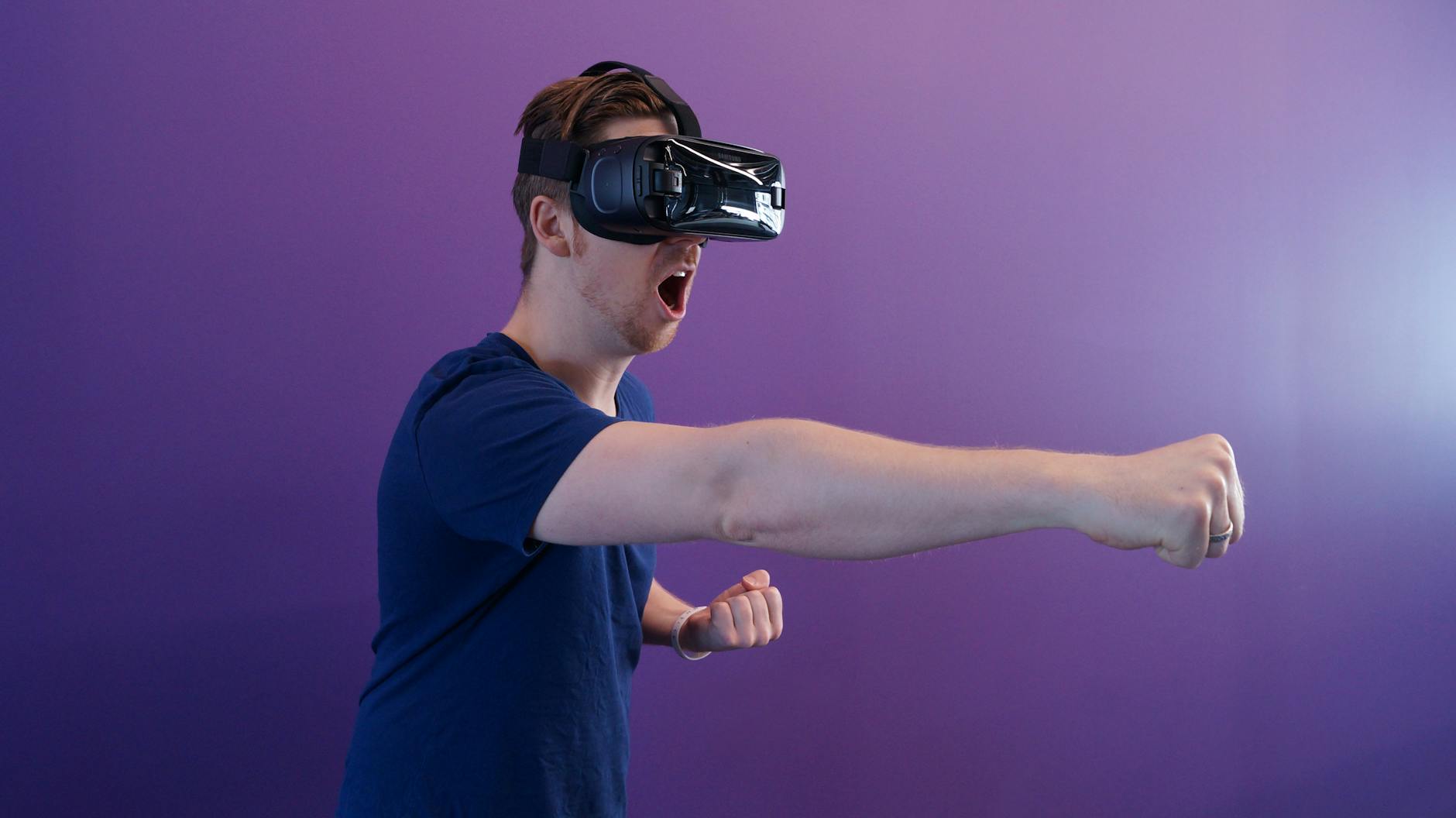
Virtual Reality (VR) technology has been around since the late 1990s though they were mainly used for medical purposes, flight simulations, and military training. In 1994, SEGA released the SEGA VR-1 motion simulator, piloting future ventures in the media and entertainment industries, some of which were previously featured here on BioGamer Girl. Today, the United States remains the region with the largest VR and AR research and development expenditure, clocking in at approximately $6.4 billion.
However, the progression of VR has almost come to a standstill and to evolve, it requires a cheaper, more consistent network with lower latency; in other words, they need 5G. This next generation mobile network promises much faster data download and upload speeds, wider coverage, and more stable connections. Last December, the Netgear Nighthawk 5G was tested in Dallas and hit 466 Mbps via Wi-Fi, which is higher than the average 5 to 12 Mbps 4G network.
Although 5G has pushed the development for many technological advancements such as automobiles, mobile devices, and most recently virtual technology, what can 5G provide that can unlock VR’s full potential?
Increased Capacity Existing 4G networks do not have the capacity to carry the huge data requirements that VR needs for its applications. In addition, the current selection of VR devices requires a lot of high-end hardware to run - which 5G can eliminate and provide unrestricted capacity via the transfer of all data to the cloud. Developments have been made to prove this; just last February, telecom conglomerate AT&T announced its 5G network was ready to stream high-resolution VR content with low latency over a 5G network. In short, cloud rending will enable its users to run their VR applications without the need for extra equipment and at speeds never before possible. As a result, moving all complex processing to the cloud will enable the wider adoption of VR technology.
Richer Experiences
New 5G infrastructure can provide an avenue for sports fans to experience their favorite sports in ultra-high-definition without flying to the other side of the globe. The influence of sports is so huge, that research by Amdocs found that 70% of network operators claim that upcoming major sports events such as the 2020 Tokyo Olympics and European Championship are influencing the development speed of 5G technology. However, a feature by Coral on the impact technology is currently having on sports notes that VR’s existing relationship with sports is still in its infancy. Although it has seen limited implementation in streaming MBL games and allowed fans to get closer to the action at the NASCAR Cup Series Championship, its full potential has not been realized just yet. With 5G, however, Digital Trends explains how the technology could vastly improve the way we experience live sports; “imagine being in a virtual room with all of your friends that are sitting in different cities across the U.S., but it’s like you’re in the stadium together and having the same experience,” all due to incredible speeds and low latency in ultra-high definition.
Decreased Latency
As we just mentioned, the latency of a network is what enables the virtual experience to feel real and responsive. The higher the latency, the higher the lag. One of the biggest problems users face is the nausea they experience when the latency is over 20 ms. A Qualcomm-commissioned ABI Research shows that 5G will bring around 10X less latency as well as 100X traffic capacity and network efficiency, offering a virtually realistic experience.
The advent of 5G is not just a new wireless technology from a network provider; it is a transformation of mobile networks, infrastructure, and business operations that will bring much higher efficiency and incredible speeds. It is going to drive the creation of new applications, including realistic, interactive and immersive virtual and augmented reality environments. With the speed that network providers are developing 5G, the new era of advanced virtual experiences can be realized sooner than you can imagine.