Duskpunk: The Smog of Rebellion - A hand‑painted world where every choice fans the flames of change. (Game Review)
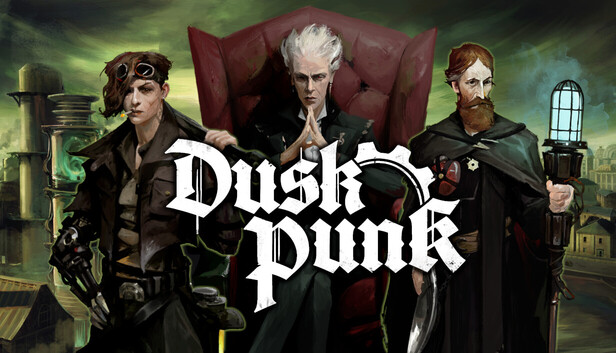
Duskpunk is a gritty, dice‑driven steampunk RPG that marries tabletop tension with a sprawling, choice‑heavy city sim; play it for the survival squeeze, stay for the worldbuilding and the moral weight of your decisions.
Arriving from Clockwork Bird (solo dev James Patton), Duskpunk paints Dredgeport in broad, oil‑stroked grime: a metropolis where gangs run the slums, corruption is institutional, and the dead of war are burned for fuel. You’re an ex‑soldier, misidentified as dead and dumped back into a city that wants you erased; your only assets are your wits and a fragile grip on sanity.
The game foregrounds political stakes; unions, revolution, class struggle; while translating them into tactile systems: dice rolls that make every risky choice feel like a tabletop session, and survival meters (health, energy, stress) that force trade‑offs between short‑term survival and long‑term goals. It’s a game about scraping by, making alliances that can betray you, and shaping a city’s fate one risky roll at a time.
Gameplay and systems
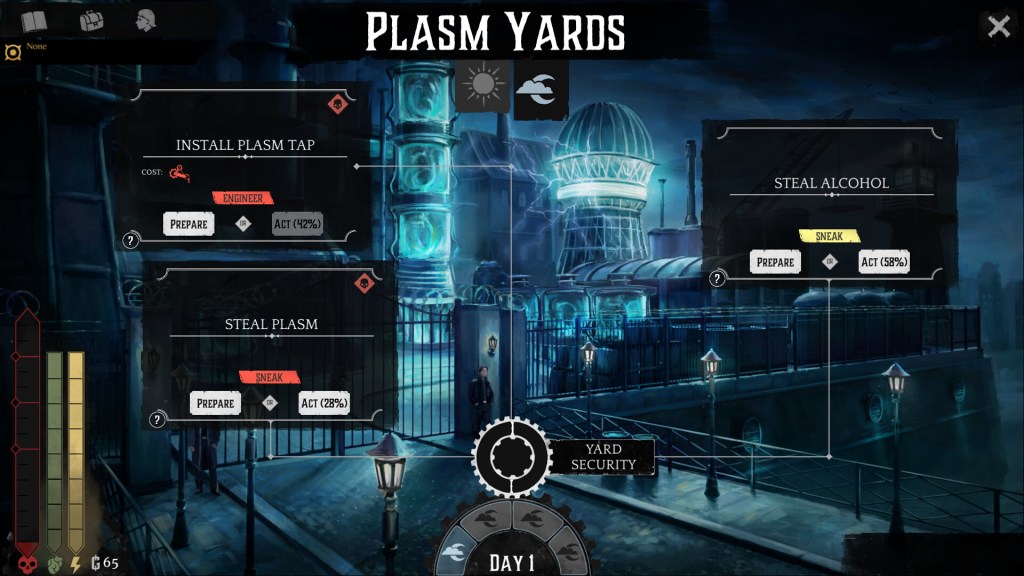
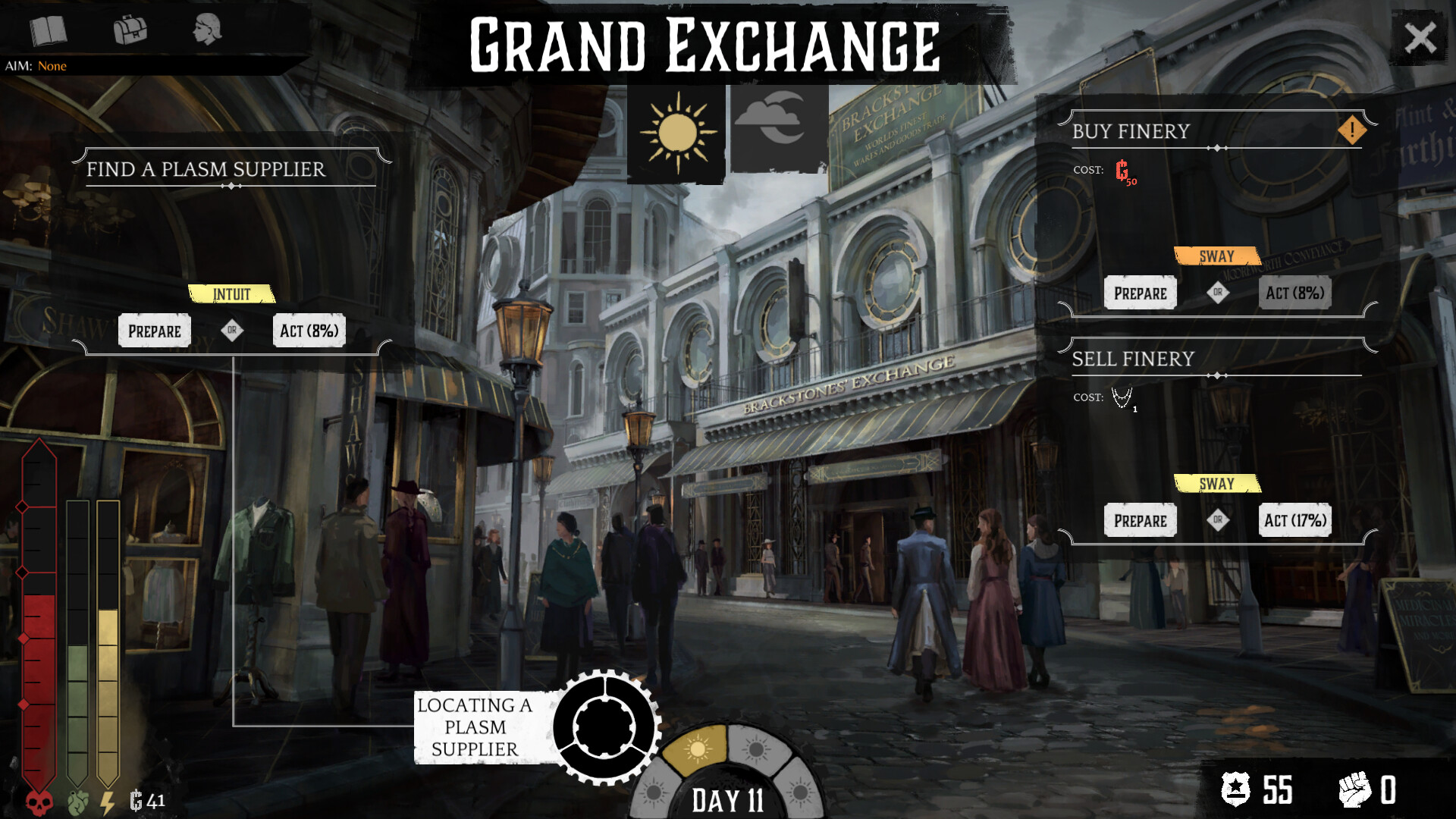
At its mechanical heart, Duskpunk plays like a tabletop session translated into a living city: most actions, from haggling for work and sneaking past gang patrols to crafting, combat, and social gambits; are resolved with dice rolls that inject genuine risk and cinematic tension into every choice.
You’ll invest in profession‑specific skills that open new approaches to problems, juggle scarce resources like rations and scrap, and manage meters for health, energy, and stress that force trade‑offs between immediate survival and long‑term plans.
The early game is deliciously precarious, failure teaches you the city’s rhythms and makes each small victory meaningful, while mid‑to‑late play often shifts toward stability as you secure steady income, reliable routines, and tools that mitigate bad rolls; even then, the dice keep a pulse of uncertainty that can turn a safe run into a desperate scramble, keeping the stakes alive without ever feeling arbitrary.
World and writing
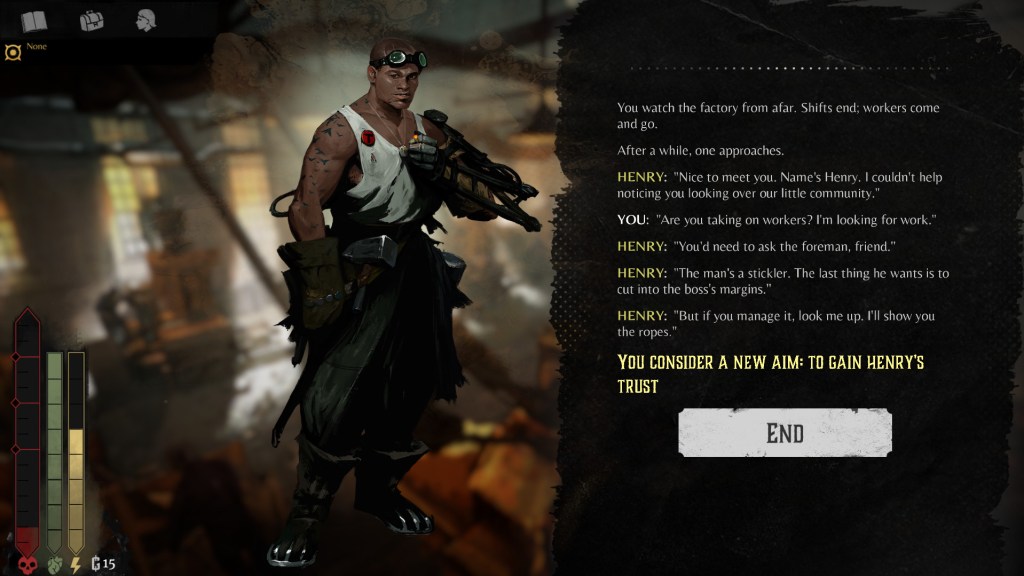
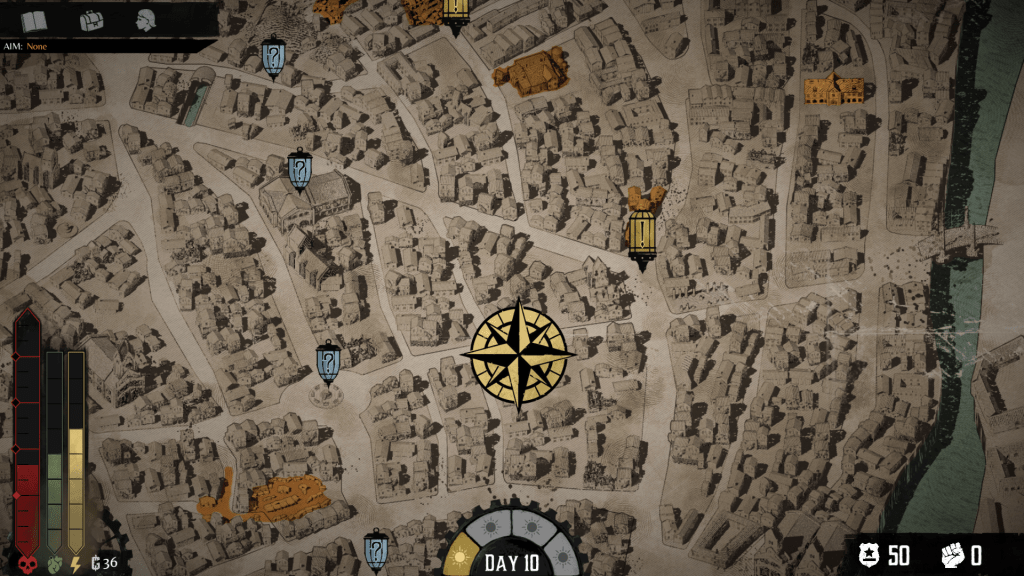
Dredgeport is the star. The city feels alive in every frame; Dickensian and industrial, all soot and steam, with oil‑painting visuals that sell both the grime and the faded grandeur of a metropolis at war with itself.
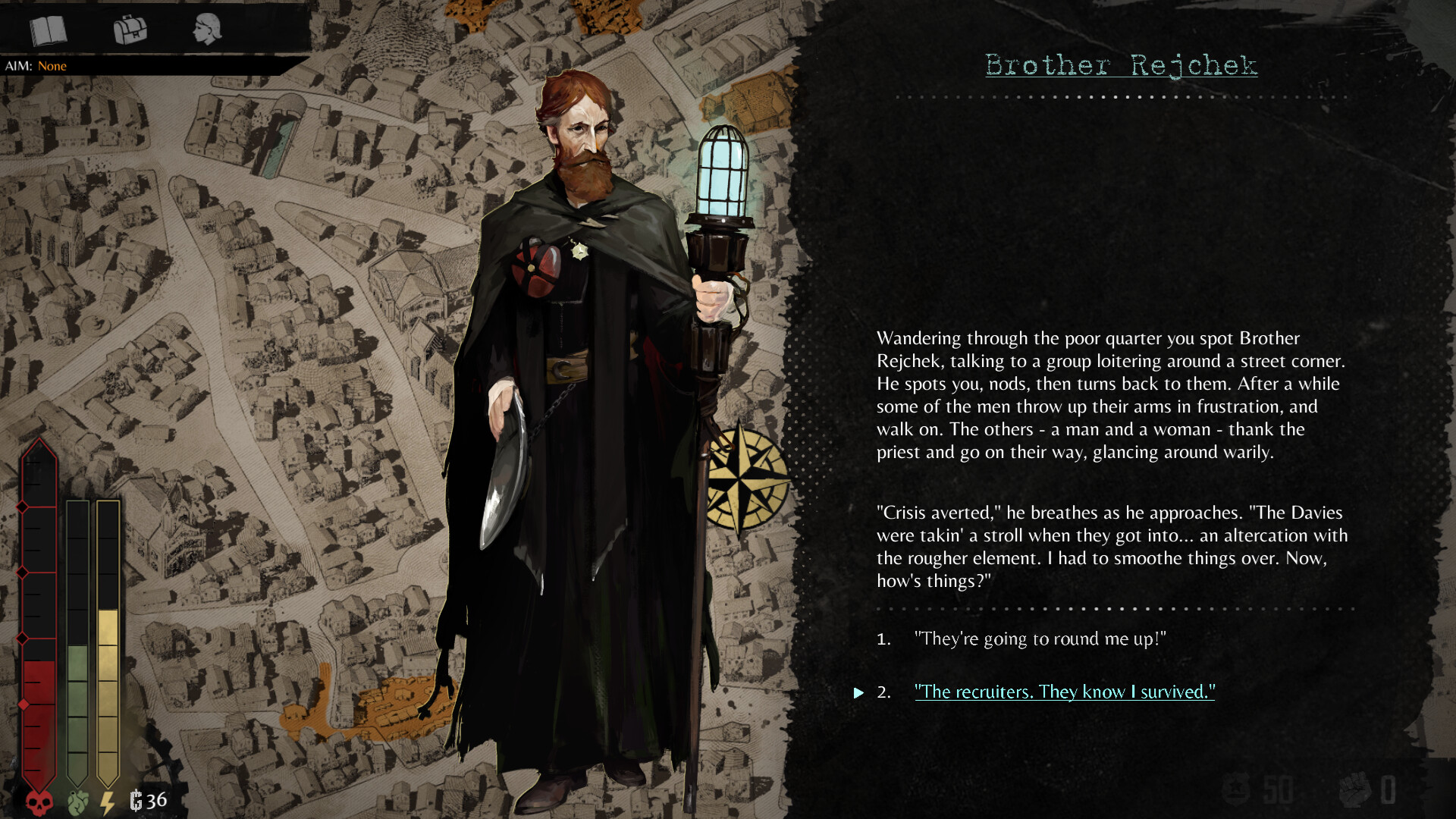
Streets, tenements, and factory interiors are packed with character: NPCs arrive fully formed, carrying rich backstories and murky motives that make conversations feel consequential rather than perfunctory.
Alliances shift like weather; a favor today can become a liability tomorrow, and choices ripple through gangs, unions, and corrupt institutions in ways that reshape opportunities and threats.
Mechanically, Duskpunk wears its tabletop roots on its sleeve; critics have likened its DNA to Citizen Sleeper; but its steampunk palette, hand‑painted art, and slightly more forgiving difficulty give it a distinct personality.
The result is a city that rewards curiosity and replay: poke at its corners and you’ll find new hooks, betrayals, and moral trade‑offs that keep each run feeling personal and unpredictable.
Strengths
• Immersive worldbuilding: Hand‑painted visuals, layered lighting, and evocative production art give Dredgeport a lived‑in personality, every district feels like a character in its own right.
• Cohesive audio and writing: A haunting score, sharp sound design, and confident prose work together to sell mood and motive; dialogue and descriptions deepen stakes without heavy exposition.
• Tactile survival systems: Health, energy, and stress meters turn routine choices into meaningful trade‑offs, making early runs tense and emotionally engaging rather than arbitrary.
• Tabletop tension made digital: Dice‑based resolution injects cinematic uncertainty into work, social, and combat actions, so success feels earned and failure teaches rather than punishes.
• Meaningful branching and replayability: Factional alliances, profession skills, and moral choices reshape opportunities and consequences, encouraging multiple playthroughs to explore alternate outcomes.
• Accessible difficulty curve: Compared with similar titles, Duskpunk eases into its systems; early scarcity feels challenging but fair, and later stability rewards planning without removing the occasional high‑stakes gamble.
Weaknesses
• Late‑game pacing and mechanical fatigue: As you settle into reliable income and routines, the game’s tension can ease into repetition; dice rolls increasingly feel like formalities, and many late‑game tasks become procedural rather than meaningful.
• Time‑skipping tedium: The systems used to advance days or trigger long‑term events can feel like busywork in later runs, turning what once felt like strategic planning into a slog.
• Diminishing rewards: Skill points, routine tasks, and some progression rewards lose impact once you’re established, reducing the incentive to experiment with alternate builds late in a playthrough.
• Balance spikes and predictability: The dice system is thrilling early on but can swing toward predictability once you’ve optimized for success, which blunts the tabletop tension the design initially promises.
• Performance on handhelds: Several players report lag and stability issues on devices like the Steam Deck after long runs, which can break immersion and make extended play sessions frustrating.
• Narrative loose ends: A handful of story threads and systems feel underexplored or resolved too quietly, which may frustrate players seeking firmer closure from their choices.
Reception and context
Critics and players alike have singled out Duskpunk’s writing, art, and emotional beats as its strongest assets; many report being genuinely moved and eager to replay to chase alternate outcomes and moral permutations. The game’s focus on worker resistance and institutional rot gives its story a timely, resonant edge, turning political stakes into personal ones through well‑written characters and consequential choices.
That resonance, however, is tempered by debate over pacing and endgame design: while some praise the steady build from precarious survival to hard‑won stability, others find the late run loses mechanical tension, making the final act feel more procedural than climactic. Overall, the emotional core and replay hooks win most players over, even if the closing chapters leave a few wanting more dynamism.
Final Verdict
If you loved Citizen Sleeper or gravitate toward narrative RPGs where choices, resource management, and dice rolls shape your fate, Duskpunk deserves a spot on your list. It rewards patience and curiosity: the city’s atmosphere, branching alliances, and tabletop‑style tension make every decision feel consequential.
This is a game for players who prefer slow‑burn drama and moral complexity over nonstop action; expect a gritty, emotionally charged journey through a city on the brink, with plenty of reasons to replay and test different loyalties and strategies.
Watch and Wishlist
• Why wishlist: Demo available on Steam and the game launched with a visible storefront presence, so wishlisting ensures you get notified about demos, patches, and sales that can change difficulty, polish, or platform availability.
• Who should watch: Fans of narrative, tabletop tension, and resource‑management RPGs; players who like Citizen Sleeper‑style choice loops, slow‑burn political drama, and replayable faction outcomes; streamers who favor story‑driven runs and moral forks will find strong moments to showcase.
• What to expect from updates: Expect stability and polish first; bug fixes, balance passes, and QoL tweaks (dialogue pacing, save/autosave improvements, and UI/inventory polish) are the likeliest early patches, with the developer signaling active post‑launch support and launch‑era messaging about fixes and improvements.
• Best times to buy: Launch windows (for discounts) and post‑patch windows. The developer offered a launch discount and early buyers can support the studio, but if you prefer a smoother experience, wait for the first major stability/balance patch or a seasonal sale to pick it up at a discount.
• Platforms to track: PC (Steam) is the primary platform now, the demo and full release are live there; keep an eye on storefront pages and press coverage for any console port announcements (PlayStation, Xbox, Switch) if you prefer handheld or living‑room play.
• How to stay informed: Wishlist on Steam, follow Clockwork Bird on social channels, and join the game’s community spaces; developer posts, hands‑on previews, and features in outlets have been the main sources of news and patch notes so far, so those channels are the best way to time a purchase or catch demos.
• Quick verdict for wishlisters: Wishlist Duskpunk to catch demos, launch discounts, and early patches; if you want the smoothest narrative run, buy after the first balance/QoL update, but don’t be afraid to jump in at launch if you want to support the solo dev and experience the city’s story firsthand.
Key Takeaways
• What it is: A dice‑driven, narrative steampunk RPG set in the decaying city of Dredgeport where survival, politics, and choice drive the story.
• Core loop: Resolve actions with tabletop‑style rolls, manage health/energy/stress, take jobs, build skills, and navigate factional alliances to survive and shape the city.
• Tone and themes: Gritty, morally grey, and politically charged; worker resistance, corruption, and personal trauma are central to the narrative.
• Standout strengths: Exceptional worldbuilding and art; cohesive writing, music, and sound design; early survival mechanics that make choices feel meaningful.
• Main weaknesses: Late‑game pacing can sag as routines stabilize; time‑skip and reward systems grow repetitive; some handheld performance issues reported.
• Replay value: High-branching alliances, profession builds, and moral forks encourage multiple runs to see different outcomes.
• Who should play: Fans of Citizen Sleeper, tabletop RPG converts, and players who prefer slow‑burn narrative tension and resource management over nonstop action.
• Buying advice: Wishlist on Steam to catch demos, patches, and sales; consider buying after early QoL/balance patches if you want the smoothest experience.
Game Information:
Developer: Clockwork Bird, James Payton
Publisher: Clockwork Bird
Platforms: PC (reviewed)
Release Date: November 17, 2025
Score: 9.0 / 10
A near‑complete narrative RPG that marries tabletop tension with rich worldbuilding and emotionally resonant writing. It’s one of those rare indie games where mechanics, art, and story amplify each other, producing a memorable, replayable experience that only stumbles in a few late‑game rhythms.
“9.0 / 10 - A near‑complete narrative RPG that turns dice and scarcity into drama; rich, replayable, and emotionally resonant, marred only by a sagging endgame and minor technical hiccups.”