Ex‑Zodiac is a brisk, lovingly crafted rail‑shooter that channels the raw speed and charm of early ’90s 3D classics while standing on its own.
You pilot Kyuu through the Sanzaru Star System, blasting Zodiac forces, threading tight corridors, and trading fire with towering, characterful bosses at each stage’s climax.
Its retro, low‑poly visuals and chunky FM‑style soundtrack nail the era’s aesthetic, but the game smartly modernizes the formula with re‑mappable controls, responsive barrel rolls, and a steady stream of inventive level designs that keep each run feeling fresh and cinematic.
Visuals and sound
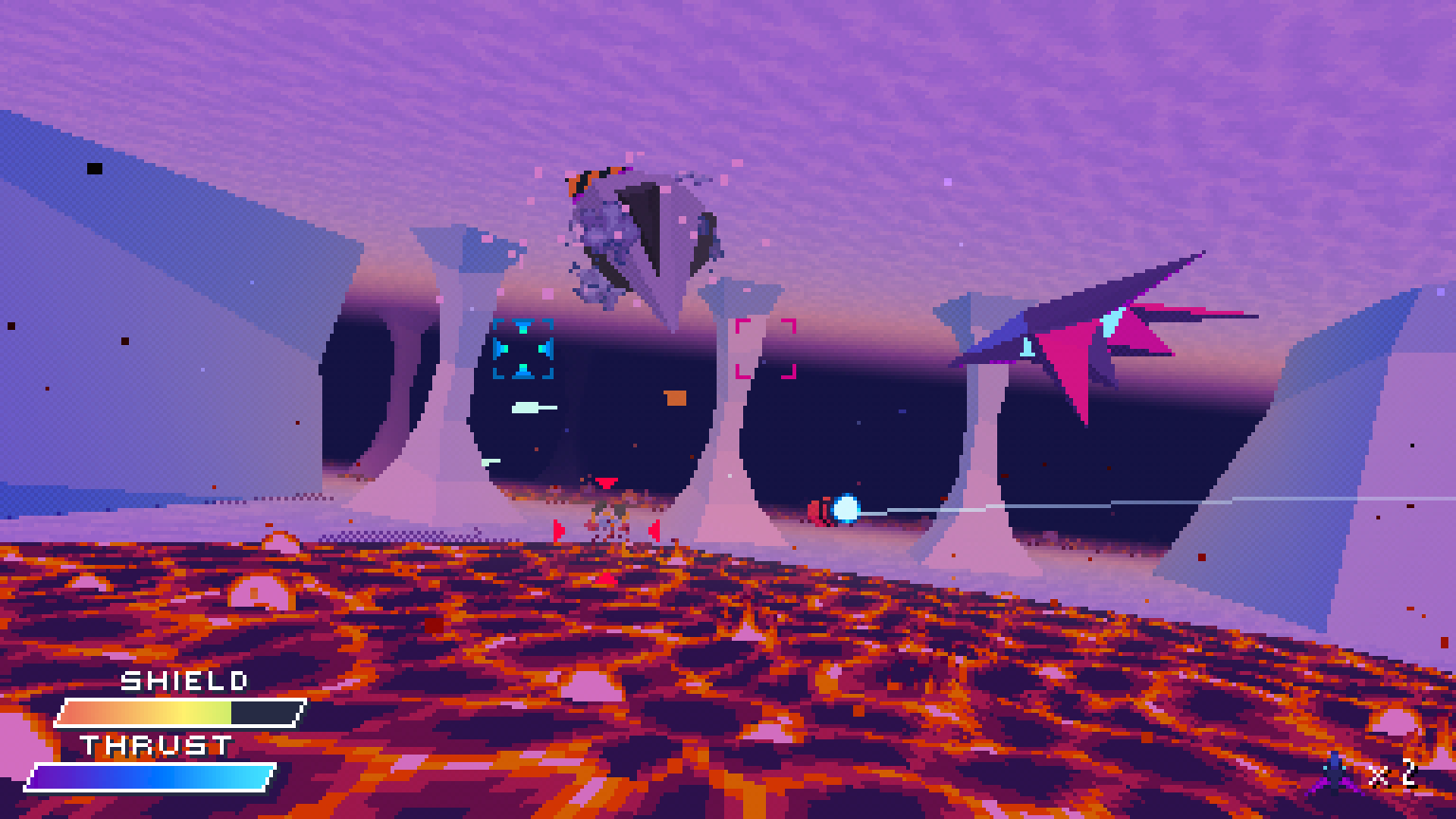
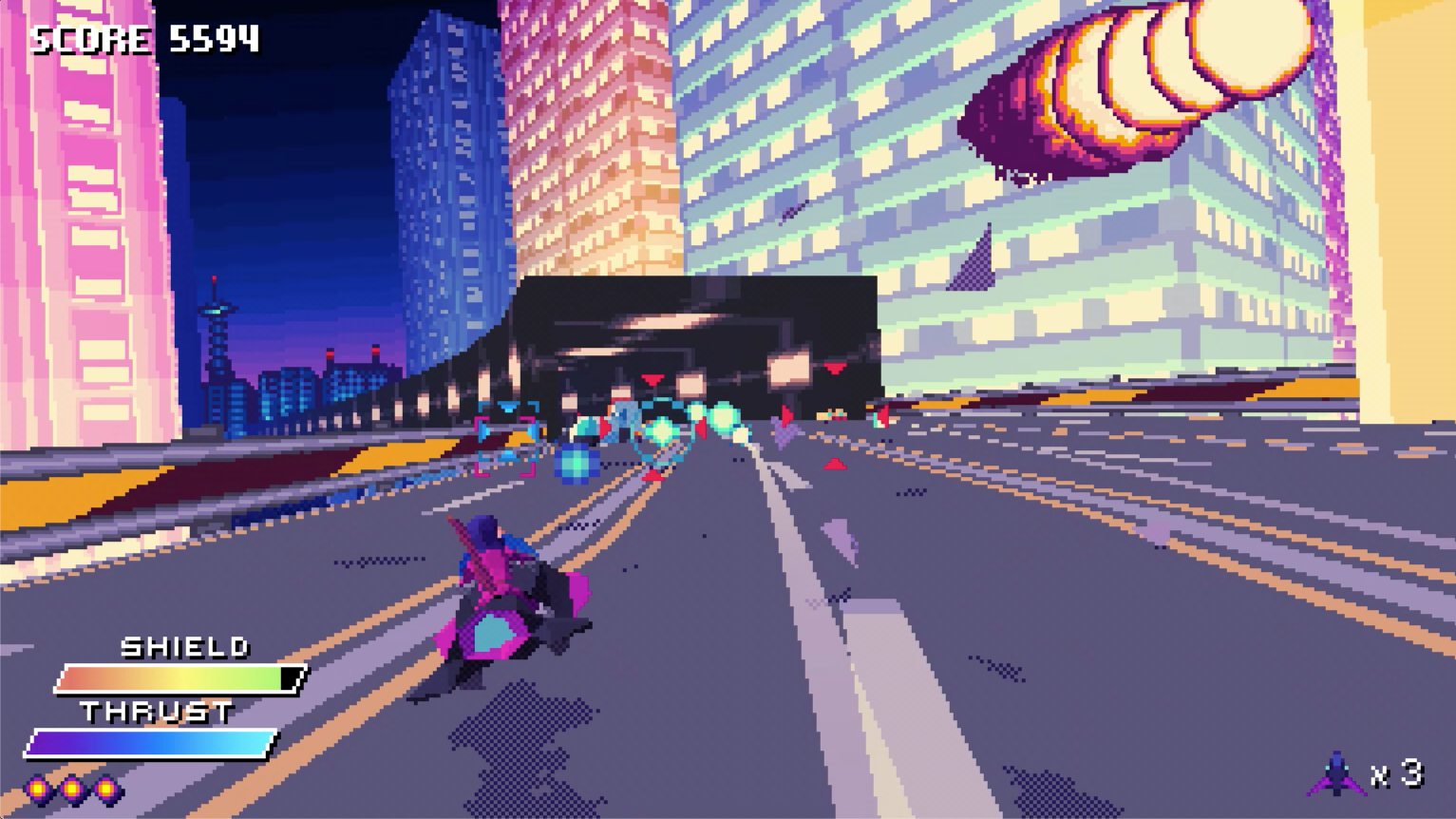
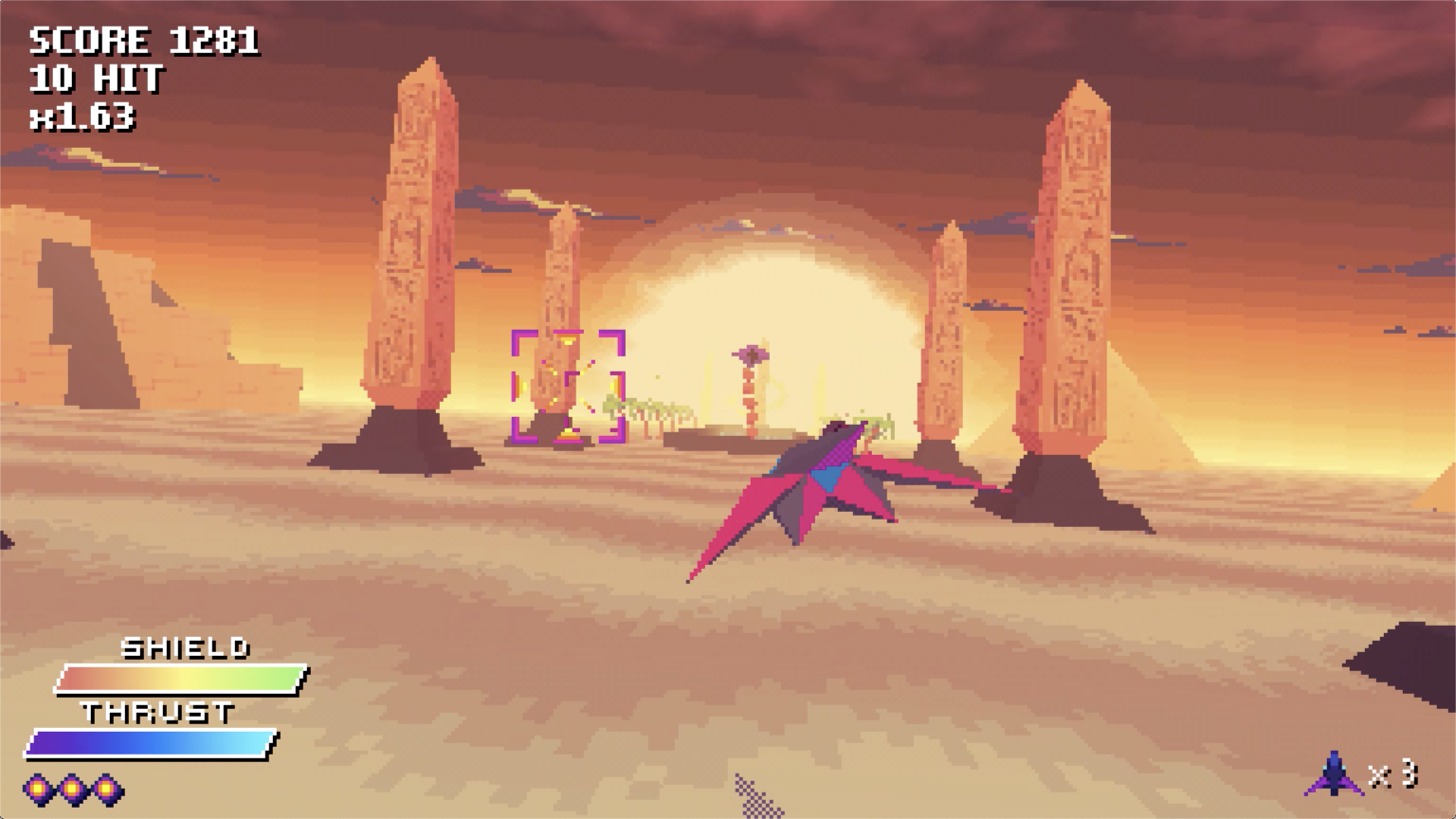
• Retro aesthetic: The game’s colourful, low‑poly look captures early 3D charm while avoiding pastiche; clean silhouettes, bold color blocking, and playful geometry make environments readable at speed. Recent levels show richer terrain detail, tighter level dressing, and stronger use of lighting and particle effects that elevate set‑pieces from nostalgic to cinematic.
• Soundtrack: +TEK’s 16‑bit‑style score fuses FM and wavetable synthesis into a propulsive soundtrack that drives momentum and punctuates boss moments. Tracks are thematically distinct per planet, with rhythmic cues that heighten tension during encounters and melodic hooks that stick after a run.
• Presentation notes: There’s a visible quality gap between early and later stages, early levels feel more utilitarian while later ones benefit from expanded assets and polish. A final content pass before full release should unify texture fidelity, UI typography, and level lighting, and consider small UX tweaks (readable mission text placement, clearer briefing screens) to make the whole package feel consistent and finished.
Gameplay and controls
• Core loop: Fast, on‑rails traversal, escalating enemy waves, environmental hazards, and a climactic boss at each level’s end. The design rewards situational awareness, smart target prioritization, and chaining destruction into high‑score combos; well‑timed destruction and path choice feel satisfying and cinematic. Small changes to enemy placement and debris density could further emphasize combo play and risk‑reward decisions.
• Controls: Best experienced with an XInput analogue controller for smooth, precise movement and aiming; keyboard and D‑pad are serviceable but lose the nuance of analogue input. Fully re‑mappable controls improve accessibility and comfort, and adding per‑axis sensitivity sliders, deadzone options, and a toggle for aim assist would help players tailor responsiveness to their hardware and playstyle.
• Maneuvers: Barrel rolls and banking exist but currently feel constrained by a reset‑to‑neutral and a perceptible lag between rolls, which breaks flow during intense encounters. Ideally rolls should be immediate, reduce turning inertia, and briefly boost lateral turning speed to enable fluid evasive maneuvers. Suggested tweaks include removing forced recentering, shortening roll cooldowns, and adding an optional “continuous roll” or input buffer so skilled players can chain evasive moves without fighting the controls.
Levels, bosses, and variety
• Level design: 11 main levels and 6 bonus levels are available now, with more planned for the full release. Each planet offers distinct visual themes and traversal challenges; tight canyon runs, open orbital vistas, and set‑piece gauntlets; so stages read clearly at speed. The wild‑west themed level stands out for clever verticality, environmental hazards that double as attack opportunities, and memorable pacing that breaks the routine.
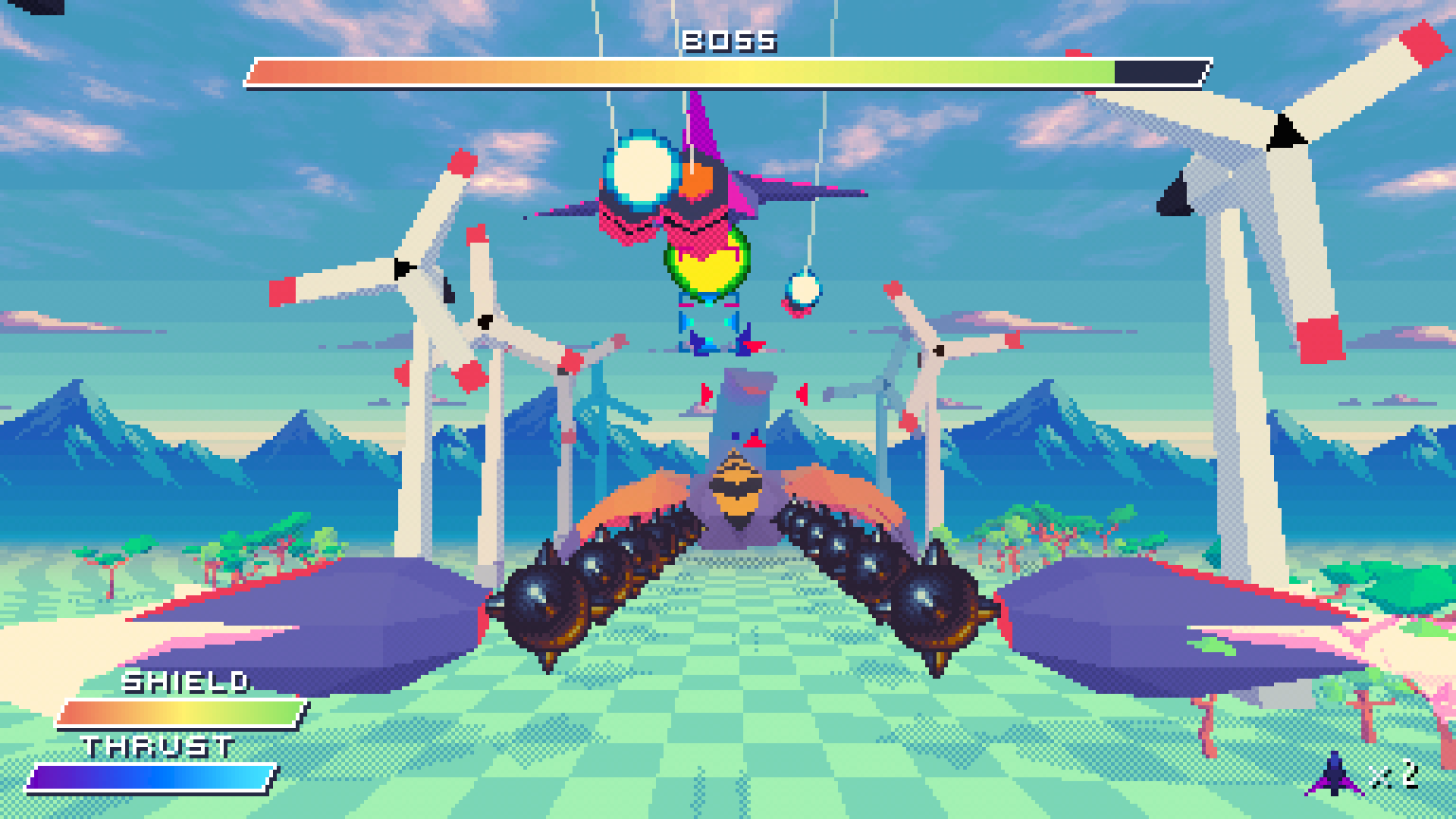
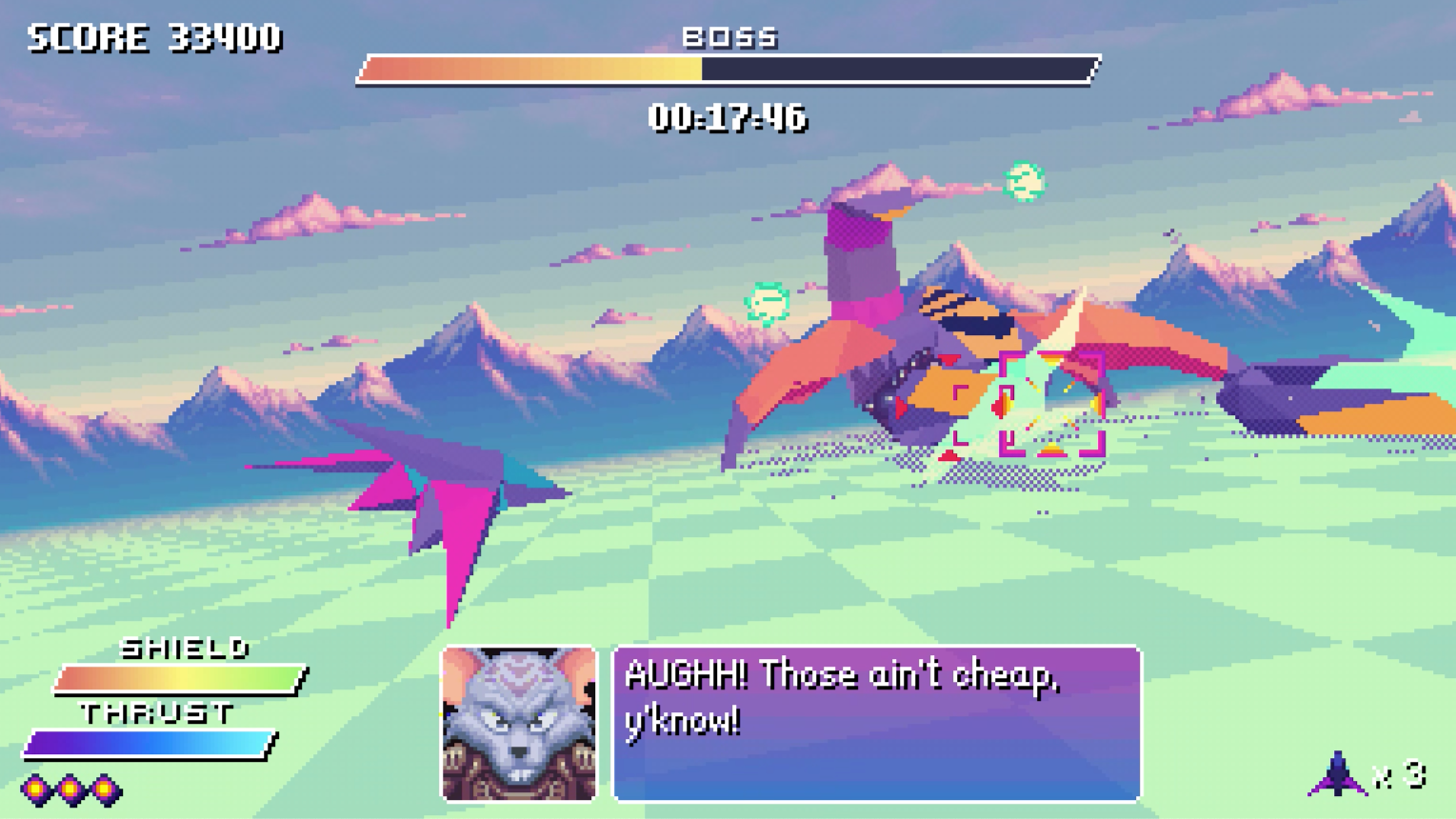
• Boss encounters: Major bosses are varied, characterful, and mechanically distinct, each piloted by a Zodiac lieutenant. Boss arenas are designed as multi‑phase set‑pieces with changing attack patterns, weak‑point windows, and environmental interactions that reward pattern recognition and precise movement. These encounters are the game’s emotional peaks and deliver the dramatic, cinematic moments rail shooters are built around.
• Replay hooks: Current scoring and objectives provide basic replay value, but there’s room to deepen incentives. Suggested additions that would meaningfully extend longevity include branching paths with divergent risk/reward routes, pre‑mission briefings that unlock optional objectives or lore, and a persistent power‑up inventory that lets players tailor loadouts between runs.
Small additions: time‑limited challenges, hidden route rewards, and combo‑focused scoring modifiers; would make mastery feel more rewarding and encourage repeated runs.
• Design polish and pacing: Later levels already show richer detail and tighter encounter pacing; bringing that same polish to early stages will improve first impressions and onboarding. Consider adding subtle visual signposting and brief pacing lulls for dialogue or mission context so story beats don’t compete with high‑intensity combat.
• Balance and variety: To keep replayability high, vary enemy density, debris placement, and combo opportunities across runs. Designing stages with explicit combo windows and destructible environmental hazards will make high scores feel earned rather than incidental, and give skilled players clear goals to chase.
Scoring, difficulty, and progression
• Ranking system: Score is primarily driven by destroying enemies and environmental debris, with final rank calculated from total score plus three objectives (enemies destroyed, damage taken, boss time). In practice the enemy quota and damage taken dominate outcomes, and the combo mechanic feels under‑leveraged by stage design.
• Difficulty: Player reports are split, some find the game punishing, others breezy. In the current build death is rare and S‑ranks are achievable on most stages, which reduces the incentive to chase mastery.
• Progression: Unlockables and bonus content exist, but pacing and reward structure could better encourage repeated runs and long‑term mastery.
What needs work
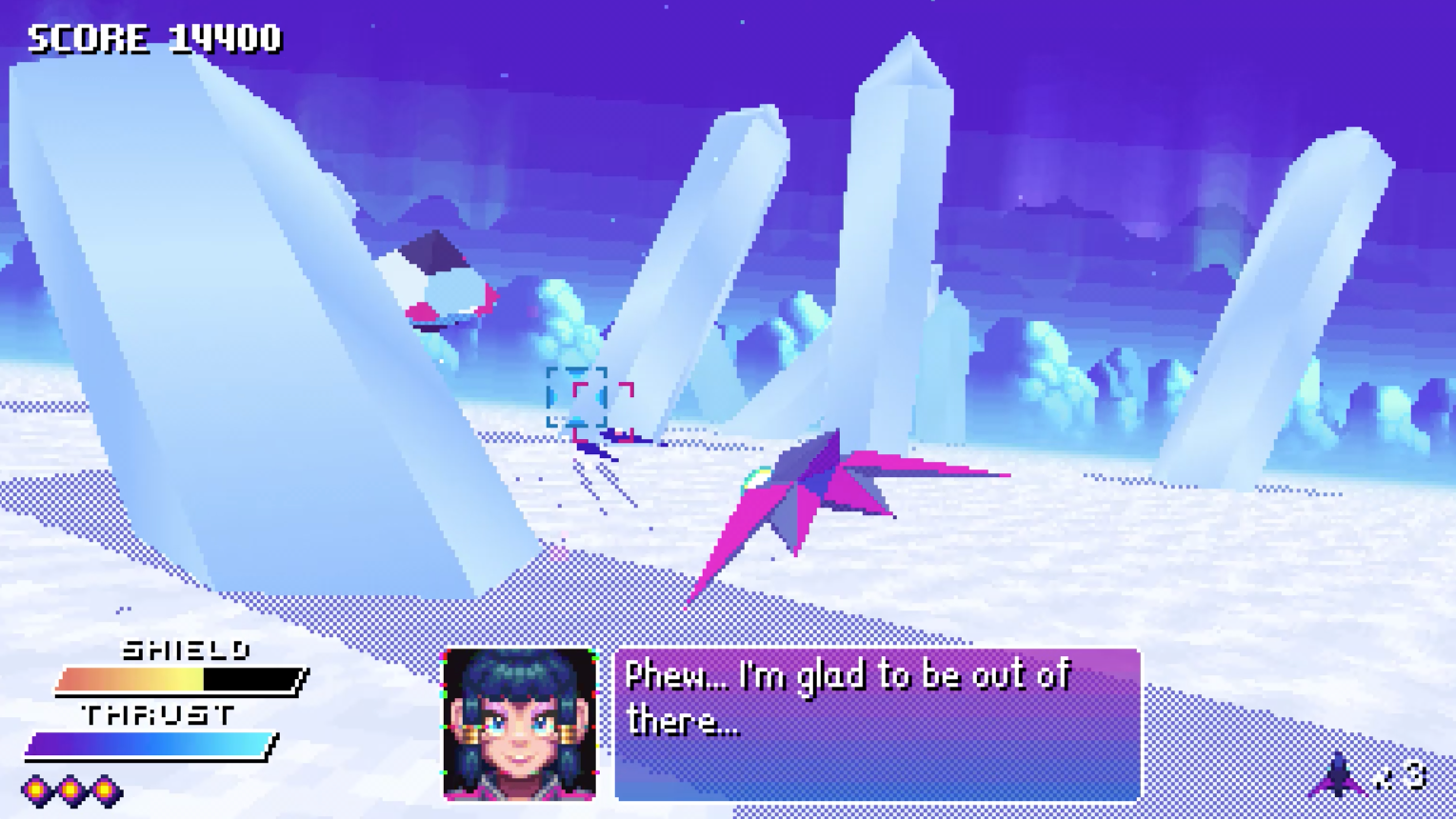
• Dialogue timing and delivery: In‑combat text dumps compete with on‑screen threats and are unreadable during hectic moments.
• Control feel and responsiveness: Barrel rolls and targeting feel constrained by forced recentering and a perceptible roll cooldown, which breaks flow.
• Scoring clarity and motivation: Massive, abstract score totals and an underused combo system make progression feel nebulous and reduce replay incentive.
• Early level polish and onboarding: A visible quality gap between early and later stages weakens first impressions and onboarding.
Who will love it
• Nostalgia seekers: Players who grew up on SNES/early 3D rail shooters will appreciate the aesthetic and pacing.
• Boss‑fight fans: If you live for dramatic set‑pieces and memorable boss patterns, Ex‑Zodiac delivers.
• Casual co‑op and arcade players: Short, punchy levels make it great for quick sessions and shared high‑score runs.
Final Verdict
Ex‑Zodiac is a confident, lovingly made rail shooter that wears its influences proudly while carving out its own personality. Distinct, characterful boss fights, a propulsive +TEK soundtrack, and a vibrant low‑poly aesthetic deliver consistently thrilling set‑pieces and a strong sense of momentum. Those strengths carry the game through its early‑access rough edges and make each level feel like a crafted arcade moment.
Tightening a few systems would elevate the experience from very good to essential. Move dialogue out of peak combat, or provide brief mission briefings and an in‑game log so story beats don’t compete with threats.
Sharpen control responsiveness by removing forced recentering and reducing barrel‑roll lag, and expose sensitivity/deadzone options so players can tune handling.
Make scoring and combos more transparent and rewarding with visible combo meters, point popups, and stage design that creates deliberate combo windows and risk/reward routes.
With those adjustments, Ex‑Zodiac has the bones of a modern classic: nostalgic in spirit, fresh in execution, and genuinely fun to play. Right now it’s a very good early‑access title worth watching closely, and for nostalgia‑minded players who love dramatic boss encounters and arcade scoring, it’s already worth jumping into.
Watch and Wishlist
• Why wishlist: Handcrafted, high‑impact boss set‑pieces, a distinctive retro aesthetic, and active early‑access development mean updates (new levels, difficulty tuning, QoL fixes) materially change the experience; wishlisting ensures you get notified about demos, patches, and sales.
• Who should watch: Fans of fast, precision rail‑shooters and SNES/N64 nostalgia; players who love dramatic boss encounters and arcade scoring; streamers who want cinematic set‑pieces and punchy, shareable moments.
• What to expect from updates: Control and responsiveness tuning (barrel‑roll behavior, targeting options), dialogue and UI QoL (briefings, logs, readable mission text), scoring/combo clarity, new levels/bosses, and occasional seasonal or bonus content drops.
• Best times to buy: Post‑patch windows and major sales when control tweaks and QoL fixes land; consider buying at full release for the most polished experience, or earlier if you want to support the devs and play evolving builds.
• Platforms to track: PC (Steam demo and full release) now; keep an eye out for future console ports (PlayStation, Xbox, Switch) and platform announcements.
• How to stay informed: Wishlist on Steam, follow Pixeljam and Ben Hickling on social channels, subscribe to the game’s Discord and devstreams, and watch patch notes and demo drops to time your purchase.
• Quick verdict for wishlisters: Wishlist Ex‑Zodiac to catch demos, balance patches, and new levels; buy after a major balance/control update if you want the smoothest experience, or jump in early if you’re driven by nostalgia and want to help shape the final release.
Key Takeaways
• What it is: A fast, on‑rails shooter that channels early ’90s 3D classics with a modern polish, pilot Kyuu through themed planets, clear waves, and face multi‑phase Zodiac bosses.
• Core appeal: Cinematic boss set‑pieces, tight arcade pacing, and a propulsive 16‑bit‑style soundtrack make each run feel like a short, intense arcade session.
• Visuals and audio: Colourful low‑poly art and +TEK’s FM/wavetable score nail the retro vibe while later levels show stronger terrain detail and lighting.
• Controls and feel: Best with an analogue XInput controller; barrel rolls and targeting work but need snappier responsiveness and an option to disable automatic recentering.
• Level and boss design: 11 main levels and 6 bonus stages now, with more planned; bosses are varied and memorable and serve as the game’s dramatic high points.
• Scoring and replayability: Score is driven by enemy and debris destruction plus three objectives; combo mechanics and scoring feedback need clearer emphasis to make mastery compelling.
• Progression and pacing: Unlockables and bonus content exist, but progression pacing and short‑term incentives could be tightened to encourage repeat runs.
• Current rough edges: In‑combat dialogue interrupts play, early levels lag behind later polish, and some control behaviors (roll lag, recentering) break flow.
• Who should play: Nostalgia seekers, fans of Star Fox–style rail shooters, and players who enjoy dramatic boss fights and arcade scoring.
• Buying advice: Wishlist and try the demo on Steam; buy after control and QoL patches for the smoothest experience, or jump in early if you want to support development and enjoy evolving builds.
Game Information:
Developer: MNKY
Publisher: Pixeljam
Platforms: PC (reviewed)
Release Date: July 21, 2022
Score: 7.0 / 10
A solid, nostalgia‑driven rail shooter with memorable boss encounters and a great soundtrack, held back by control quirks, pacing inconsistencies, and systems that need clearer feedback to reward mastery.
“7.0 / 10 - A solid, nostalgia‑driven rail shooter with standout bosses and style; fun now, but control and scoring rough edges hold it back from greatness.”