Sanatorium: The Impostor’s Diagnosis - Forge a diploma, hide the truth, and choose who lives. (Game Review)
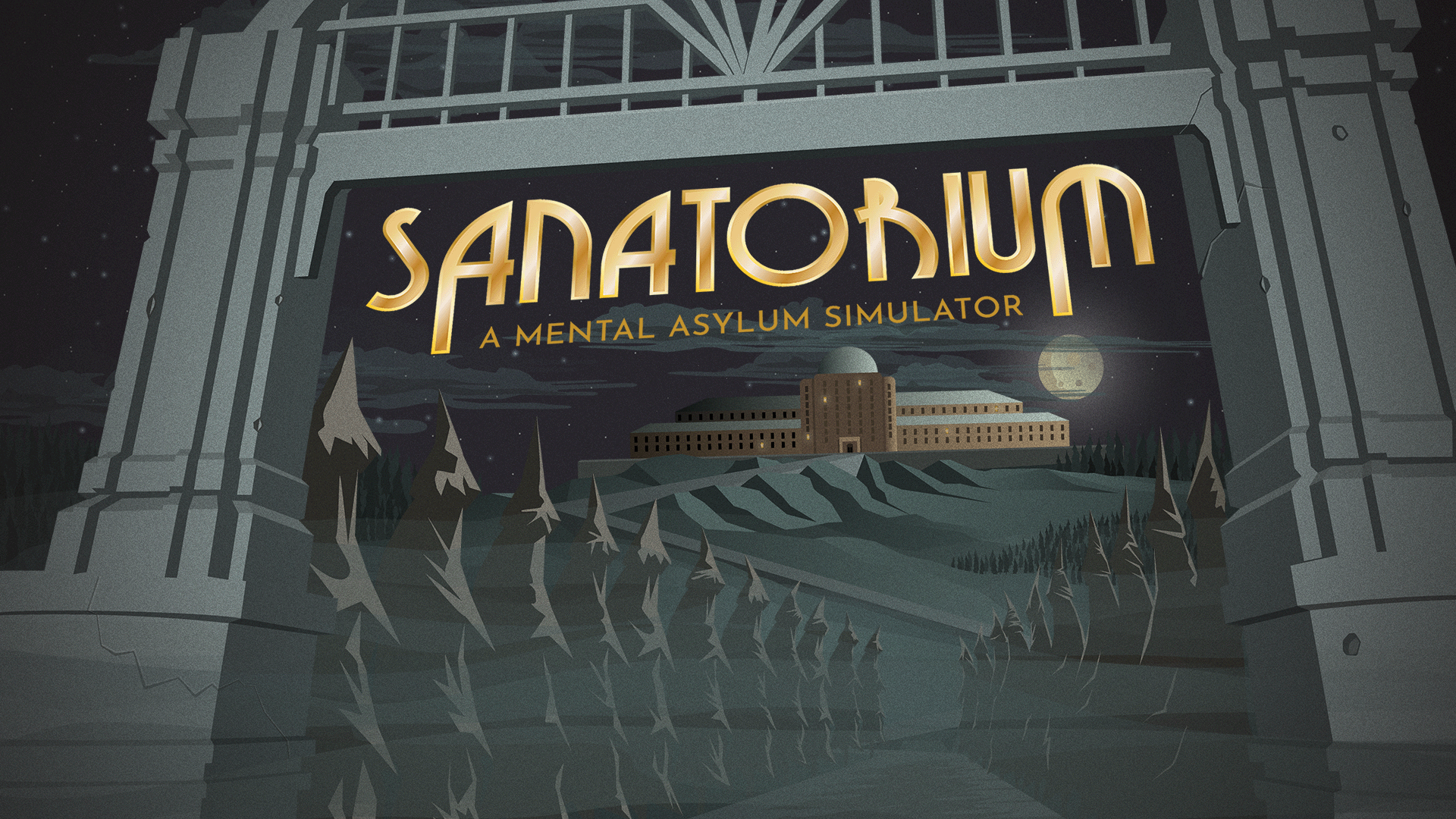
Sanatorium - A Mental Asylum Simulator is a daring, morally fraught card‑driven workplace sim that masterfully evokes the Roaring Twenties and the oppressive atmosphere of institutional care; its narrative tension and ethical dilemmas are compelling, but the deliberately restrictive core loop; forcing blind preselection of tests and treatments; often feels punitive rather than illuminating, and the experience is occasionally undermined by technical and UI rough edges.
About the Game
Sanatorium - A Mental Asylum Simulator puts you in the shoes of a debt‑ridden journalist who forges a medical diploma to infiltrate Castle Woods in 1923, posing as a doctor to diagnose patients and win your aunt’s freedom while desperately concealing your impostor status.
The game marries a card‑driven diagnosis system with daily planning and branching narrative across a four‑chapter campaign, forcing you to pick tests and treatments from layered decks before you meet each patient and live with the consequences.
That design creates constant moral tension: follow the era’s harsh, archaic methods to protect your cover and the institution’s interests, or risk experimental and humane approaches that could expose you but save lives.
Born from an academic thesis on professional mimicry and decision‑making, the concept is tightly woven into the mechanics, uncertainty, limited information, and the pressure to perform are not just story beats but the core gameplay, producing difficult tradeoffs and meaningful branching outcomes.
What works
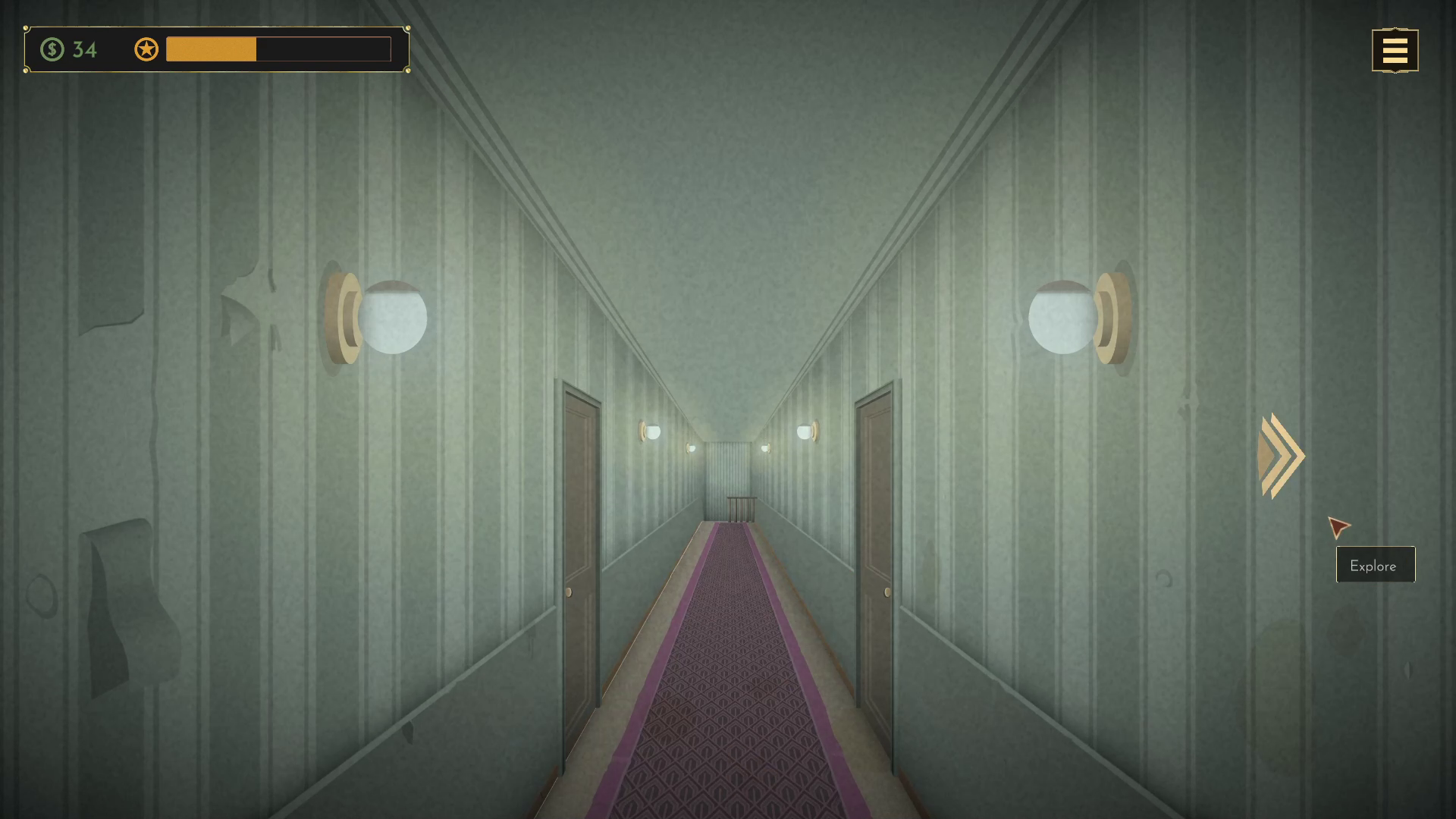
Sanatorium - A Mental Asylum Simulator shines most brightly in tone and concept. Its Art Deco flourishes and period details, gleaming geometric trim set against peeling paint and dim corridors; create a striking visual contrast between 1920s glamour and institutional decay, giving the sanatorium a personality all its own.
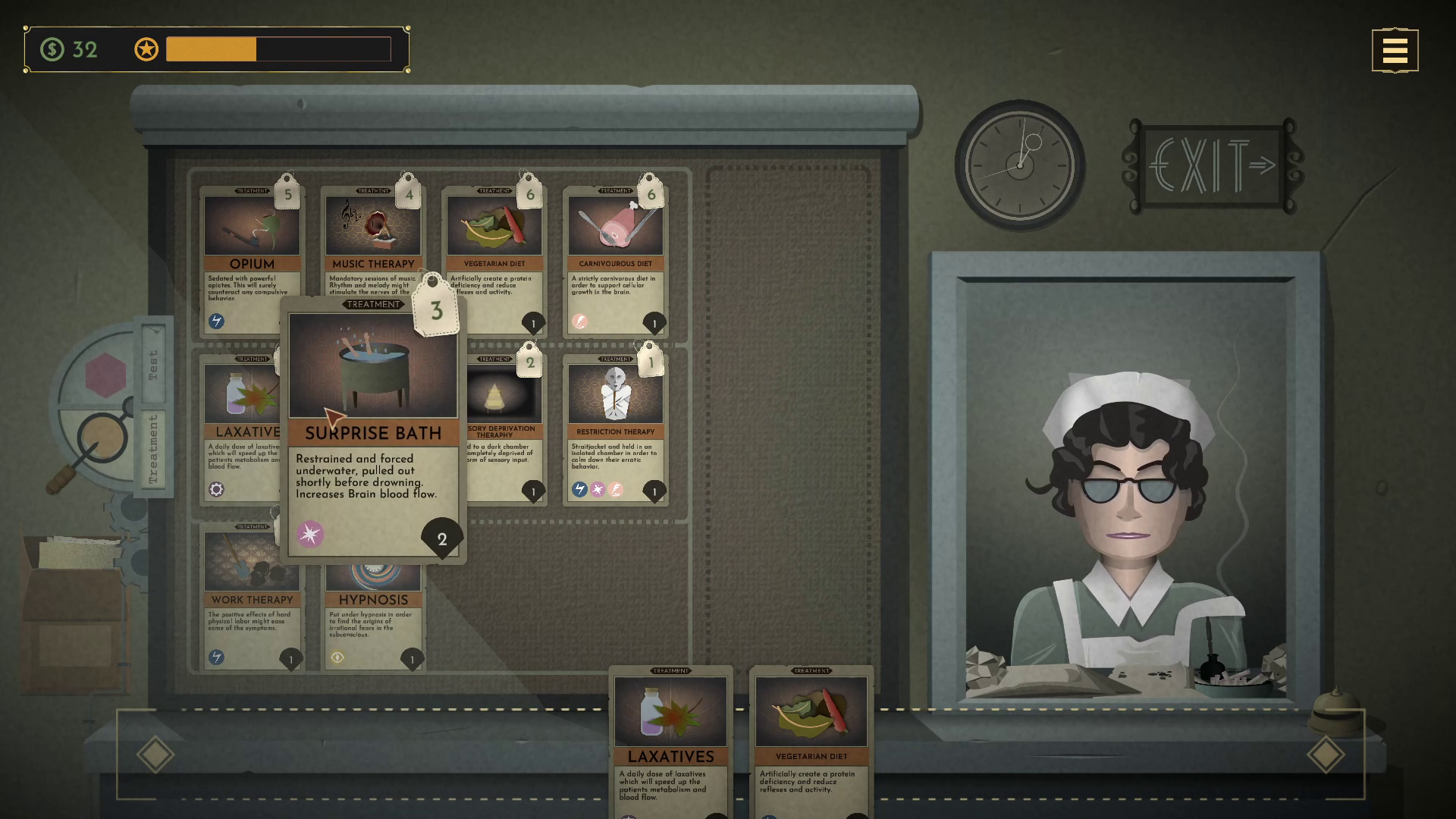
The card system is elegantly designed: symptoms, tests, and treatments unfold as layered decks, and the upgrade paths let you steer toward gentler, more humane care or double down on methods that preserve your cover.
Those mechanical choices carry real narrative weight, turning each patient into a compact moral puzzle where ethics, risk, and survival collide. Critics have praised the game’s ambition and the way its systems force uncomfortable tradeoffs, making every decision feel consequential.
What frustrates
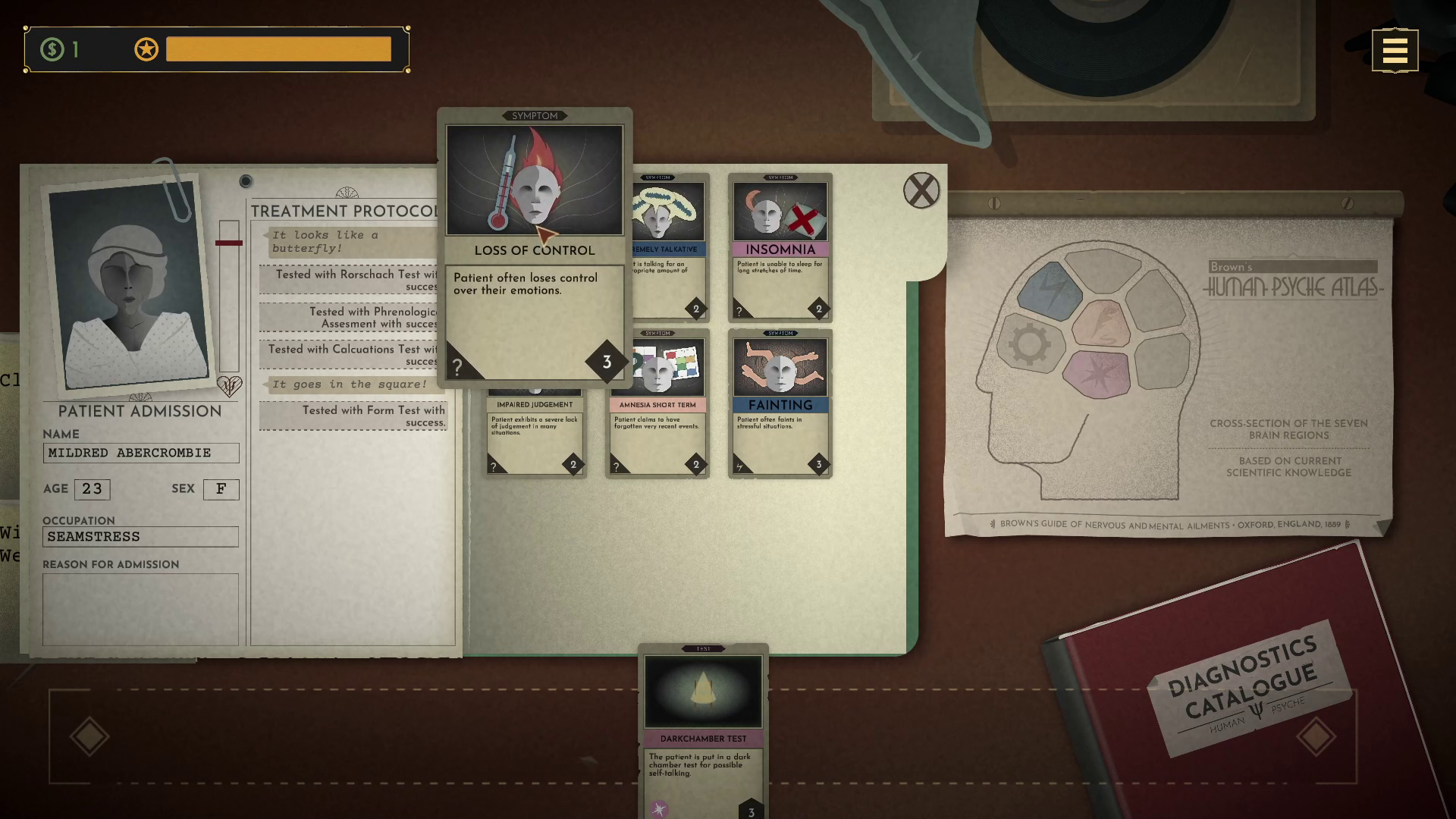
The game’s signature mechanic is also its most divisive: you must commit to tests and treatments at the start of each day without access to full patient files, guided only by a vague estimator.
For many players this feels less like a clever simulation of professional uncertainty and more like an arbitrary constraint, diagnosis becomes a memory‑style gamble rather than a process of reasoned inference.
The design does intentionally model mimicry, limited information, and the pressure to perform, but in practice it can undercut player agency and frustrate those who expect choices to reward insight rather than blind risk.
Technical and polish notes
Zeitglas is a very small studio, and that scale shows in the game’s polish: multiple outlets and players have reported technical hiccups; bugs, unclear UI elements, and occasional performance stutters; though the underlying systems and core loop remain functional and compelling.
Steam sentiment is mixed, with many praising the concept, writing, and atmosphere while others express frustration at execution and stability; the community is hopeful that post‑launch patches and quality‑of‑life updates will smooth the rough edges.
Final Verdict
Sanatorium - A Mental Asylum Simulator is a provocative, original sim that rewards players who relish moral ambiguity, tight card systems, and a richly realized period atmosphere.
Its core strengths are conceptual: the game forces ethically fraught decisions, turns each patient into a compact moral puzzle, and uses its 1920s setting to amplify tension and narrative weight.
That said, the experience is built around a deliberately constrained loop, blind preselection of tests and treatments, that will feel thrillingly tense to some and arbitrarily punitive to others.
If you welcome uncomfortable choices and systemic uncertainty, this is a rare, thought‑provoking title worth exploring; if you expect transparent, player‑led diagnosis or a highly polished, bug‑free release from a larger studio, consider waiting for post‑launch patches and quality‑of‑life updates.
Watch and Wishlist
• Why wishlist: The game’s short, tightly authored campaign and small‑studio launch mean quality‑of‑life fixes, readability patches, and stability hotfixes will noticeably improve the experience; wishlisting ensures you get demo drops, patch alerts, and sale notifications so you can buy at the right moment.
• Platforms to track: The game launched on Steam with support for Windows, macOS, and Steam Deck, track the Steam page for demos and platform notes, and watch the developer for any console port announcements.
• How to stay informed: Wishlist on Steam, follow Zeitglas and publisher Shoreline Games on social channels, join the official Discord, and tune into devstreams and patch notes so you catch demos, hotfixes, and community Q&A.
Key Takeaways
• What it is: Sanatorium - A Mental Asylum Simulator is a card‑driven workplace sim set in 1923 that casts you as an impostor doctor infiltrating Castle Woods to diagnose patients and free a relative.
• Core loop: Plan each day by selecting tests and treatments from layered card decks before meeting patients; outcomes depend on limited information, risk management, and upgrade choices.
• Tone and setting: Exceptional period atmosphere; Art Deco flourishes, Roaring Twenties contrasts, and oppressive institutional interiors; give the game a distinctive, morally charged identity.
• Design intent: Mechanics intentionally model professional mimicry, uncertainty, and ethical tradeoffs; choices between archaic, cover‑preserving methods and humane, risky treatments drive narrative branching.
• Biggest friction: The blind preselection mechanic (choosing tests/treatments without full patient files) divides players; some find it tense and thematically apt, others see it as an arbitrary, memory‑style constraint that undermines agency.
• Technical state: Small‑studio polish shows through in writing and concept, but reviewers and players report UI clarity issues, occasional bugs, and performance quirks; post‑launch patches could materially improve the experience.
• Replay and stakes: Four chapters, branching paths, and multiple endings give replay value; decisions shape both patient fates and your own exposure as an impostor.
• Who should play: Recommended for players who enjoy moral ambiguity, compact narrative sims, and card‑based systems; less suited to those who want transparent, deduction‑driven diagnosis or a highly polished AAA release.
Game Information:
Developer: Zeitglas
Publisher: Shoreline Games
Platforms: PC (reviewed)
Release Date: November 6, 2025
Score: 6.5 / 10
An original, thematically bold indie that nails atmosphere and moral tension but is held back by a deliberately restrictive core loop and a handful of polish and UI issues.
“6.5 / 10 - An ambitious, thematically daring indie that nails atmosphere and moral tension but is held back by a punitive core mechanic and rough polish.”