Toree Saturn - High‑velocity 3D platforming: bite‑sized runs, addictive rhythm, and a soundtrack that keeps you moving. (Game Review)
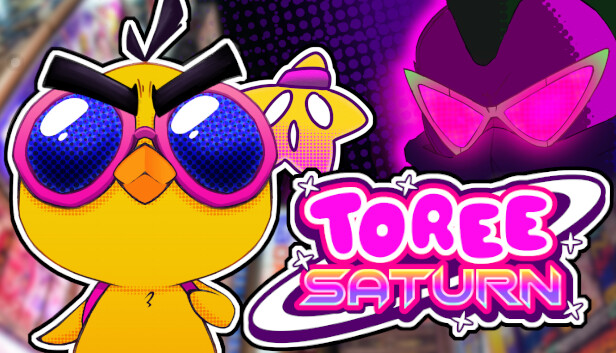
Toree Saturn is a compact, turbocharged 3D platformer that hones the series’ speed‑run DNA into a gleaming, retro‑forward gem. Movement feels razor‑sharp: every jump, dash, and homing boost snaps together into a satisfying rhythm, while level layouts are designed for flow, with clear sightlines and risk‑reward shortcuts that invite experimentation.
Backed by an irresistible late‑90s/Y2K soundtrack and bold, nostalgic visuals, short runs become addictive loops of practice and improvement. The game’s brevity is deliberate: it’s built around mastery and replay, rewarding players who chase cleaner lines and faster times rather than sprawling, unfocused content.
What stands out
• Pure momentum design: Levels are engineered for uninterrupted flow; platforms, boosts, and homing stars are placed to encourage chaining moves so runs feel like a single, accelerating rhythm rather than a series of stops.
• Accessible controls: The simplified input scheme (no run button) makes the game instantly approachable, while the ground‑dash and homing star introduce high‑skill options that reward timing and precision.
• Retro‑forward presentation: A late‑90s/early‑Y2K aesthetic, bold color palettes, and a punchy soundtrack give the game personality and nostalgia, while clean geometry and readable visuals keep fast play crystal clear.
• Short, replayable runs: Compact stages are designed for iteration; leaderboards, rankings, and optional collectibles turn each level into a solvable puzzle, encouraging repeated attempts to shave off seconds and discover cleaner routes.
Core mechanics
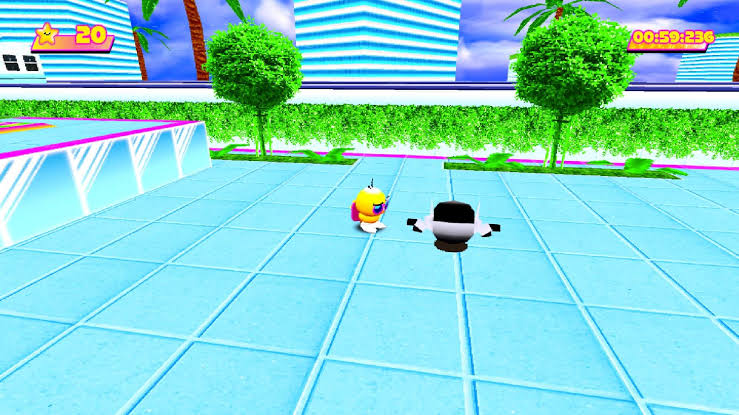
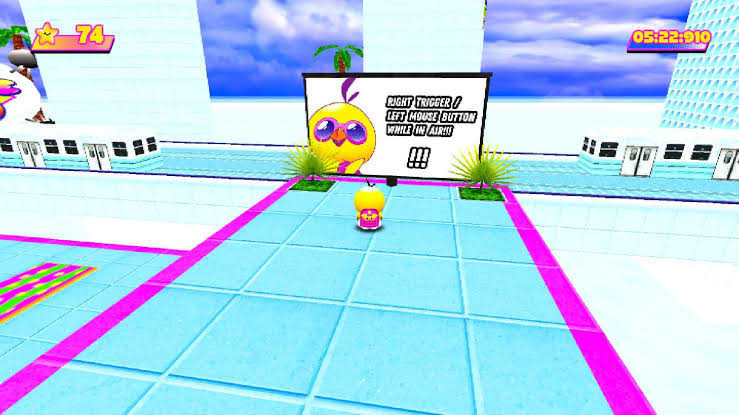
• Movement toolkit: Double jump, homing on special stars, and a mid‑air ground‑dash that accelerates descent and grants a landing speed boost form a compact, expressive toolkit. These moves are intuitive to pick up but chain together in surprising ways, timed ground‑dashes into boost pads or homing stars into midair redirects let skilled players carve entirely new routes.
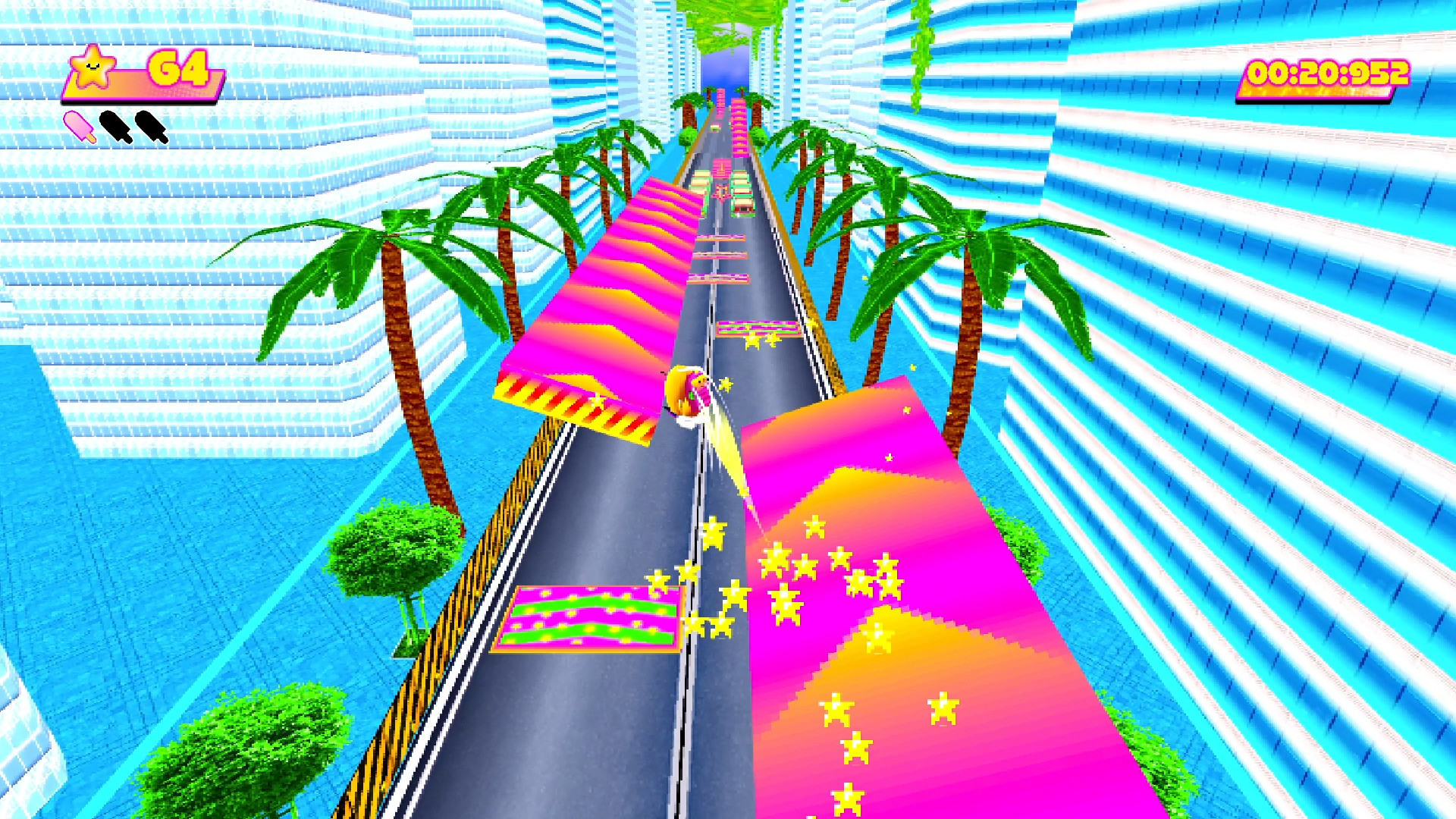
• Level flow: Linear stages are designed around forward momentum, with clear visual cues and platform geometry that guide you at speed. Collectible placement and boost timing teach optimal lines organically, so each run becomes a lesson in smoothing rough segments and linking actions into a single flowing run.
• Risk versus reward: Optional stars, secret paths, and tucked‑away shortcuts offer tangible time and score advantages for players who stray from the safe line. Choosing the risky route is a deliberate decision, one that can shave seconds off your time or unlock higher ranks, but also demands precision and confidence with the movement toolkit.
Level design and pacing
• Sonic‑style routing: Stages are built for uninterrupted momentum; platform placement, enemy timing, and boost pickups are tuned so runs feel like a single, accelerating line. Designers reward rhythm: the optimal route emerges naturally as you learn to link jumps, dashes, and homing stars into one flowing sequence.
• Readable hazards: Enemies and obstacles use clear silhouettes, contrasting colors, and simple geometry so threats are instantly identifiable at speed. That visual clarity lets you make split‑second decisions, commit to a risky shortcut or pull back to a safer line, without being tripped up by clutter.
• Short bursts, fast iteration: Levels are compact by design, letting you practice specific segments repeatedly and refine routes without long downtime. The result is a tight feedback loop: try, fail, adjust, and shave off seconds in focused bursts that keep progression feeling immediate and rewarding.
Presentation and audio
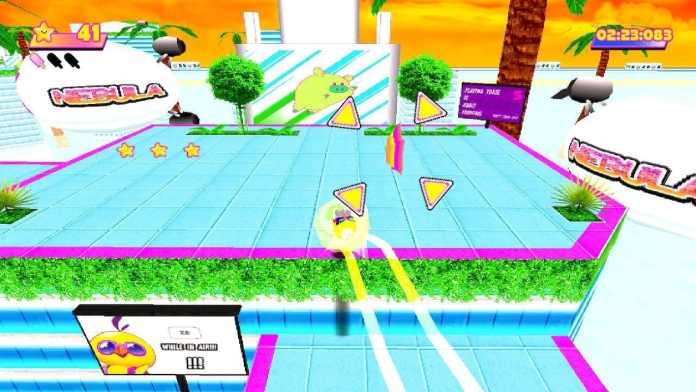
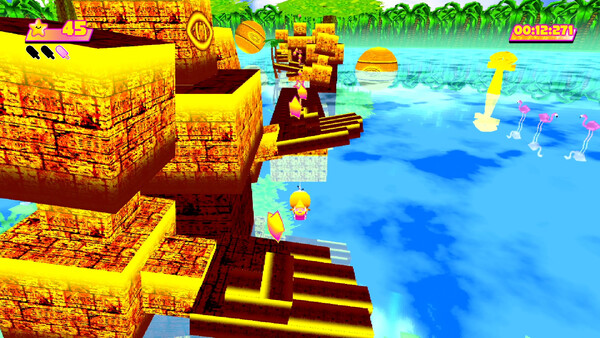
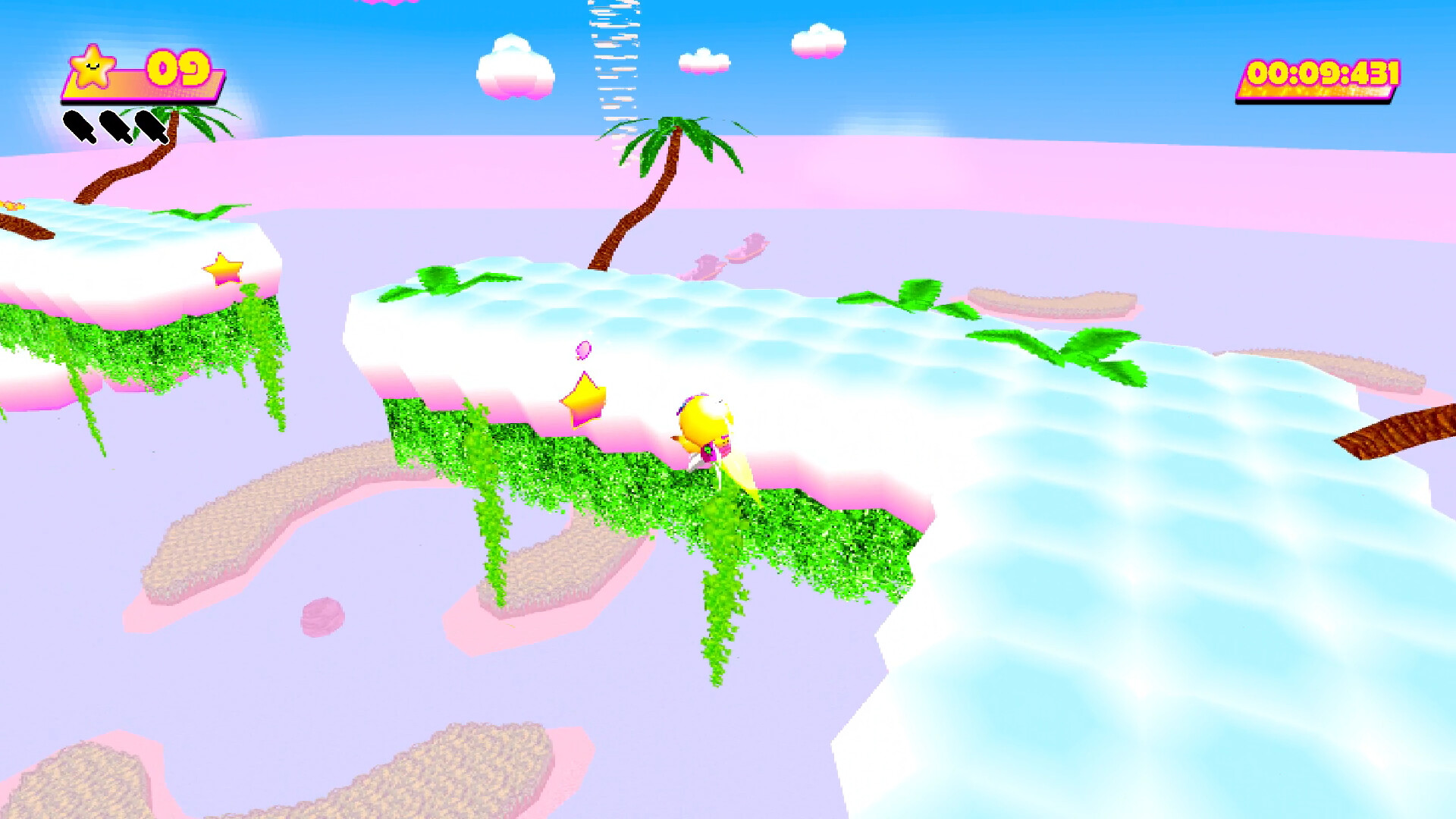
• Art direction: A deliberate retro look channels early 3D charm while prioritizing modern readability; bright palettes, bold silhouettes, and stylized geometry make obstacles and routes instantly legible at speed and let the action pop with personality. Environmental details and playful VFX add warmth without cluttering sightlines.
• Soundtrack: Late‑90s and early‑Y2K inspired tracks drive momentum; upbeat, hook‑driven tunes and dynamic audio cues accentuate boosts, landings, and clutch moments so runs feel rhythmically satisfying and triumphant. Mixing emphasizes clarity at high tempo, keeping music energetic without drowning gameplay sounds.
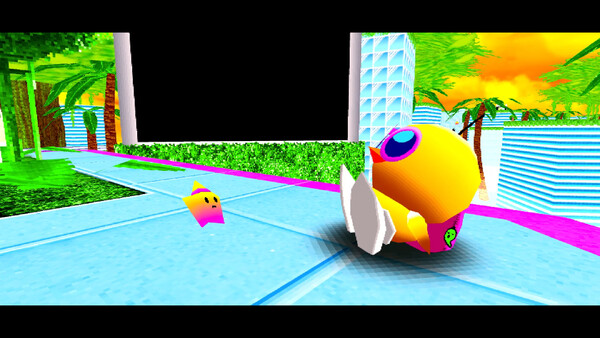
• Character charm: Toree’s round design, sunglasses, and backpack give the protagonist instant identity, expressive animations and cute cutscenes sell the game’s playful tone and make every short run feel like a tiny, stylish adventure.
Progression and replayability
• Short campaign, long mastery: The main story is intentionally compact, designed as a concentrated sprint rather than a marathon. Leaderboards, rank tiers, and time‑attack goals turn each level into an open‑ended challenge, finish once to learn the route, then replay to refine lines, shave seconds, and chase perfect runs.
• New moves deepen play: The ground‑dash and homing star aren’t just flashy additions; they unlock new routing possibilities and emergent techniques. Use the ground‑dash to chain faster landings into boost pads, or homing stars to reorient midair and access tucked shortcuts, small inputs that yield big time savings for skilled players.
• Extras and secrets: Beyond the core path, bonus stages, hidden stars, and tucked‑away collectibles reward curiosity. These extras provide alternate challenges, unique routes, and cosmetic or score incentives that extend play for completionists and explorers.
• Meaningful replay loops: Between leaderboards, optional objectives, and movement tech to master, progression favors skill growth over grind. Each replay feels purposeful: you’re not just replaying levels, you’re discovering cleaner solutions and new ways to express speed.
Strengths
• Razor‑sharp movement: Controls feel precise and responsive; every jump, ground‑dash, and homing boost connects predictably, letting players string actions together with confidence.
• Addictive short‑form runs: Compact stages deliver immediate feedback and a tight mastery loop; shaving seconds off a route is consistently rewarding and keeps you coming back.
• Audiovisual personality: A punchy late‑90s/Y2K soundtrack, bold palettes, and stylized visuals give the game a memorable identity while preserving clarity at high speed.
• Speed‑first controls: Streamlined inputs (no run button) reduce friction and let players focus on timing and routing, making the game accessible yet deep for advanced techniques.
• Design that rewards flow: Level layouts, boost placement, and collectible positioning all encourage chaining and rhythm, turning obstacles into opportunities for cleaner, faster runs.
Weaknesses
• Brief campaign: The main story is intentionally short, which can leave players wanting more, many runs end just as momentum and routing mastery peak. This makes the game feel like a concentrated sprint rather than a full‑length adventure.
• Session flow friction: Story mode’s single‑sitting structure and restart behavior can be unforgiving; returning to the main menu often forces a full replay of the campaign, which disrupts longer play sessions or casual drop‑ins.
• Minor UI quirks: Small interface choices, like the pause menu defaulting to exit, create avoidable interruptions and occasional accidental restarts that break flow during high‑tempo runs.
• Limited late‑game variety: With a compact level set, some players may exhaust the core content quickly; without more stages or expanded mechanics, the long‑term draw relies heavily on leaderboards and self‑directed challenges.
• Expectation mismatch: Players seeking a lengthy, narrative‑driven experience may be disappointed; the design rewards repetition and mastery, so those who prefer exploration or extended progression loops could find the scope too narrow.
Player feedback and patterns
• Praise: Players consistently praise the soundtrack, charming cutscenes, and level design that rewards flow, many say the music and visuals make runs feel cinematic. Returning fans highlight a clear evolution from earlier Toree entries: tighter controls, smarter routing, and more confident presentation. Community chatter also celebrates the game’s accessibility for newcomers alongside depth for speedrunners, and leaderboards have sparked friendly competition.
• Criticism: Common complaints center on session and UX choices, story mode’s single‑sitting structure, the pause menu defaulting to “exit,” and restart behavior that can force full replays disrupt momentum. Players also want more levels, additional post‑campaign modes or challenges, and a few quality‑of‑life fixes (checkpoint options, clearer menu defaults, expanded leaderboard features) to extend longevity and reduce friction.
Final Verdict
Toree Saturn is essential for fans of speed‑focused platformers and anyone who thrives on short, repeatable runs that reward practice and route optimization.
It’s built for players who prize movement mastery and soundtrack‑driven momentum, every level is a compact playground for shaving milliseconds and discovering cleaner, more elegant lines.
The campaign is intentionally concise, so if you want a sprawling narrative or hundreds of hours of content this isn’t the game for you; but if you love perfecting routes, chasing leaderboards, and feeling the rush of a near‑flawless run, Toree Saturn delivers in spades.
Watch and Wishlist
• Why wishlist: Get notified of updates, soundtrack releases, and any post‑launch content or quality‑of‑life patches.
• Platforms to track: PC (Steam) and Nintendo Switch; check storefronts for platform‑specific features and releases.
• How to stay informed: Follow Siactro on social channels, join community hubs, and follow the store page for patch notes and announcements.
• Price perspective: $4.99, a modest indie price; the game’s short, polished experience often makes it a good value for fans of the genre.
Key Takeaways
• Momentum first: Movement is the game’s core; double jump, ground‑dash, and homing stars combine into a fluid toolkit that rewards chaining and rhythm.
• Accessible but deep: Streamlined inputs (no run button) make Toree easy to pick up while new moves create high‑skill routing for speedrunners.
• Retro‑forward presentation: Bold late‑90s/Y2K visuals and a hooky soundtrack give the game personality while keeping fast play readable.
• Short campaign, long mastery: The story is compact by design, but leaderboards, ranks, and secrets provide strong reasons to replay.
• Design that rewards risk: Optional stars and hidden routes offer meaningful time and score benefits for players willing to take riskier lines.
• Polished, focused loop: Levels are engineered for flow and iteration, compact runs make it easy to practice segments and shave seconds.
• Minor friction points: Session flow and UI quirks (single‑sitting story, pause menu defaults) can interrupt momentum and frustrate some players.
• Who it’s for: Ideal for players who love speed‑oriented platforming, route optimization, and short, satisfying runs rather than long narrative epics.
Game Information:
Developer & Publisher: Siactro
Platforms: Nintendo Switch (reviewed), PC
Release Date: August 8, 2025
Reviewed by: Alissa Worley
Reviewed on: January 30, 2026
Score: 8.0 / 10 👍
⭐⭐⭐⭐⭐⭐⭐⭐☆☆
Toree Saturn earns a 8.0 for delivering a focused, exhilarating platforming experience: movement feels superb, levels are designed for flow, and the presentation is delightfully nostalgic. Its short runtime and a few UX oddities keep it from perfection, but what’s here is polished, addictive, and full of character.
“8.0 / 10 - A tiny, turbocharged platformer that proves speed and charm can outshine scope, Toree is a blast to master.”
