Diplomacy Is Not an Option: Epic Siege Simulator - Massive waves, ruthless micromanagement, and a steep learning curve (Game Review)
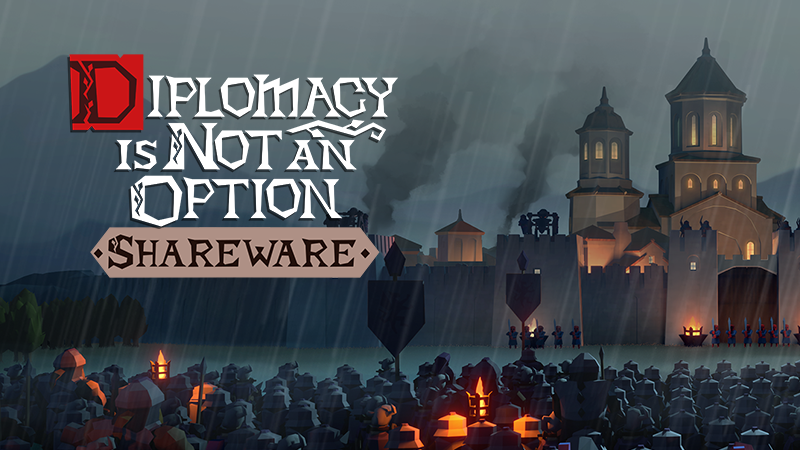
Diplomacy Is Not an Option is an uncompromising, physics‑first base‑building RTS that stages sieges on a jaw‑dropping scale, think tens of thousands of attackers raining down on your walls. Every arrow, catapult stone, and flying body is physically simulated, so battlefield geometry and line‑of‑sight matter as much as troop numbers.
Surviving requires ruthless micromanagement of economy and logistics; food, wood, stone, iron, and gold must be balanced with farms, storage, and trade; alongside clever engineering, magic, and tactical placement of towers and kill‑zones. It’s a game that rewards meticulous planning and decisive intervention: build smart, manage supply, and micro your forces, or watch your carefully crafted defenses collapse under overwhelming hordes.

What it is
Diplomacy Is Not an Option is a medieval‑fantasy base‑building RTS from Door 407 that graduated from Early Access to full release on October 4, 2024. Its core pitch is audacious and delightfully straightforward: defend a castle against truly massive hordes while juggling construction, logistics, and battlefield tactics.
The game blends large‑scale siege warfare with city‑builder depth; managing food, wood, stone, iron, and gold; planning storage and supply lines; and engineering towers, gates, and kill zones, while physics‑driven projectiles and bodies turn every engagement into a chaotic, cinematic test of design and micromanagement.

Scale and physics‑first combat
The headline figure is staggering: battles can swell to tens of thousands of attackers, and a robust physics engine models every arrow, catapult stone, and airborne body so convincingly that the battlefield feels tactile and unpredictable.
That physical fidelity forces three‑dimensional thinking, clear lines of sight, tower placement, choke points, and layered kill‑zones matter as much as raw troop numbers.
The result is chaotic, cinematic sieges where clever engineering is rewarded and poorly considered defenses can literally work against you, turning a proud curtain wall into an accidental shield for the enemy if you don’t design with sightlines and trajectories in mind.

Economy, logistics, and survival
Surviving a siege in Diplomacy Is Not an Option is as much about logistics as it is about fortifications. Food, Wood, Stone, Iron, and Gold are the lifeblood of your realm, and farms, workshops, storage placement, and even emergency trade via a merchant dirigible must be carefully managed to keep soldiers fed and walls standing.
Civilian welfare is not optional, neglect housing, burial, and medical care and you’ll invite plague, starvation, and cascading breakdowns that can turn a promising defense into a collapse.
The game forces constant prioritization: allocate labor between harvesting and repairs, decide when to expand versus when to reinforce, and route supplies so your frontlines don’t run dry.
That tight interplay, city‑builder resource chains under the relentless tempo of RTS sieges, keeps both systems meaningful and makes every strategic choice feel consequential.

Magic, factions, and freedom of play
Beyond engineering and economy, Diplomacy Is Not an Option spices its siegecraft with magic and a wry sense of humor.
Harvest soul crystals to power arcane monuments, rain devastating fireballs on enemy masses, or summon spectral allies to harry stragglers, magic adds a volatile, high‑impact layer to your defensive toolkit.
The story leans tongue‑in‑cheek, populated by a spendthrift king, revolting peasants, the mysterious Sarranga tribe, and undead who worship hard rock, giving the campaign a playful, offbeat flavor.
Multiple playstyles are supported across Story Campaign, Endless, Challenge, and Sandbox modes, and a robust Map Editor lets creative players design and share custom scenarios, extending replayability and turning the community into a laboratory for new siege experiments.

Difficulty and community response
Diplomacy’s difficulty is divisive. Many players celebrate its depth and the hard‑won satisfaction of mastering a winning playstyle, praising the way careful planning and relentless iteration pay off.
Others report that even the lowest difficulty settings demand intense micromanagement and razor‑sharp timing, turning what should be a relaxed “easy” option into a trial by fire that punishes experimentation.
The result is a steep, sometimes unforgiving learning curve: rewarding for players who enjoy iterative failure and optimization, frustrating for those who want gentler onboarding or a more forgiving sandbox.
Better difficulty tuning, clearer tutorials, or an intermediate “learning” mode would broaden its appeal, but as it stands the game’s streamlined city‑defense systems and emergent siege moments win acclaim even as its punishing spikes draw criticism.

Ongoing support and replayability
Door 407 has kept the game evolving with steady updates and community‑focused tools, turning Diplomacy into a living sandbox rather than a static release. The built‑in Map Editor and procedurally generated battlefields let players endlessly iterate on defensive philosophies, test new wall layouts, experiment with resource pipelines, or craft bespoke scenarios to share with others, while ongoing patches and mod‑friendly features help keep strategies fresh and the community engaged.

Final Verdict
Diplomacy Is Not an Option is an audacious, tactile RTS that stages siegecraft on an almost absurd scale, physics‑driven projectiles and thousands‑strong hordes make every engagement feel visceral and emergent. It rewards meticulous planning, clever engineering, and relentless logistics: the players who study sightlines, optimize supply chains, and micro their defenses will be richly rewarded.
That same uncompromising design, however, punishes complacency and can overwhelm newcomers; this is a game for those who relish high‑stakes problem solving and iterative mastery rather than a casual pick‑up‑and‑play session. If you crave cinematic, physics‑led chaos and the satisfaction of turning a collapsing fortress into a triumph of design, this is essential; if you prefer gentler onboarding, brace for a steep, but ultimately rewarding, climb.
Watch and Wishlist
• Why wishlist: Ongoing, substantive updates (faction reworks and new systems) materially change gameplay and strategy; wishlisting ensures you get notified about major patches, trailers, and sale windows so you can jump in after balance or QoL changes.
• Who should watch: Players who enjoy large‑scale, physics‑driven sieges and heavy logistics; builders who like to iterate on layouts and supply chains; creators who want to design and share custom maps and scenarios via the Map Editor and Steam Workshop.
• What to expect from updates: Major content and systems updates (example: a full Undead faction rework with new units and tech trees), balance passes, economy tweaks, and Map Editor/Workshop improvements that expand replayability and strategic options.
• Best times to buy: After a major patch or content drop, that’s when balance tuning and QoL fixes land, or during seasonal sales once you’ve seen post‑patch player feedback; buying immediately after a well‑received update reduces the chance of hitting rough, unpatched spikes.
• Platforms to track: Primarily PC storefronts (Steam plus other PC stores noted in official trailers and coverage); keep an eye on the Steam page and publisher channels for any console port announcements.
• How to stay informed: Wishlist on Steam, follow Door 407’s official channels and the game’s Steam news feed for patch notes, watch trailers and dev posts, and join community hubs where Map Editor creations and challenge scenarios appear first.
• What the community is doing: The developer has been shipping summer updates and Map Editor enhancements and the community is already using Workshop tools to share custom sieges and experiments, so early wishlisters will see new player‑made content soon after editor releases.
• Quick verdict for wishlisters: Wishlist now to catch trailers, the Map Editor launch, and major reworks; buy after a balancing update if you prefer a smoother, post‑patch experience (or buy at launch if you want to support the studio and dive into the evolving sandbox immediately).
Key Takeaways
• Scale and spectacle: The game stages truly massive assaults, battles can swell into the tens of thousands,so expect siege encounters that feel cinematic and overwhelming by designk.
• Physics matters: Projectiles, launched bodies, and environmental interactions are physically simulated, making line‑of‑sight, trajectories, and three‑dimensional geometry core tactical concerns rather than window dressing.
• Economy is as important as walls: Food, Wood, Stone, Iron, and Gold underpin every decision; farms, storage placement, trade (including emergency merchant deliveries), and labor allocation are constant priorities to keep troops fed and defenses repaired.
• City‑builder + RTS tension: The game blends long‑term planning (resource chains, housing, burial, medical care) with real‑time siege urgency, neglecting civilians or logistics can trigger cascading failures that doom even well‑designed fortifications.
• Magic and personality: Arcane systems (soul crystals, monuments, high‑impact spells) and a tongue‑in‑cheek narrative; from a spendthrift king to undead who worship hard rock, add flavor and tactical variety to the core engineering loop.
• Multiple modes and creative tools: Story Campaign, Endless, Challenge, and Sandbox modes cover different playstyles, and a Map Editor plus procedurally generated maps extend replayability and community creativity IGN India.
• Active post‑launch support: The developer has continued to update the game and expand community tools, with notable editor and content updates that keep strategies evolving and the Workshop lively.
• Difficulty is divisive: Many players find the learning curve rewarding once mastered, but others report that even the easiest settings demand intense micromanagement, expect a steep onboarding period unless you enjoy iterative failure and optimization.
• Who will love it: Players who relish high‑stakes siegecraft, emergent physics chaos, and deep logistics will find a rich sandbox; builders who enjoy iterating on layouts and supply chains will get long mileage from the Map Editor.
• Who should be cautious: Casual RTS fans or players seeking a gentle, pick‑up‑and‑play experience should be prepared for a demanding climb or wait for further difficulty tuning and QoL patches.
• Buying advice: Wishlist and watch for major patches or content drops; post‑patch windows and sales are the best times to jump in if you want a more polished, balanced experience.
Game Information:
Developer & Publisher: Door 407
Platforms: PC (reviewed)
Release Date: October 4, 2024
Score: 7.5 / 10
An ambitious, tactile RTS with spectacular scale and satisfying systems, held back by a punishing difficulty curve and occasional polish issues. It’s a compelling sandbox for players who love emergent siegecraft and logistics, but not the most welcoming entry for casual or time‑pressed strategists.
“7.5 / 10 - An ambitious, physics‑driven siege sandbox that thrills with scale and systems but is held back by punishing difficulty and rough edges.”