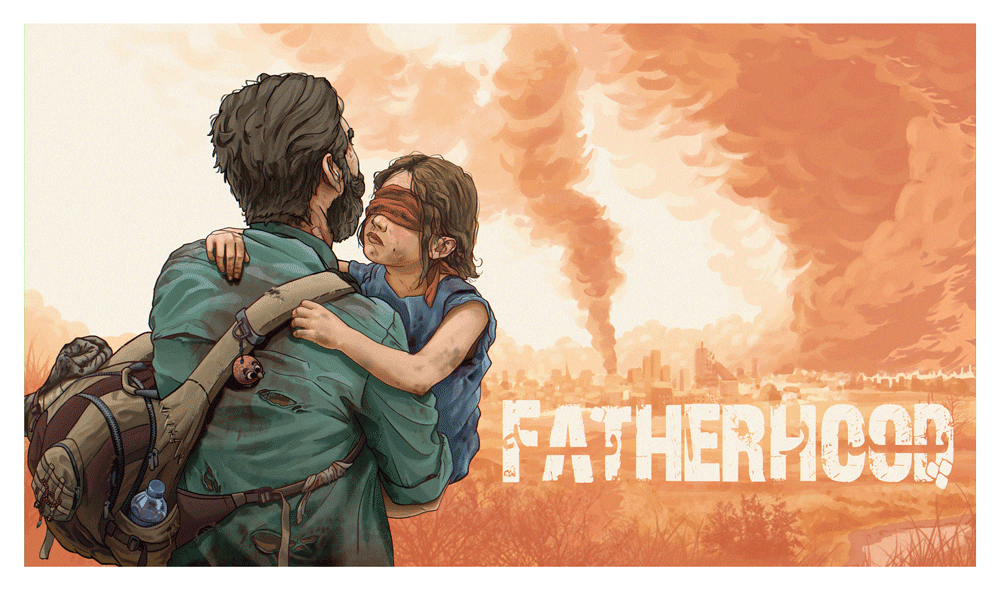
Fatherhood’s demo thrusts you into a spare, harrowing world where the usual trappings of war games fall away, leaving one urgent bond at the center: a father desperate to keep his blind daughter safe. It marries tense stealth with intimate, mechanically significant gestures; hand‑holding that guides and constrains, hugging that calms and buys time; and forces morally fraught choices that ripple beyond a single scene. The result is an experience less obsessed with spectacle and more devoted to the quiet, human work of survival: scavenging safe routes, managing fear, and trading small mercies against impossible demands in a world that keeps asking what you’re willing to sacrifice.
What the demo teaches you quickly
• Intimate, pressure‑filled loop: Move quietly through patrol routes, keep Asma close, and use cover and timing to slip past danger; every corridor and doorway becomes a tactical decision rather than background scenery.
• Stealth as emotional gameplay: Confrontation is a last resort; encounters favor observation, distraction, and misdirection, so success hinges on reading enemy patterns and creating small, precise windows to act.
• Hand‑holding as constraint and tool: Holding Asma’s hand guides her and prevents panic but restricts certain actions, forcing you to plan routes and sacrifices around a living, dependent partner.
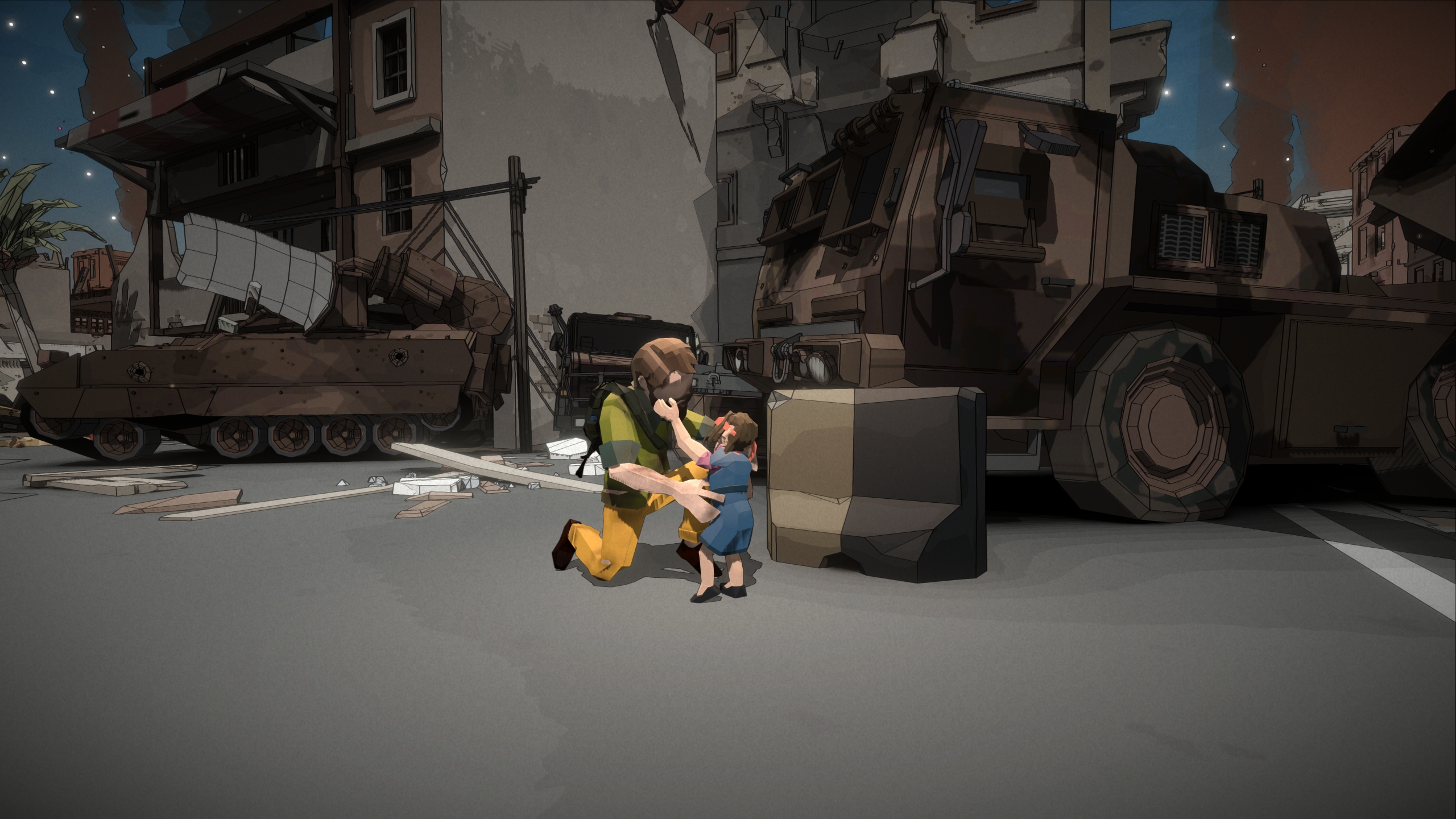
• Hugging with mechanical weight: The hug is both balm and resource; it soothes Asma’s anxiety to prevent detection, but relying on it too often can leave you exposed or drained, making each embrace a charged choice.
• Choices that echo beyond the moment: Asma’s anxiety, reactions, and what she witnesses shape her trust and the narrative path; moral decisions in the field alter relationships and unlock different emotional outcomes.
• Tension through limited tools: Sparse supplies and few direct fight options amplify the need for creative problem solving, turning scavenging, timing, and empathy into your primary survival toolkit.
Mechanics that define the demo
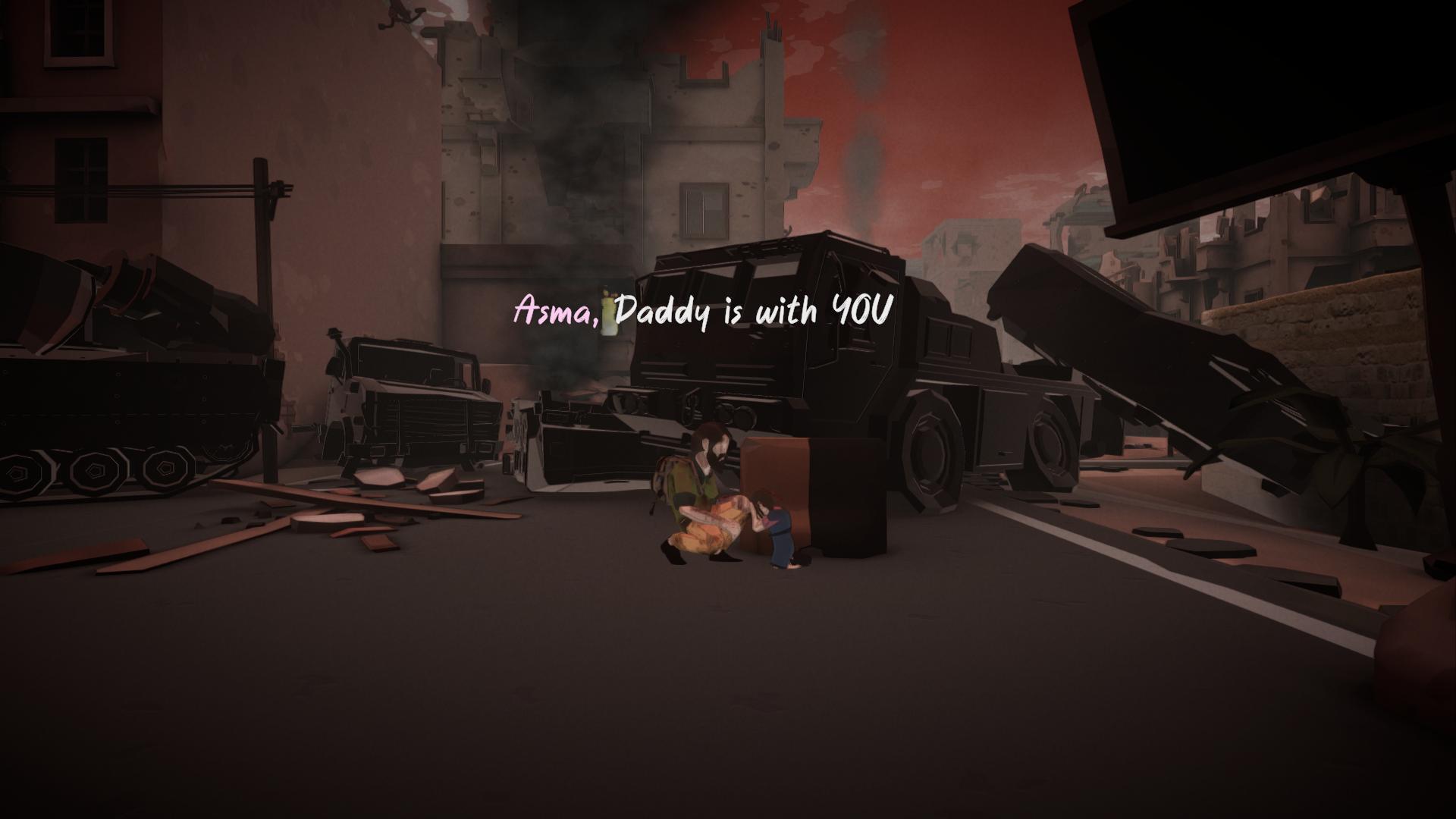
• Guiding hand mechanic: Holding Asma’s hand is a design fulcrum; it anchors navigation and keeps her calm while simultaneously limiting actions and movement options. That constraint forces route planning, slows frantic choices into deliberate tactics, and makes separation a meaningful, risky decision rather than a convenience.
• Hugging mechanic with stakes: The hug is more than a storytelling beat; it’s a consumable tool. Embracing Asma reduces her anxiety and mutes the risk of detection, but it costs time and can expose you in tight windows. Choosing when to soothe her becomes a tactical judgment call that balances immediate safety against long‑term vulnerability.
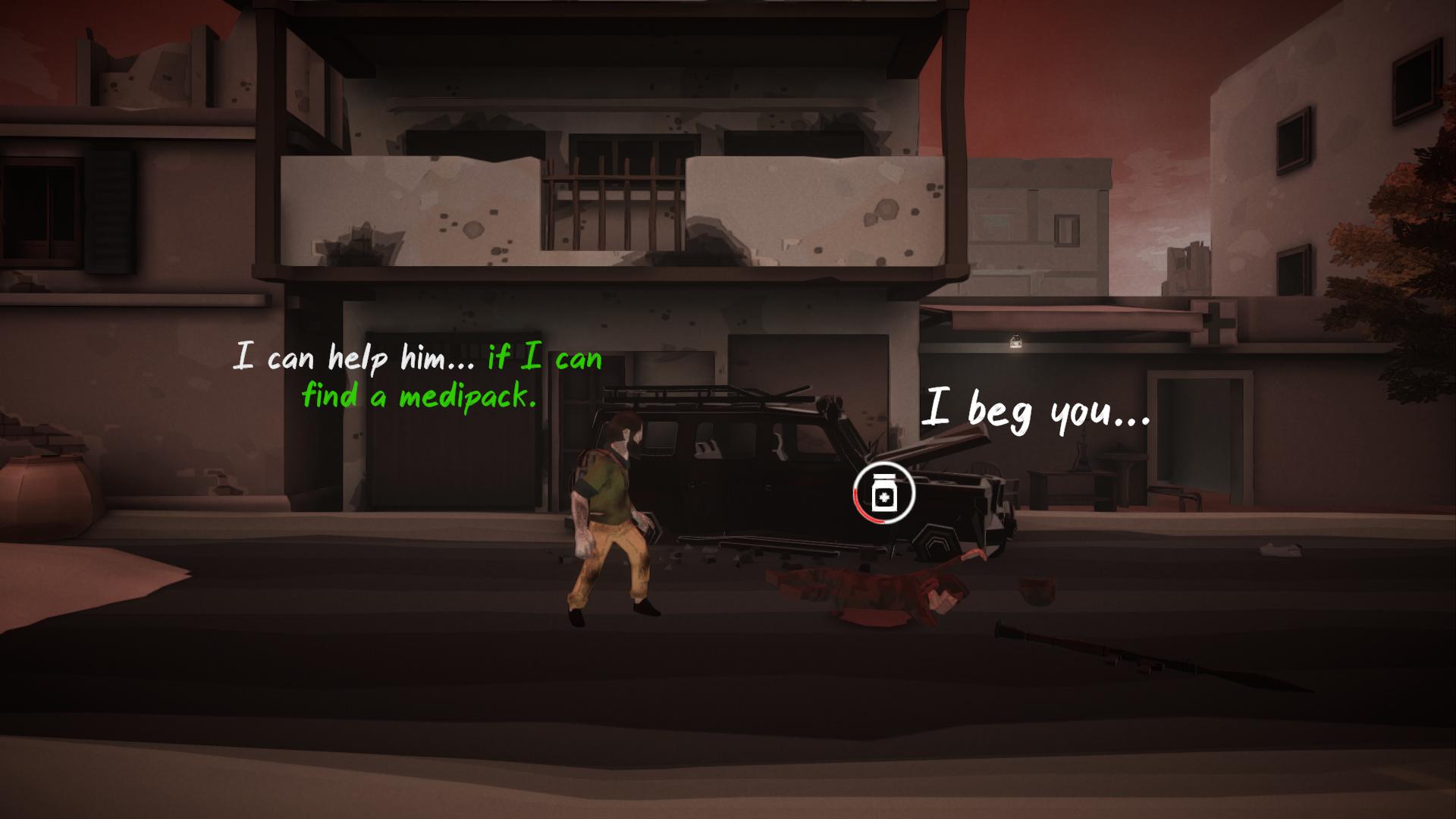
• Choice and consequence that matter: Early moral dilemmas hit quickly and stick; who you spare or rob, how you lie or protect, and whether you model compassion or cold pragmatism all leave marks on Asma and the world. These decisions subtly reshape NPC reactions, relationship trust, and narrative branches even within the demo’s short playtime.
• Scarcity and survival framing: Supplies are scarce and medical help is effectively nonexistent, so every scavenge, trade, or social gamble has weight. The demo stages risk‑reward tradeoffs that force players to weigh short‑term gains against the emotional and practical toll on Asma.
• Interplay of systems for emergent moments: The guiding hand, hug, scarcity, and moral choices combine to create emergent scenarios; a hurried embrace in a tight corridor that saves Asma but leaves you without an escape route; a decision to help a stranger that later complicates a patrol; a route choice that sacrifices supplies to preserve trust. Those moments make empathy a gameplay axis, not just a narrative theme.
Story and tone in the demo
• Bond that lands immediately: The demo establishes Basir and Asma’s relationship with economy and emotional clarity; Asma’s blindness fundamentally reshapes how the world is navigated and cared for, centering every encounter on protection, tenderness, and the practical burdens of guardianship. The father‑daughter dynamic drives both decisions and tension, so your choices feel personal rather than abstract.
• Music that answers the moment: A dynamic, emotion‑driven score reacts to gameplay, swelling into tense crescendos during stealth peaks and retreating into intimate, sparse textures in quieter scenes. Sound design does heavy lifting too: footsteps, distant radio chatter, and Asma’s breathing all contribute to a living soundscape that heightens suspense and empathy.
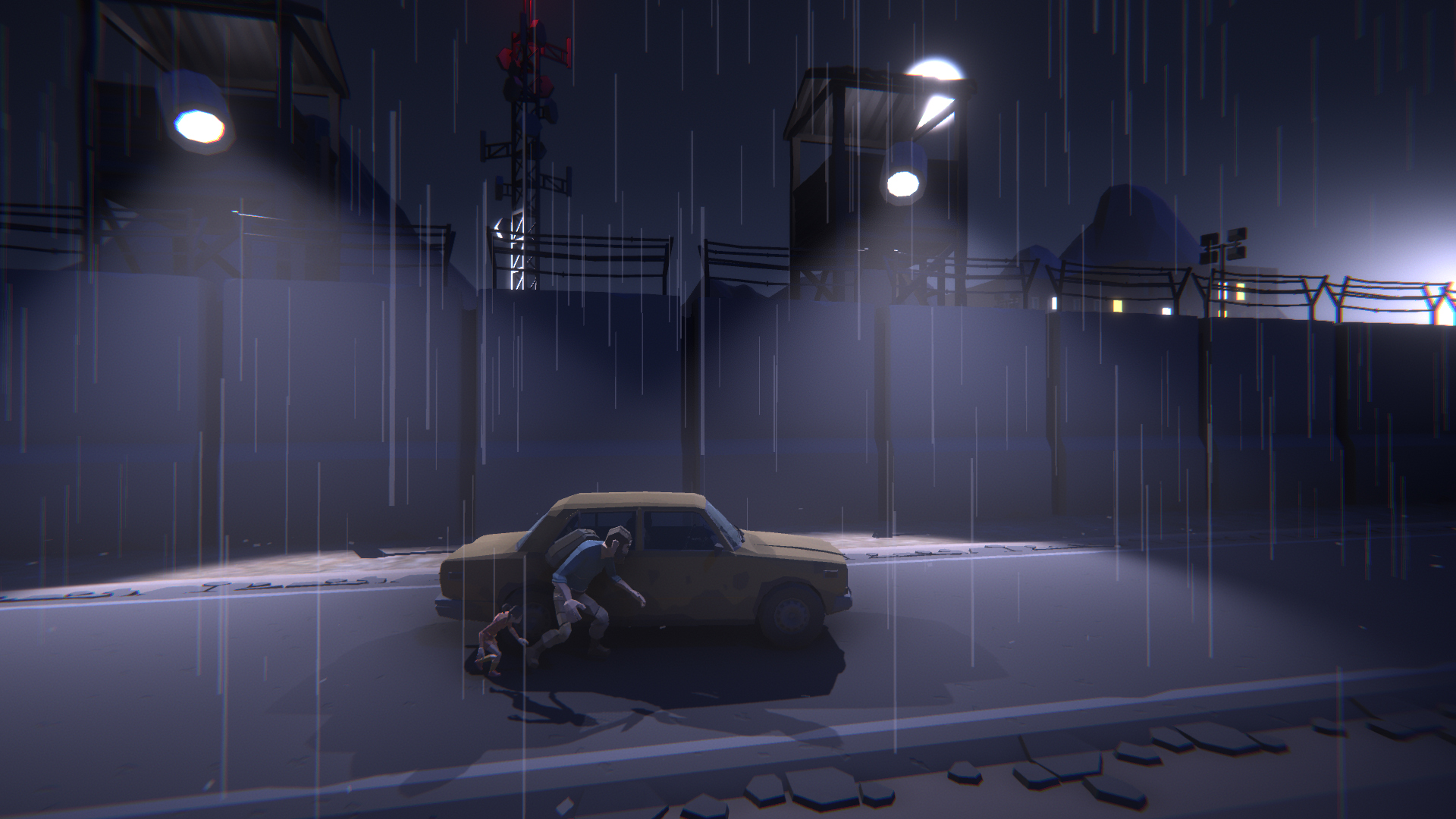
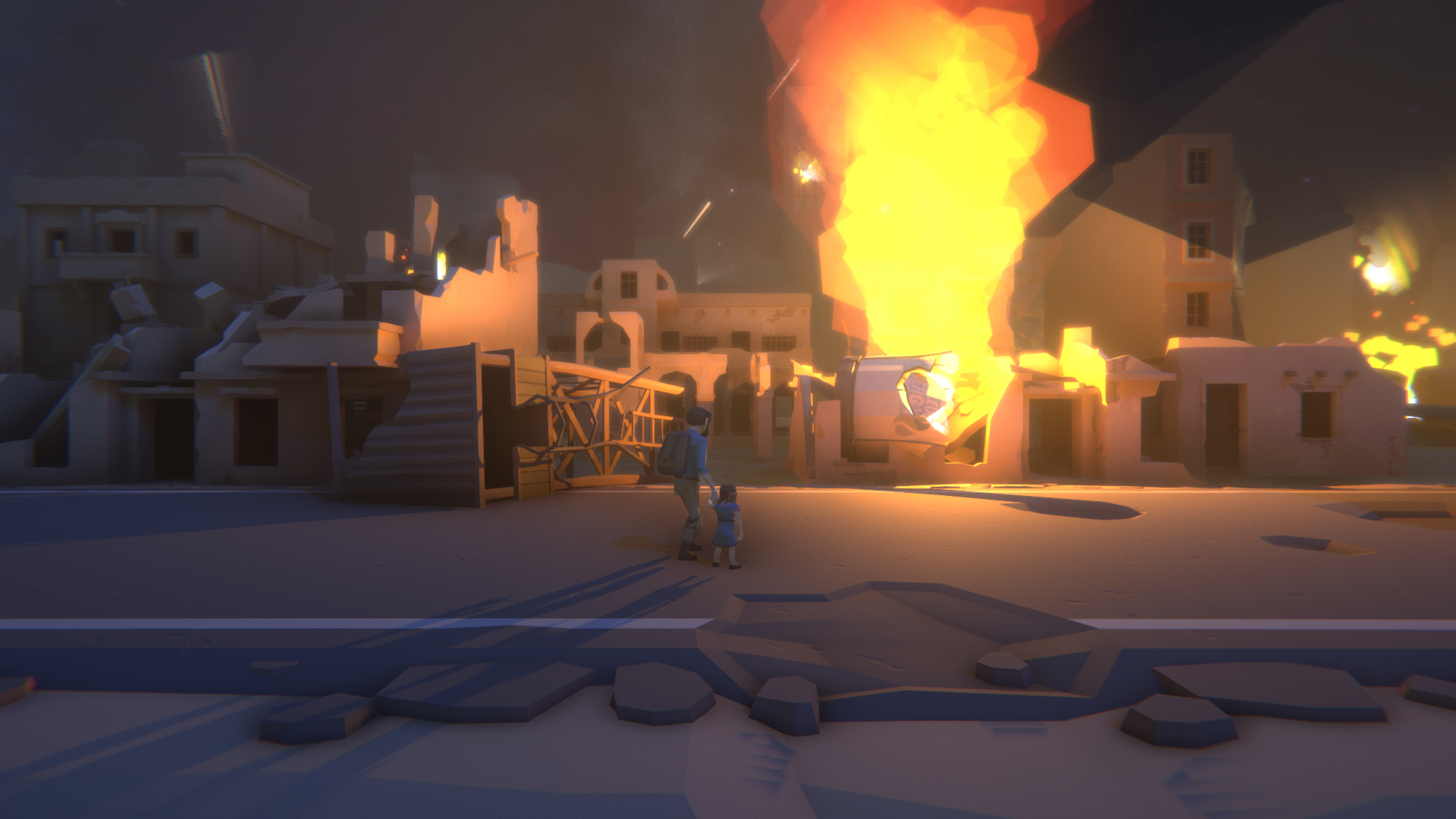
• Visuals that prioritize mood over detail: The low‑poly art style and war‑scarred environments strip away photorealism to emphasize silhouettes, contrast, and compositional storytelling. This clarity keeps patrol patterns readable, foregrounds emotional beats, and uses sparse detail to make each choice visually meaningful.
• Atmosphere as a gameplay layer: Visual and audio elements don’t just set tone; they inform play. Lighting, shadowed sightlines, and environmental clutter create natural stealth opportunities and moral moments, while recurring visual motifs link narrative threads and reinforce the demo’s melancholic, human‑centered story.
Strengths shown by the demo
• Emotional mechanics with gameplay teeth: The hugging and hand‑holding systems are baked into core play, not tacked on as story flavor. They alter stealth windows, pacing, and risk calculations, so choosing to soothe or separate Asma becomes a tactical move with emotional consequences.
• Moral dilemmas that leave marks: Choices carry durable weight; who you spare, how you lie, and what you sacrifice affect Asma’s trust, NPC reactions, and the branching narrative. Even short runs hint at distinct outcomes, rewarding players who wrestle with ethical cost rather than rote optimization.
• Readable stealth that still scares: Patrol routes, sightlines, and environmental cues are telegraphed clearly enough for planning, but the systems are tuned to produce high‑tension failures; collapsed plans, surprise discoveries, and frantic improvisation; which keep stealth feeling dangerous and meaningful.
• Systems-driven empathy: Because mechanical choices influence emotional states, empathy becomes a resource to manage: calming Asma may save you in the moment but create later scarcity; protecting strangers can win allies or invite risk. That interplay creates memorable, character‑first dilemmas.
• Emergent moments of consequence: The demo reliably produces scene‑specific vignettes; a hurried embrace that exposes you to guards, a risky route that pays off with supplies but erodes Asma’s trust; that feel authored and emergent at once, making replaying for different emotional beats genuinely compelling.
Areas to watch and opportunities
• Pacing and variety: The demo focuses tightly on the bond and stealth, which is powerful, but longer play sessions will need more encounter variety and pacing adjustments to avoid repetition.
• Accessibility and clarity: Asma’s needs and anxiety meters should remain readable without breaking tension; additional UI clarity and difficulty options would broaden the experience’s reach.
• Branching depth: The demo hints at multiple endings and long‑term consequences; expanding visible, impactful branches and their payoff will deepen replay value.
Final Verdict
Fatherhood’s demo is a concise, emotionally potent preview that makes caregiving the core gameplay loop. Its systems and story are tightly interwoven: Asma is never just a mission marker but a living mechanical partner whose fear, needs, and reactions reshape routes, tactics, and moral choices. If you want stealth that rewards tenderness over violence, consequences that linger beyond a single scene, and a narrative that makes survival feel intimate and wrenching, this demo is essential play. If you prefer broader encounter variety or more action, watch the roadmap for the full release; there’s clear potential for expanded branches, new scenarios, and deeper systemic variety that would broaden its appeal.
Watch and Wishlist
• Why wishlist: Stay informed about demos and updates so you can replay new builds and see how branching choices evolve.
• Support an emotionally driven indie that prioritizes mechanics tied to relationship and consequence.
• Who should wishlist: Fans of narrative stealth that prioritizes care and restraint.
• Players who value choice‑driven stories and multiple endings.
• Streamers and creators looking for tense, human moments and emotionally resonant set pieces.
• Who should wait: Players who want wider encounter variety or more action‑oriented gameplay before committing.
• Those who need robust accessibility and difficulty customization to enjoy stealth‑heavy design.
• When to jump in: Try the demo now to experience the core hug/hand mechanics and see whether the intimacy and moral stakes land for you.
• Buy after major patches or post‑release content drops if you prefer a broader set of encounters, expanded branching, and additional QoL options.
• How to keep up: Wishlist on your platform of choice and follow the developer’s updates for patch notes, demo refreshes, and roadmap reveals.
• Watch for community playtests and developer streams that demonstrate new mechanics and narrative branches.
• Quick recommendation: Add Fatherhood to your wishlist and play the demo to test whether its tender, stealth‑first approach resonates. If you love narrative risk and tight emotional systems, pick it up on, or soon after; release, if you want more variety and accessibility options, wait for future updates.
Key Takeaways
• Emotion‑first stealth: The demo centers on caregiving as gameplay; guiding and calming Asma shapes every stealth decision rather than treating her as a passive objective.
• Mechanics that matter: Hand‑holding constrains movement and route choices; hugging soothes anxiety but costs time and safety, turning empathy into a tactical resource.
• Meaningful choice: Early moral dilemmas have tangible consequences for relationships and narrative direction, hinting at multiple endings and durable emotional payoffs.
• Tense, readable stealth: Patrol patterns and sightlines are telegraphed clearly enough to plan around, yet failures still produce high‑stakes, nail‑biting moments.
• Strong atmosphere: A dynamic, emotion‑driven score and low‑poly, silhouette‑focused art strengthen mood and keep attention on human interactions over spectacle.
• Scarcity heightens stakes: Limited supplies and absent medical options force hard tradeoffs, making scavenging and social choices feel weighty.
• Areas to watch: The full release should add encounter variety, clearer accessibility options, and deeper branching payoffs to sustain longer play sessions.
• Who will love it: Players drawn to intimate, moral stealth experiences and narrative games that make survival personal will find the demo compelling.
• Who should wait: Those seeking fast action, broad mechanical variety, or robust difficulty/accessibility toggles may prefer to wait for post‑demo expansions.
Game Information:
Developer & Publisher: Persis Play
Platforms: PC (reviewed)
Release Date: Coming Soon
Score: 9.0 / 10
Fatherhood earns a 9.0 for turning caregiving into a mechanically rich, emotionally resonant stealth experience. The demo fuses tender, high‑stakes systems; hand‑holding constraints, the hugging mechanic, and meaningful moral choices; with a focused stealth loop and a haunting atmosphere. It feels polished, purposeful, and rare: a war story that plays like intimate human drama.