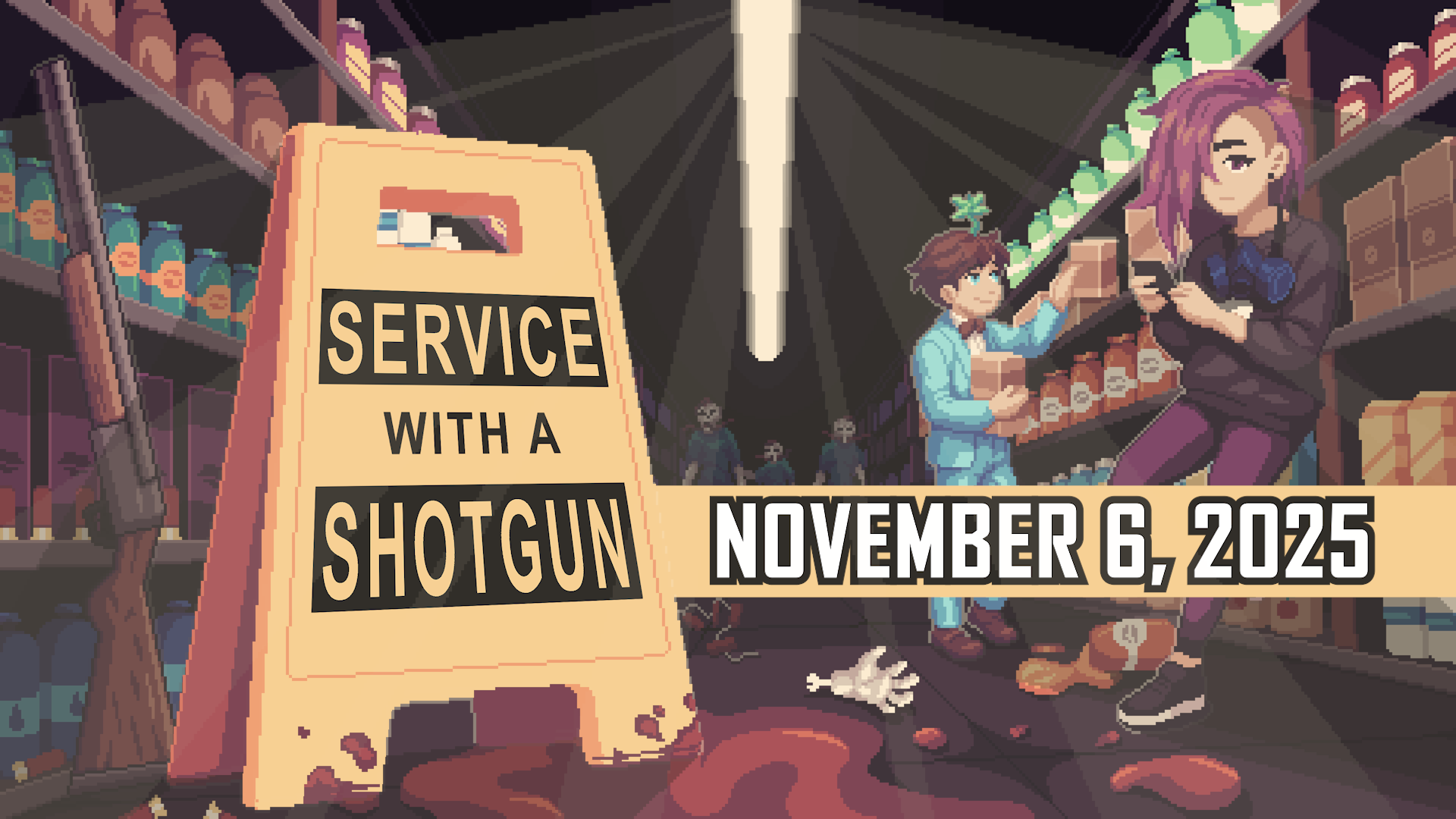
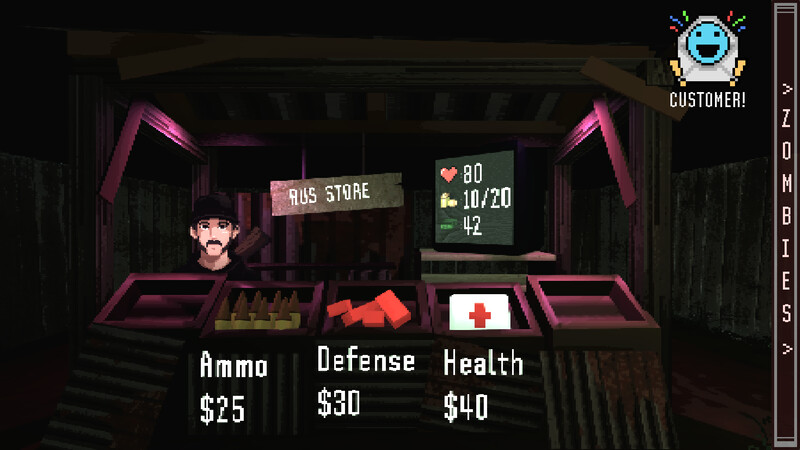
Service With a Shotgun (SWAS) shines a darkly comic light on the hellscape of retail during the end times. You’re the sole clerk holding a battered roadside shop together while society unravels: unpredictable customers, desperate regulars with messy pasts, and the occasional undead with a taste for chips. Blending sharp visual‑novel beats with frantic wave‑shooter action, SWAS turns everyday service tasks into high‑stakes improv; where conversation choices can unlock supplies, enrage patrons, or change how a firefight plays out, and clean aiming, trap placement, and quick thinking determine whether you survive the shift. The result is an absurd, surprisingly human loop that makes both the comedy and the tension land with satisfying impact; watch the trailer here:
Gameplay loop
• Narrative action rhythm: Shifts alternate between visual‑novel beats and pulse‑pounding combat. Story scenes deliver branching conversations, moral dilemmas, and character moments that change how NPCs behave; action segments force you to fortify the counter, man choke points, and survive escalating waves of the undead. Decisions in the VN sections have mechanical weight, opening supply options, shifting customer attitudes, or changing enemy behavior in later encounters.
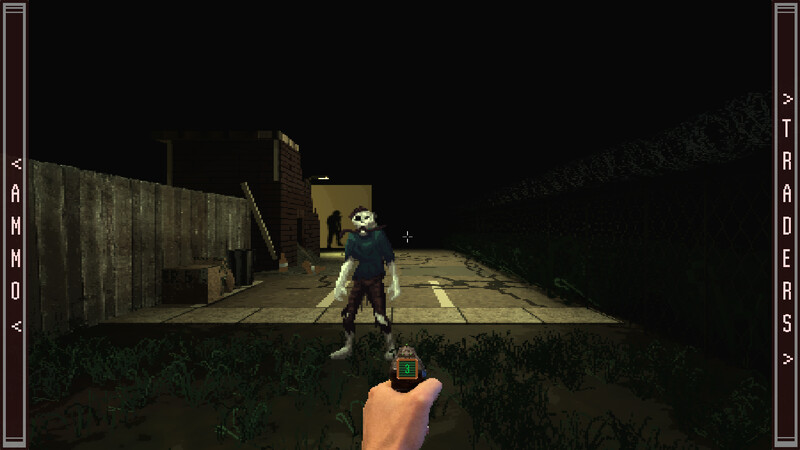
• Skill meets improvisation: Shooting encounters reward precision and creative problem solving. Headshots yield tangible bonuses, barricades and traps shape battlefield flow, and resourceful use of the shop’s items turns improvised solutions into crucial advantages. The combat loop encourages both careful aim and on‑the‑fly thinking.
• Tune the chaos: The Zombie Intensity slider replaces a one‑size difficulty with a personal dial; lower settings slow spawns for tense, methodical runs; higher settings crank up speed and numbers for frantic, high‑reward mayhem. It tailors each playthrough to how much chaos you want to manage.
• Chaptered progression: The game is structured into five story‑heavy chapters, each layering new twists, fresh antagonists, and evolving threats that reshape subsequent shifts. Chapters introduce new mechanics and set pieces so every act feels distinct and escalates the stakes.
• Interlinked systems: Narrative choices, shop upgrades, and combat performance feed one another; a well‑timed conversation can unlock a trap blueprint, a successful wave can fund a defensive upgrade, and a new character relationship can change who shows up for your next shift. The result is a compact, interdependent loop where every action nudges the story forward.
Story and tone
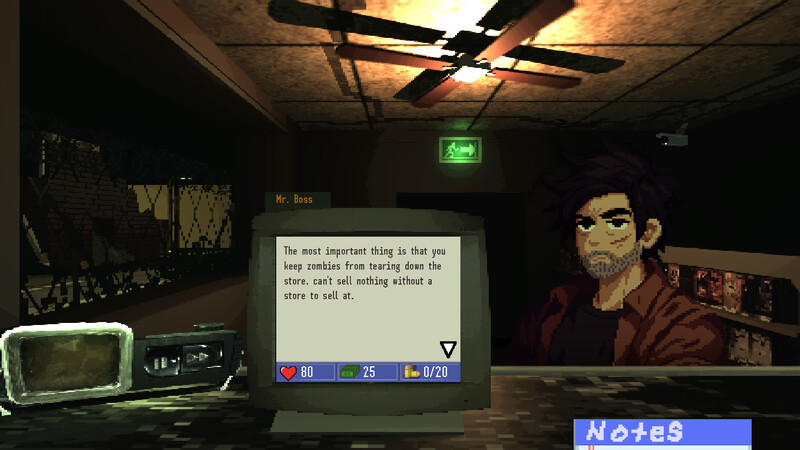
• Darkly comic with real heart: The game blends razor‑sharp absurdity with surprising emotional payoffs. You’ll meet a rotating cast of desperate, deranged, and unexpectedly sympathetic customers whose demands spark everything from gut laughs to uncomfortable, human moments. Punchlines land next to awkward power shifts and quiet revelations, so the tone can flip from manic to melancholy in a single exchange, making each encounter feel alive and consequential.
• Irreverent storytelling that earns drama: The premise, “retail in the apocalypse”, is used smartly; it fuels gag‑heavy setpieces while also creating fertile ground for emergent drama. Dialogue is snappy, often gleefully chaotic, but the writing still finds room for nuance, letting characters reveal vulnerability, grudging loyalty, or moral compromise. The result is a voice that can mock the absurdity of survival and, at the same time, make you care about the people behind the counter.
Characters
• A vivid, memorable cast: The game is anchored by a colorful ensemble: more than ten recurring regulars plus a rotating parade of one‑off visitors, each written with distinct motives, odd habits, and comedic beats. Development iteration and community feedback turned throwaway prototypes into fan favorites; Mr. Boss’s shrugging managerial apathy, Killmonger’s scrappy survival instincts, Rus’s quiet cool, and Amanda’s punk‑soul energy all land because they feel like real people you’ve seen at the worst possible shift.
• Polish that amplifies personality: Visual redesigns and micro‑details sharpen characterization: tiny accessories, exaggerated silhouettes, and expressive pixel flourishes (a twirled moustache, a bucket helmet, a crooked patch) turn visual shorthand into narrative shorthand. Those choices make jokes hit harder, emotional moments read clearer, and even background customers feel like cast members, not placeholders.
Combat and shop defense
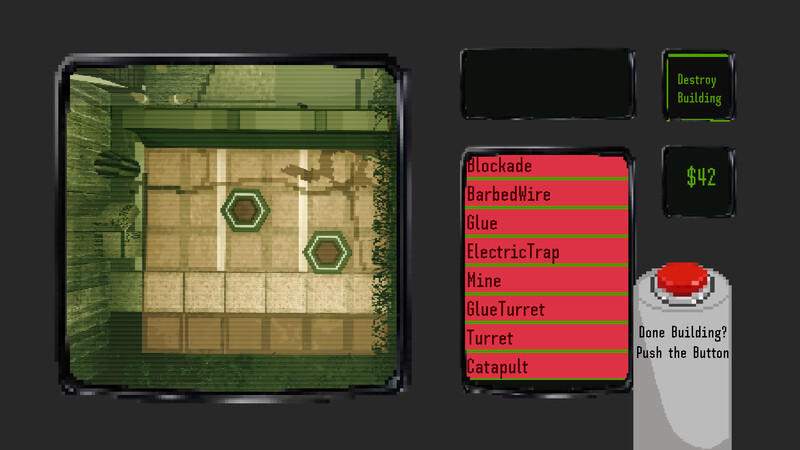
• Fast, tactical action under an arcade sheen: Combat moves quickly but rewards smart play. Between waves you jury‑rig defenses; barbed wire, glue traps, improvised barricades; then reposition turrets and weapons to counter new enemy behaviors. Encounters lean on positioning, resource management, and timing; headshots grant extra cash and a real sense of mechanical payoff, so every aimed shot feels meaningful rather than incidental.
• Shotgun fantasy with thoughtful balance: The shotgun is the satisfying centerpiece of the fantasy; loud, punchy, and deeply cathartic; but the game resists turning combat into a mindless spray fest. Ammo is finite, traps have situational uses, and enemy variety punishes sloppy play. That balance pushes players to combine precision, environmental tools, and clever defenses, turning frantic fights into tense, rewarding improvisations.
Presentation and audio
• Hands‑on pixel warmth: The pixel art leans into a scrappy, lived‑in apocalypse: grease‑streaked counters, hand‑tacked flyers, and characters who look tired, inventive, and vividly lived‑in. Recent visual polish sharpens character portraits, cleans up animation reads, and preserves the game’s rough edges while giving environments clearer silhouettes and more expressive detail that sell both comedy and grit.
• A soundtrack that swings and soothes: The official score mixes hip‑hop, jazz, and lo‑fi to match the game’s tonal whiplash: punchy beats and brass hits that pump up combat, warm lo‑fi grooves for downtime, and atmospheric touches for quieter, uneasy moments. Isochron Studios and the credited composers layer texture and rhythm so the music punctuates jokes, heightens tension, and makes the whole experience feel sonically alive.
Features
• Genre mash‑up: Visual‑novel storytelling woven into fast‑paced FPS wave‑defense action, marrying character moments with frantic, tactical combat.
• Five escalating chapters: A chapter‑based structure that introduces new twists, mechanics, and threats so each act feels fresh and consequential.
• Cast of memorable characters: 10+ recurring regulars and rotating visitors with branching interactions that change between shifts and influence gameplay outcomes.
• Zombie Intensity slider: Personalize your runs by dialing spawn rate and speed, from slow‑burn tension to all‑out, chaotic mayhem.
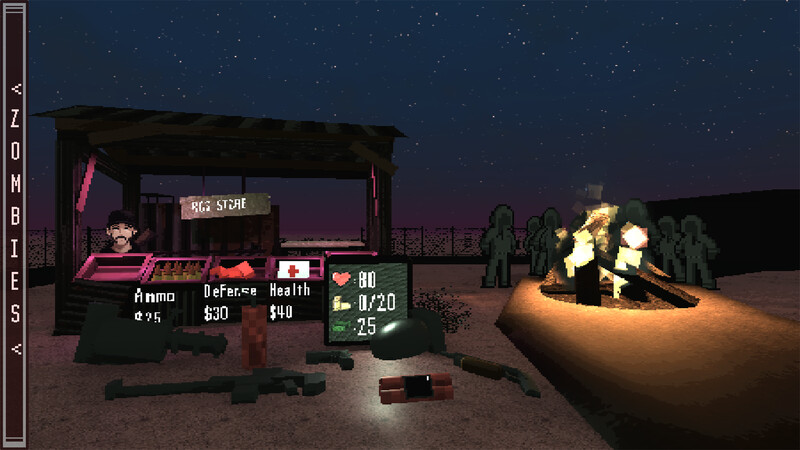
• Shop defense and traps: Build and retrofit last‑minute defences between waves; barbed wire, glue traps, barricades, turret placement; to shape each encounter.
• Skill‑rewarding combat: Systems that reward precision and smart play (headshot bonuses, trap combos, economy rewards), so aim and tactics feel impactful.
• Interconnected systems: Narrative choices, shop upgrades, and combat performance feed one another, creating emergent scenarios and meaningful tradeoffs.
• Accessibility and tuning: Difficulty and quality‑of‑life options let players tailor pacing, UI, and challenge to their preferred comfort level.
• Polish and live updates: Active post‑release support with UX fixes, balance tweaks, and feature rollouts to refine the experience over time.
Development and community notes
• Transparent, player‑forward development: Nolyn Vansyckle and Silver Lining Interactive have kept players close to the process, regularly sharing design notes, character iterations, and soundtrack credits. The studio leans into playtester feedback: throwaway prototypes like Mr. Boss evolved into fully polished favorites after community reaction, and dev commentary shows a genuine loop of testing → listening → refining.
• Collaborative visual direction: Artist collaborators, most notably Sorahn, helped translate rough prototypes into a coherent visual identity. Their work tightened character silhouettes, expanded expressive pixel reads, and turned small design tweaks into big tonal wins that make the cast feel distinct and emotionally readable.
• A candid, human devlog voice: Dev updates read like conversations with a fellow fan: excited, honest, and sometimes nervy. Nolyn shares behind‑the‑scenes wins and worries, celebrates trailer traction, and spells out what’s next, which builds trust and keeps the community invested in the game’s growth.
Updates and recent patch highlights
• Stability and quality‑of‑life fixes: Core polish landed across demo builds; fullscreen boot behaviour fixed, settings now reliably save between sessions, widescreen menu layout issues resolved, and several UI quirks cleaned up to make play sessions smoother.
• Combat and systems tuning: New gameplay features sharpened the action loop: the Zombie Intensity slider replaces the old read‑speed toggle to dynamically scale spawn rates and speed; headshot rewards were added to make precision more lucrative and combat more satisfying.
• Encounter reliability: Narrative and encounter bugs were addressed so story beats fire consistently; missing NPC appearances and day‑specific events have been patched, ensuring key character moments and trigger conditions occur as intended.
• Player feedback driven changes: Many tweaks came directly from playtesting: balance adjustments, UX refinements, and encounter timing were tuned to match player expectations and highlight the game’s comedic and dramatic beats.
• Ongoing maintenance roadmap: The team continues to push incremental builds focused on polish, balance, and feature rollout, prioritizing reliable triggers, clearer feedback, and tighter pacing as more chapters and mechanics arrive.
What could be stronger
• Rhythm needs tightening: The switch from dialogue to combat sometimes feels abrupt, and pacing can wobble; smoother transitions and clearer stakes between VN beats and shooting would keep momentum, and player investment, steadier.
• Combat depth still maturing: The shooting layer is satisfying at a moment‑to‑moment level but could use more mechanical variety (weapon mods, trap synergies, enemy behaviors) to sustain interest across five chapters.
• Balance and economy work in progress: Wave composition, resource rewards, and upgrade scaling need further tuning so later chapters feel challenging without becoming grindy or under‑rewarding.
• Tone won’t suit everyone: The game leans intentionally irreverent and absurd; players after a bleak, survival‑horror experience may find the comedy and levity at odds with expectations.
• Narrow play session profile: The chaptered structure favors relatively short, punchy runs; players who prefer long, open‑ended survival sims might wish for more emergent, sandboxy systems.
• Polish gaps remain: Despite steady fixes, small UX rough edges and timing glitches occasionally interrupt the flow; continued QA and QoL updates will be important as the scope expands.
Who should play it
• Fans of genre mashups who enjoy strong characters and emergent comedy.
• Players who like action with narrative stakes and mechanical variety across short sessions.
• Streamers and content creators who enjoy chaotic highlights, memorable NPCs, and audience‑friendly spectacle.
• Anyone who’s ever been trapped at a worst‑possible retail shift and wanted to solve it with a shotgun.
Final Verdict
Service With a Shotgun is a razor‑sharp, high‑octane mashup of survival and storytelling that turns retail drudgery into gleeful chaos. Its premise is funny and clever, anchored by a standout cast, punchy combat, and an infectious sense of anarchic joy; small systems like Zombie Intensity, headshot rewards, and evolving character polish show a team iterating toward a tighter, more rewarding experience. The result is a game that makes you laugh out loud one moment, scramble to shore up defenses the next, and unexpectedly care about the weird people who wander through your door; if you crave frantic, character‑driven action with a big personality, SWAS is absolutely worth your time.
Watch and Wishlist
• Add Service With a Shotgun to your wishlist: Get notified for the full release, discounts, and platform updates.
• Play the demo now: Sample the VN/combat loop, test Zombie Intensity and headshot rewards, and decide whether the pacing and tone click for you.
• Follow Nolyn and Silver Lining Interactive: Track character reveals, chapter rollout, and design diaries so you catch art updates (Sorahn’s posts) and soundtrack drops.
• Enable store notifications: Turn on alerts for the game and the developer to catch limited demos, patch notes, and release-day bundles.
• Watch trailers and streams: Gameplay clips show how dialogue choices affect combat and highlight standout NPC moments, great for judging whether the shotgun fantasy and comedy land.
• Keep an eye on these features before buying: shotgun mechanics and promised “shotgun justice”; deeper combat/trap synergies; chapter pacing and economy balance; reliable VN‑combat transitions.
• Support the soundtrack and creators: If you love the music, wishlist or follow the OST release and the credited composers/artists to signal interest.
• Share with cozy/action communities: Recommend the demo to streamers and friends who enjoy chaotic highlights, character comedy, and bite‑sized, replayable runs.
Key Takeaways
• Inventive premise: Turns the drudgery of retail into a darkly comic survival game that feels fresh and memorable.
• Genre mash‑up works: Visual‑novel storytelling and wave‑defense shooting complement each other, with choices affecting combat outcomes.
• Strong personality cast: 10+ vivid characters (including breakout favorites) give the game emotional weight and comedic payoff.
• Tactical, satisfying combat: Fast-paced encounters reward precision, improvisation, and smart use of traps and defenses.
• Customizable chaos: Zombie Intensity and difficulty options let players tune runs from tense to outright mayhem.
• Polish and momentum: Ongoing updates have tightened visuals, fixed stability issues, and added systems like headshot rewards.
• Areas to watch: Pacing between VN and combat needs smoothing, combat depth and economy balancing require further tuning, and the irreverent tone may not suit all players.
• Worth trying: Demo is a strong sampler; wishlist the full release if you like character-driven, chaotic action with a big sense of humor.
Game Information:
Developer: Nolyn Vansyckle
Publisher: Silver Lining Interactive
Platforms: PC - Steam (reviewed)
Release Date: November 6, 2025
Score: 9.0 / 10
Service With a Shotgun nails a bold, hilarious premise and backs it up with sharp writing, a memorable cast, and shockingly satisfying combat that rewards both aim and improvisation. The visual‑novel moments give weight to the action, and systems like Zombie Intensity and headshot bonuses add meaningful player choice and mechanical bite. A few rough edges remain; pacing between dialogue and shooting can jar, and later‑chapter balance needs polish; but those are quibbles beside a game that consistently surprises, amuses, and thrills. If you want frantic, character‑driven chaos with real heart, this is one of the year’s most delightful surprises.