Codex Mortis: Necromancer’s Onslaught - Summon, spell, and survive a relentless undead storm. (Demo Preview)
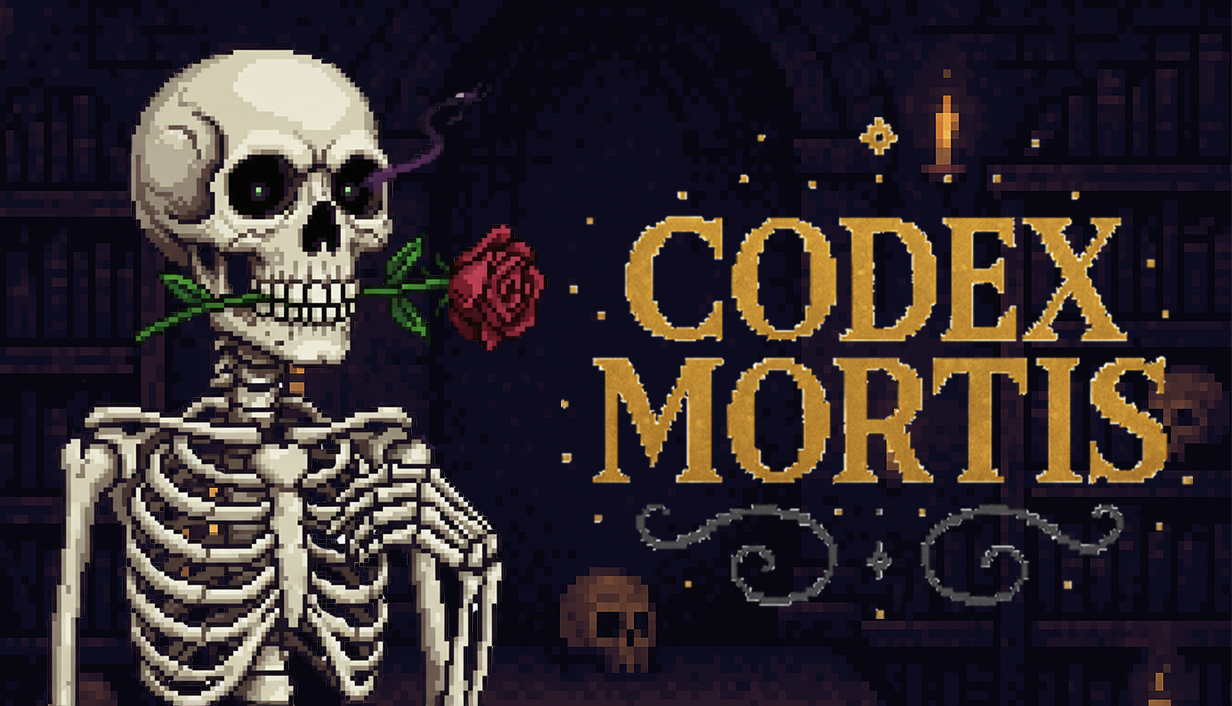
Codex Mortis casts you as a death‑wielding sorcerer in a relentless, necromantic bullet‑hell where survival depends on clever builds and brutal execution.
Runs are frantic and systems‑driven: slot spells from five distinct schools; Necromancy, Summoning, Blood, Soul, and Curses; chain synergies that reshape the battlefield, and command summoned legions and heroes to tip chaotic encounters in your favor.
Whether you prefer solo runs or coordinated co‑op, the game rewards experimentation and planning as much as twitch skill, turning each procedurally generated arena into a laboratory for devastating combinations and emergent strategies.
Gameplay and Core Loop
Core loop: The game hooks you fast: drop into a procedurally generated arena, slot active spells, scavenge resources and artifacts, then push forward until you either escape or are overwhelmed. Runs are compact and goal‑driven, so each attempt feels purposeful and immediately rewarding.
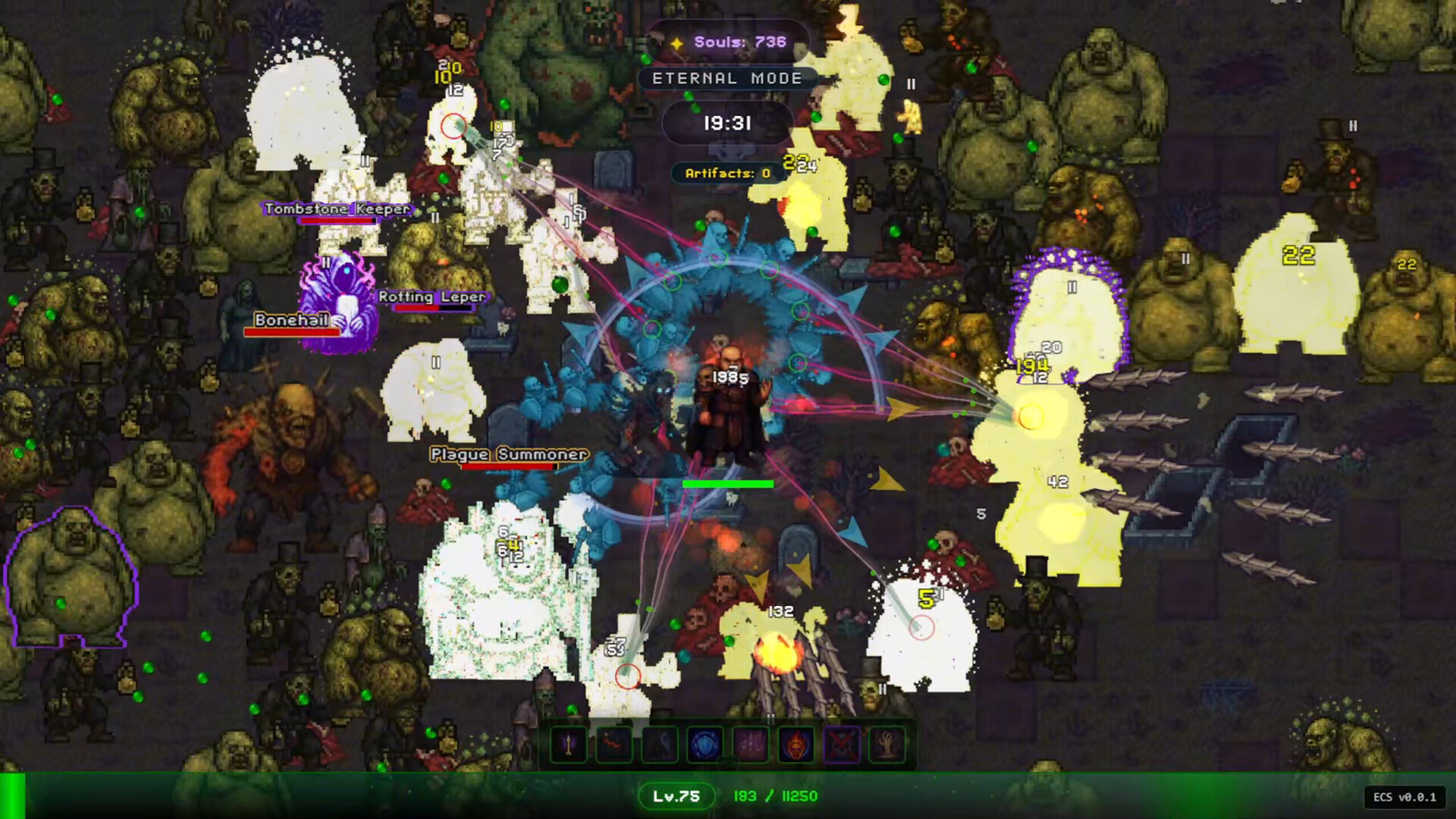
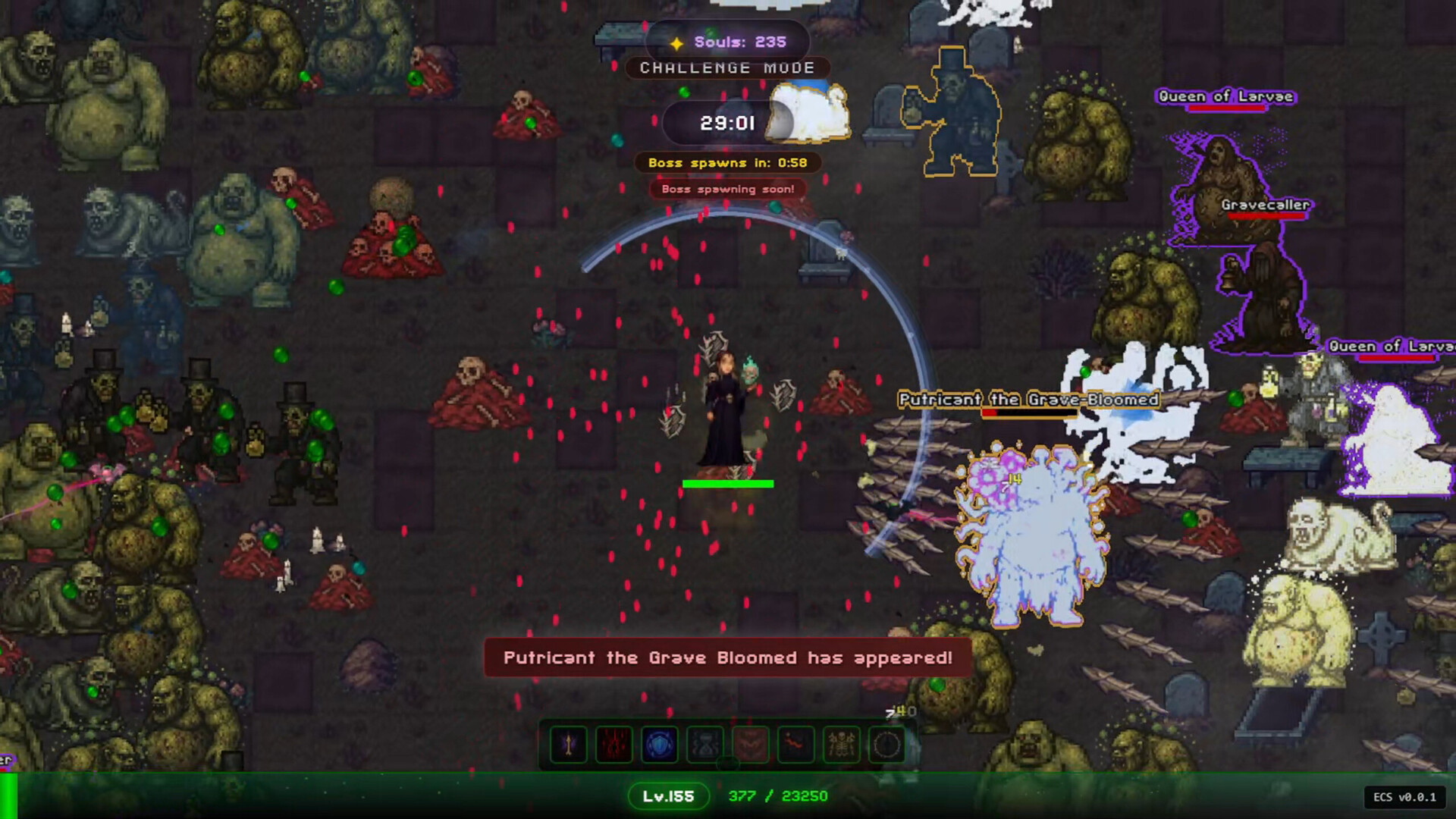
Combat density: Encounters are a dense, screen‑filling spectacle; spells, summons, and enemy projectiles overlap into complex patterns that demand constant attention. Success hinges on positioning, timing, and using synergies to reshape the battlefield rather than relying on raw firepower alone.
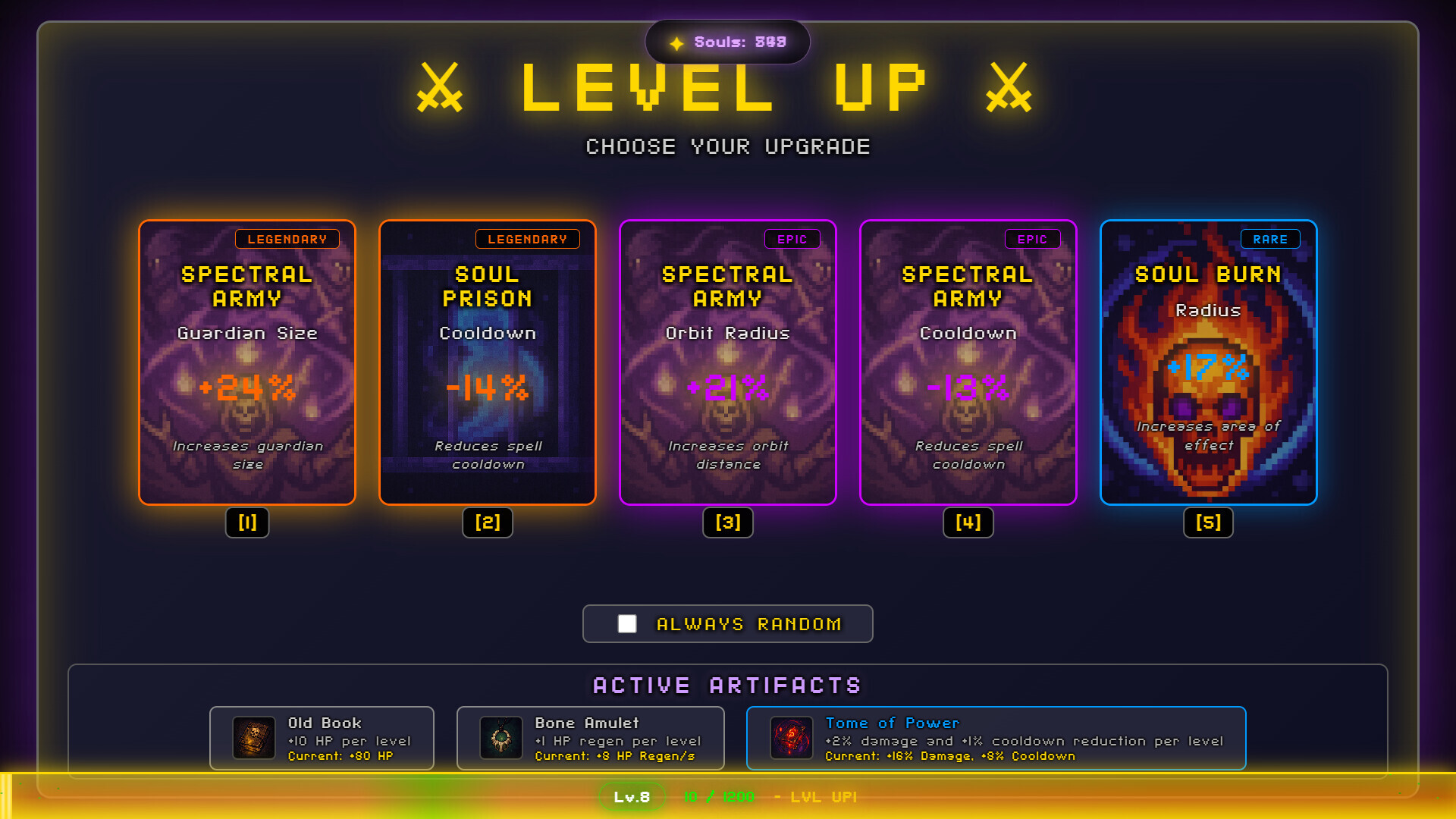
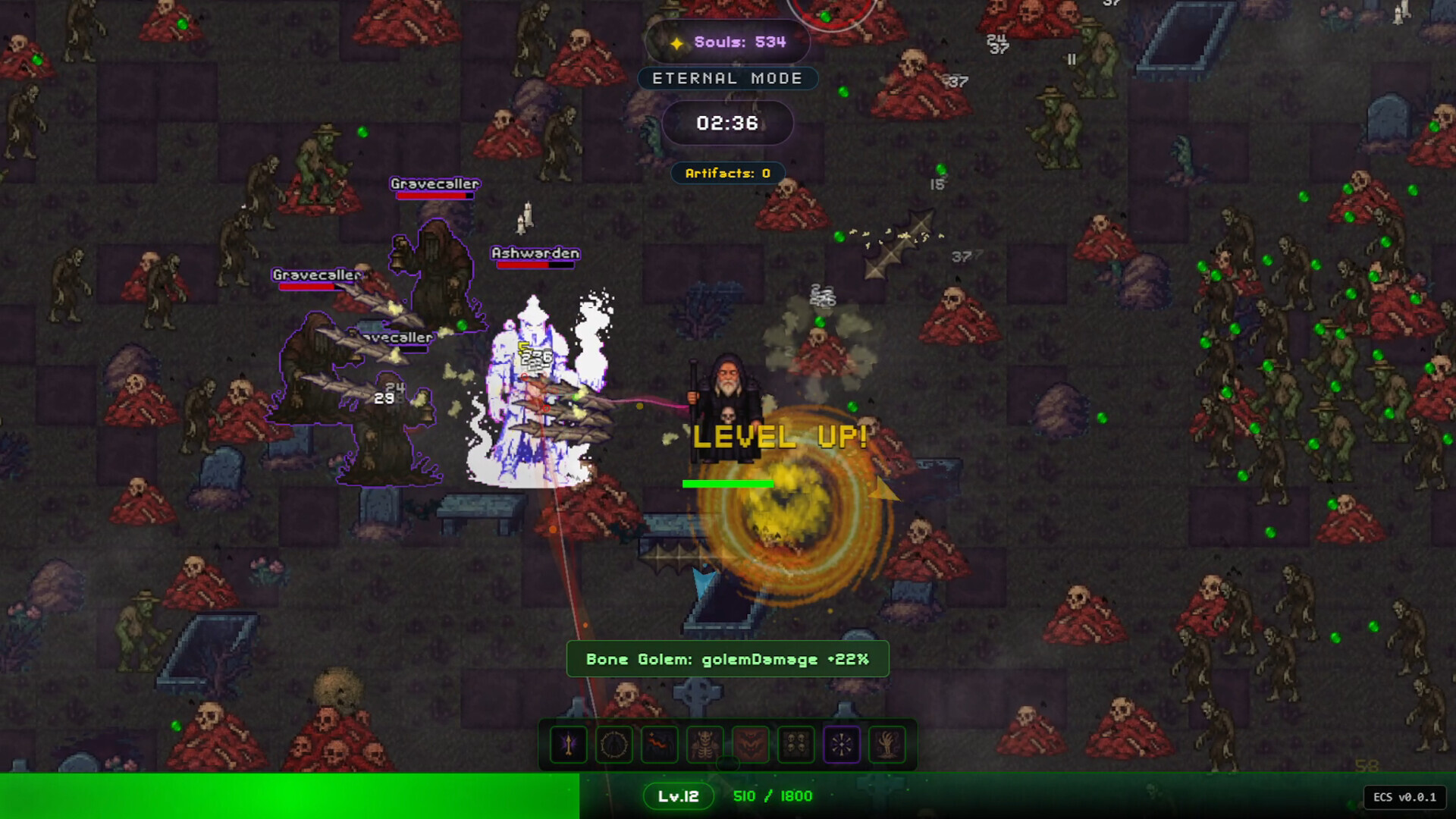
Buildcraft and decision moments: Between pickups and level rewards you make meaningful choices: which spells to slot, which artifacts to keep, and when to invest in upgrades. Those mid‑run decisions compound quickly, turning small choices into dramatic power spikes or fragile glass‑cannon setups.
Persistent progression: Unlockable heroes, artifacts, and upgrade paths carry weight across runs, giving long‑term goals beyond a single session. Each run becomes both practice and experimentation; refine a favorite build, test a new synergy, or chase a different playstyle to keep the loop fresh.
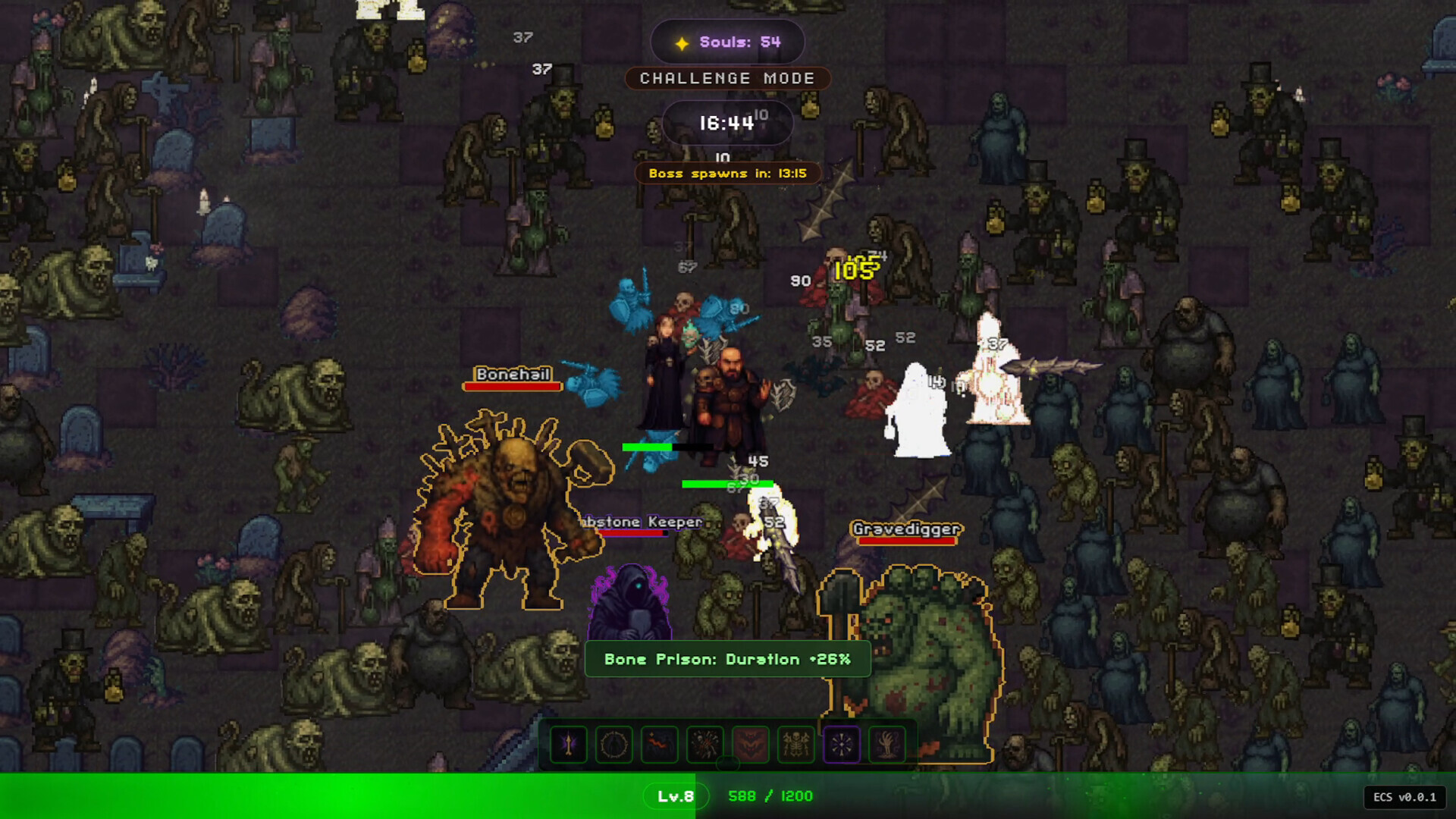
Spell Schools and Synergies
Five distinct schools of dark magic define Codex Mortis and give the game its mechanical backbone. Each school offers a clear role in combat and opens different synergy paths when combined with others.
• Necromancy - control and burst: Bone spears, corpse explosions, and skeletal prisons shape space and deliver concentrated damage. Use Necromancy to deny choke points, punish clustered foes, and convert fallen enemies into explosive resources.
• Summoning - presence and attrition: Raise skeletons, bone golems, and undead legions to soak hits and multiply your battlefield footprint. Summons hold lines, distract bosses, and scale well with area buffs that turn swarms into force multipliers.
• Blood Magic - sacrifice for power: Exchange health for amplified damage, lifesteal, or devastating area effects. Blood builds trade survivability for explosive output, rewarding aggressive play and careful risk management.
• Soul Magic - sustain and mobility: Harvest essence, siphon resources, and phase through enemies to reposition or escape. Soul effects smooth resource flow and enable hit‑and‑run tactics that keep you alive while your synergies ramp up.
• Curses - disruption and amplification: Debilitate foes, spread fear, and weaken resistances to make enemies brittle. Curses excel at softening targets for your summons and turning enemy formations into easy pickings.
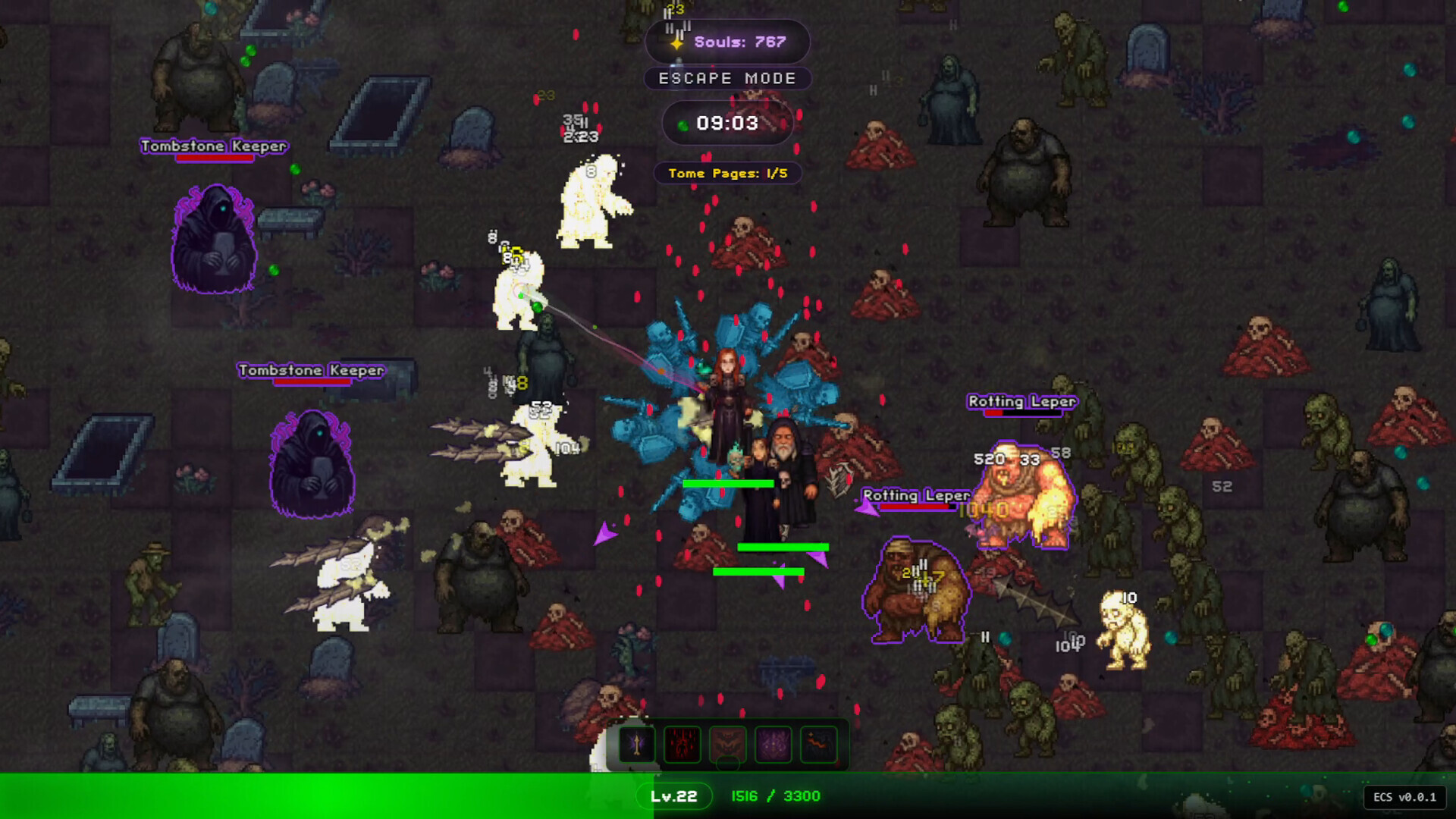
Synergy and strategy
The game’s best moments come from mixing schools to create emergent effects rather than relying on single spells. Examples of powerful pairings:
• Blood Magic + Necromancy: Sacrifice health to trigger incendiary corpse explosions that clear hordes and punish clustering enemies.
• Curses + Summoning: Terrorize and slow foes so your undead legions can swarm and finish them with minimal risk.
• Soul Magic + Necromancy: Harvest essence from kills to fuel more summons and phase through danger while your minions hold the line.
• Summoning + Curses + Artifacts: Combine mass summons with area debuffs and artifact bonuses to create near‑unbreakable defensive bubbles.
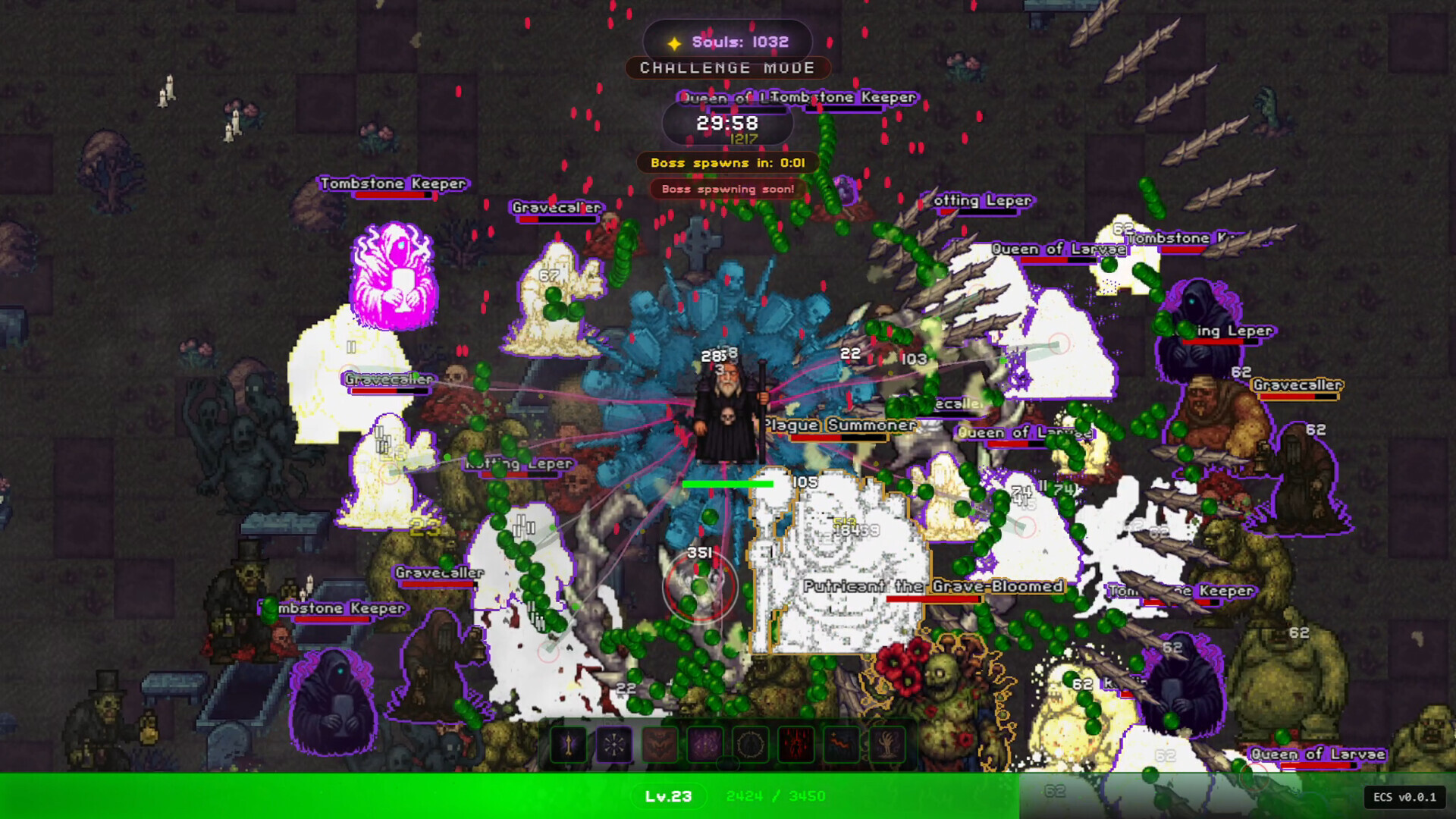
Design intent
Codex Mortis emphasizes planning synergies as much as moment‑to‑moment execution. Choosing which schools to invest in, which artifacts to equip, and how to slot spells creates a layered decision space where small choices cascade into dramatic power spikes. The result is a sandbox for creative builds where experimentation and combo discovery are the primary engines of fun.
Modes and Objectives
Codex Mortis offers three distinct modes that reshape pacing, risk, and reward, encouraging different build philosophies and resource choices.
• Escape Mode - urgent runs: A timed race to collect ancient pages and defeat the portal guardian before the immortal Lothar catches you. Time pressure forces aggressive routing, prioritizing mobility, burst damage, and quick‑clear synergies that let you reach objectives before the timer closes in.
• Challenge Mode - boss‑focused trials: Shorter, focused runs that culminate in an epic showdown with Lothar. This mode rewards optimized builds, careful cooldown management, and boss‑specific counters, perfect for players who want to test theorycrafted synergies and refine strategies for single‑encounter mastery.
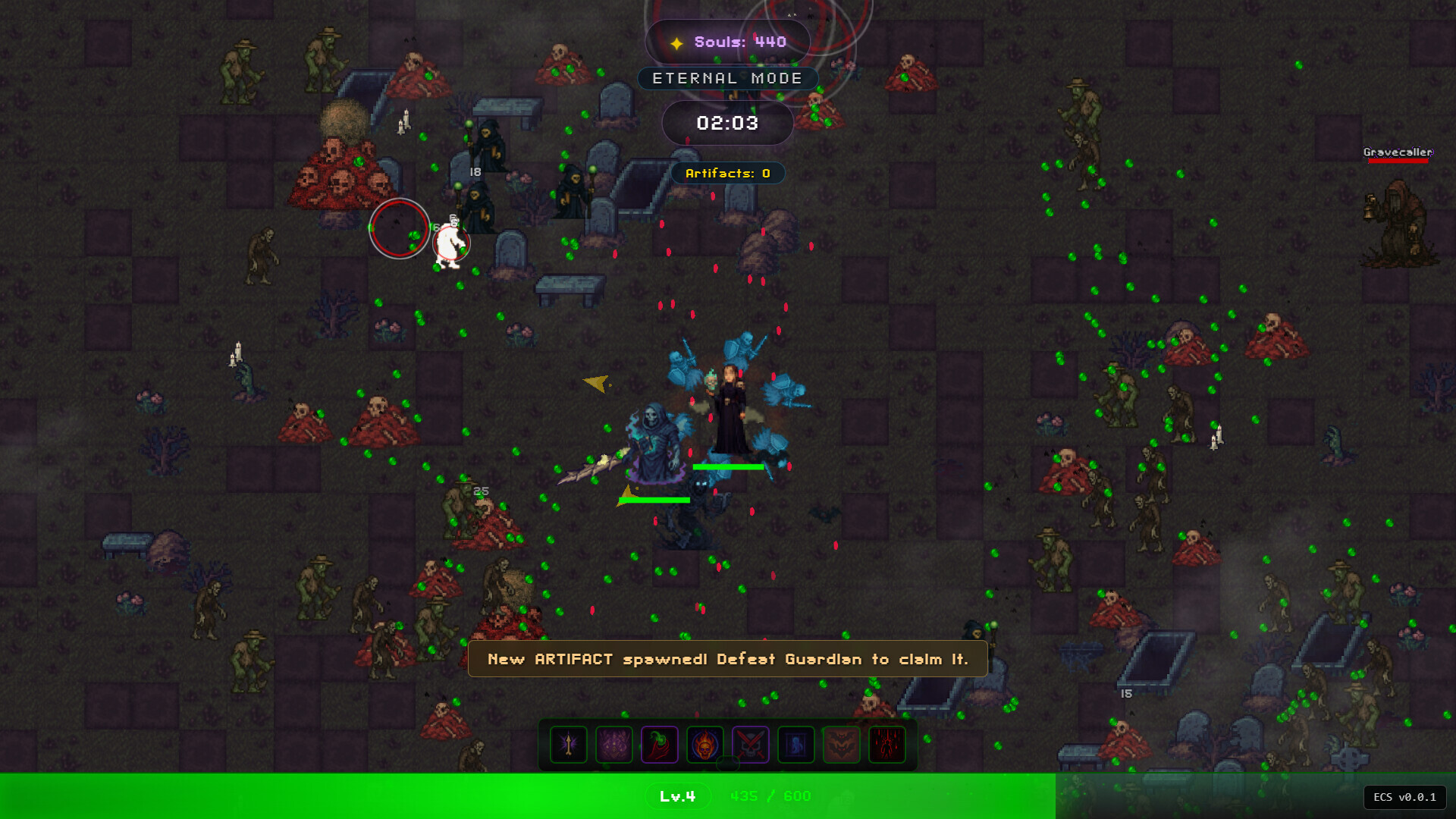
• Eternal Mode - sandbox progression: No time limits, no rush; grind for heroes, artifacts, and incremental power. Eternal Mode is ideal for experimentation: try unusual spell pairings, scale summons into unstoppable forces, and pursue long‑term unlocks without the pressure of a ticking clock.
Each mode shifts the stakes and decision points: Escape pushes for speed and survivability, Challenge demands precision and counters, and Eternal encourages creative builds and slow, compounding progression. Choose the mode that matches your goals; speedruns, boss practice, or open‑ended buildcraft.
Builds, Heroes, and Artifacts
Build variety is the game’s core promise. Slot active spells from different schools to craft distinct archetypes; glass‑cannon damage dealers, resilient blood‑tanks, summon‑heavy commanders, or utility‑focused phantoms that kite and harvest souls.
• Spell mixing: Combine abilities across schools to create emergent playstyles; a single run can shift from burst‑damage to attrition simply by swapping one spell or synergy.
• Artifacts and heroes: Artifacts meaningfully alter how spells behave, while heroes bring unique abilities and AI‑driven tactics that change your role on the battlefield.
• Deep progression: Persistent upgrades let you tune damage, cooldowns, health, speed, and more, so long‑term choices compound into powerful late‑game builds.
• Procedural variety: Randomized levels and encounter layouts keep each run feeling new, forcing you to adapt your build on the fly rather than rely on rote routes.
• Meaningful unlocks: Hero and artifact progression provide clear mid‑ and long‑term goals, new tools that reshape strategies and reward experimentation.
Together these systems create a layered sandbox: quick, satisfying runs for immediate thrills and a rich progression loop for players who love iterating on powerful, surprising combinations.
New Player Experience and Recent Updates
Recent UX and balance work aims to smooth the onboarding curve:
• Starter improvements: Bonespear is now a default scroll for new players; several spells (BoneSpear, Life Drain, Soul Burn, Raise Skeleton, Blood Frenzy) are unlocked early so players can experiment immediately.
• Build flow: The initial build starts empty and four skill slots are unlocked from the outset, encouraging early experimentation and clearer synergy planning.
• UI tweaks: Synergies are now visible beneath active spells, removing a hidden mechanic and making combo planning more transparent.
• Balance overhaul: XP gains, enemy counts, and level‑up pacing were reworked to reduce grind and make each level up feel impactful.
• Quality‑of‑life fixes: Warnings for empty builds, refreshed scroll removal UX, and improved game‑over tips guide players back into the upgrade loop.
These changes show the developer responding to feedback and prioritizing clarity and flow from the first run.
Strengths
• Synergy‑driven design: Five distinct magic schools and visible synergy feedback make build planning rewarding and creative.
• High replay potential: Procedural worlds, multiple modes, and unlockable heroes/artifacts encourage repeated experimentation.
• Clear progression goals: Artifacts and hero unlocks provide tangible mid‑ and long‑term objectives.
• Co‑op options: Playing with friends amplifies the chaos and opens new tactical possibilities for coordinated synergies.
• Active development: Recent balance and UX updates demonstrate a commitment to polish and player feedback.
Weaknesses
• Balance tuning still in progress: With many systems reworked, some spells or artifact combos may feel overpowered until further balancing lands.
• Learning curve for newcomers: Even with UI improvements, the density of systems and combo potential can overwhelm players who prefer simpler, more guided starts.
• Potential repetition: Procedural generation keeps runs varied, but without a broad roster of unique enemy behaviors or late‑game twists, runs could feel similar over time.
• Unannounced release timing: With the full release date still to be announced, some players may hesitate to invest until the roadmap is clearer.
Final Verdict
Codex Mortis is an ambitious, systems‑first necromantic bullet‑hell that will click for players who love buildcraft, combo discovery, and emergent chaos. Its five distinct schools of dark magic and a clear, visible synergy system turn each run into a laboratory for creative, devastating spell pairings, while summoned legions and hero companions add tactical depth and spectacle.
Multiple modes and co‑op broaden the game’s appeal, whether you’re racing the clock, honing boss strategies, or grinding for artifacts, and recent balance and UX overhauls make the early game far more welcoming and the progression loop more rewarding. If you enjoy planning intricate builds, commanding undead armies, and watching layered synergies cascade across the battlefield, Codex Mortis is a standout project to watch as it moves toward full release.
Watch and Wishlist
• Why wishlist: Get notified when the full game launches, major balance patches, new spell schools/heroes, co‑op features, and seasonal content drop; wishlist alerts also flag sales and platform releases.
• Platforms to track: PC (Steam/Epic) first; watch for console ports and cloud/VR storefronts as the developer expands availability.
• How to stay informed: Wishlist the demo on store pages, join the official Discord, follow GROLAF and CRUNCHFEST on social media, and check the game’s roadmap/patch notes for update windows.
• Price perspective: Only a free demo is available right now, no full release price announced; wishlist to catch launch discounts or bundle offers.
Key Takeaways
• Premise: Necromantic survival bullet‑hell where you wield five schools of dark magic to command undead armies and obliterate hordes.
• Core loop: Fast, build‑driven runs; slot spells, collect artifacts, and push until you escape or are overwhelmed.
• Magic depth: Five distinct schools (Necromancy, Summoning, Blood, Soul, Curses) enable layered synergies and emergent combos.
• Synergy focus: Visible synergy feedback and combo design reward planning as much as twitch execution.
• Modes: Three playstyles, Escape (timed race), Challenge (boss trials), and Eternal (open‑ended grind), each shifts pacing and strategy.
• Build variety: Active spell mixing, artifacts, and hero companions create a wide sandbox for creative archetypes and long‑term goals.
• Progression: Persistent unlocks for heroes and artifacts plus deep upgrade paths give meaningful reasons to replay.
• Co‑op and spectacle: Multiplayer amplifies tactical possibilities and the chaotic, screen‑filling spectacle of summons and spells.
• Early access state: Free demo available now with significant balance and UX overhauls; full release date and pricing are unannounced.
• Who it’s for: Ideal for players who love systems, combo discovery, and iterative buildcraft; less suited to those seeking tightly guided, narrative‑driven experiences.
Game Information:
Developer: GROLAF
Publisher: CRUNCHFEST
Platforms: PC (reviewed)
Demo Release Date: December 9, 2025
Score: 8.0 / 10
Codex Mortis delivers a compelling systems‑first bullet‑hell built around creative spell synergies, satisfying buildcraft, and chaotic co‑op spectacle. Recent balance and UX improvements make the early game more approachable, and the visible synergy feedback turns each run into a rewarding experiment. Remaining rough edges and tuning needs keep it from perfection, but the core loop and combo potential make this a standout demo worth following to full release.
“8.0 / 10 - A dark, addictive sandbox of necromantic combos: brutal, creative, and primed for players who love to tinker with devastating builds.”