Magic Forge Tycoon: Smiths and Sovereigns - A systems‑forward management sim about craft, commerce, and consequence (Game Review)
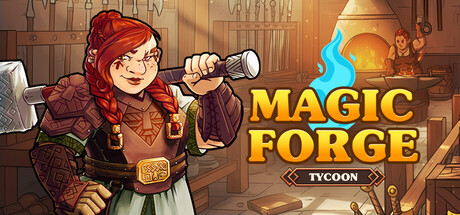
Magic Forge Tycoon casts you as a mythic weaponsmith running an astral forge: craft enchanted arms, manipulate markets, and steer wars through the products you produce. It’s a deep, systems‑forward management sim with satisfying micro‑crafting (hammer timing, alchemical infusions) and macro strategy (market play, faction contracts). Expect a steep but rewarding learning curve, excellent for players who love optimization, emergent political consequences, and long‑term planning.
What the game is
You run an astral forge that produces enchanted weapons for nobles, generals, and clandestine clients. The loop blends tactile micro‑crafting; selecting patterns, timing hammer strikes, tuning forge heat, and applying alchemical infusions, with macro management: research, production lines, market speculation, and political contracts. Your choices affect regional power balances, opening emergent narrative outcomes where you can profit from conflict or steer kingdoms toward peace.
Core gameplay loop
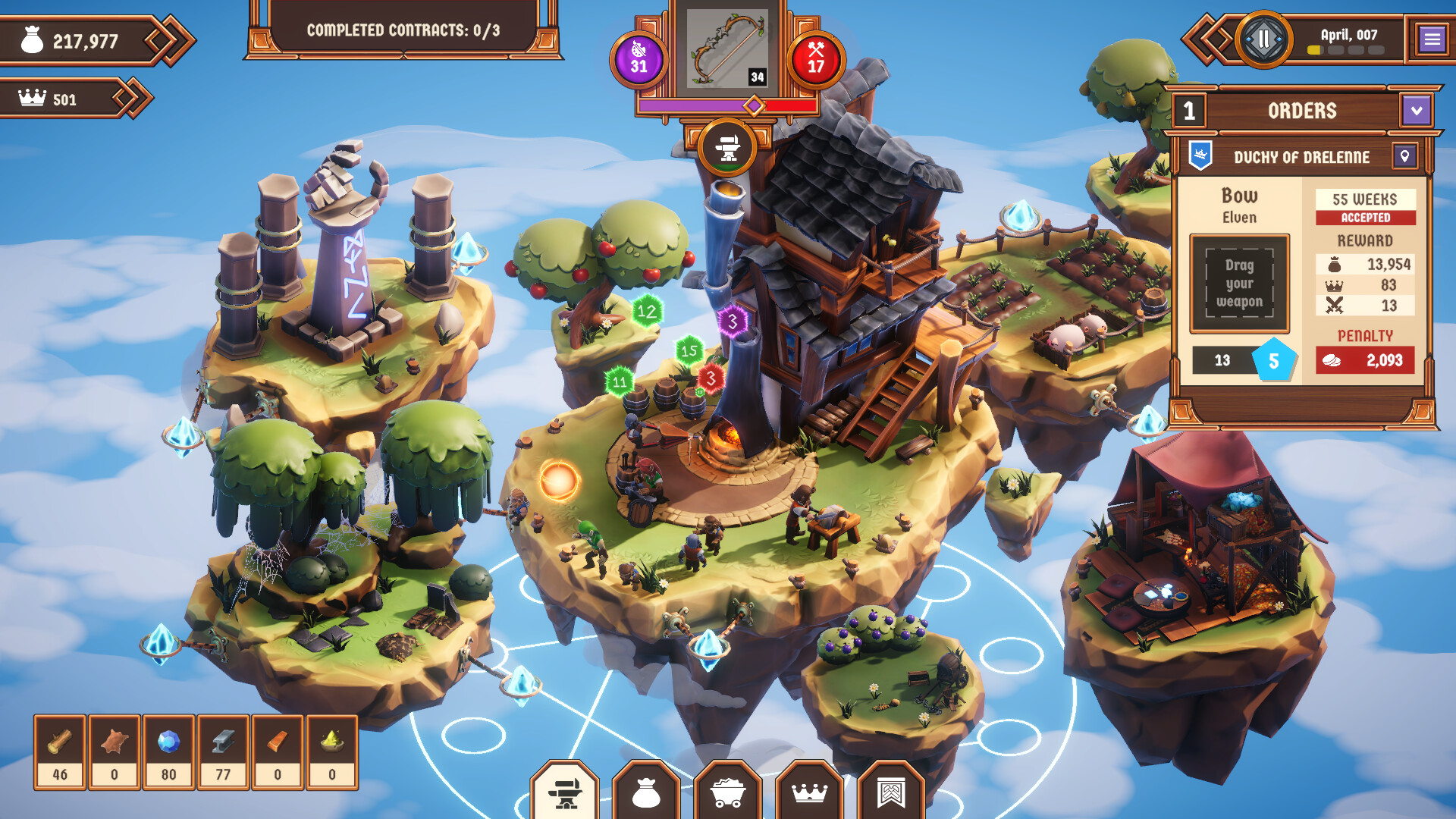
• Design: Choose weapon blueprints and tweak stats, reach a balance between damage, durability, weight, and enchantment capacity.
• Forge: Execute the forging minigame (timing, heat control, infusion) to determine base quality and unlock enchantment slots.
• Enchant: Combine runes, reagents, and alchemical processes to create synergies, some combos favor siege, others stealth or cavalry.
• Market & logistics: Buy raw materials, anticipate price swings driven by wars and alliances, and manage stockpiles and trade outposts.
• Contracts & politics: Fulfill faction orders to earn Favor Points, unlock perks, and influence wars; choose clients carefully, who you arm changes the realm.
What it does well
• Tactile forging systems: The astral forge mechanics add satisfying micro‑decisions to each weapon, so quality feels earned.
• Meaningful economy: Prices and resource availability shift with geopolitical events, rewarding strategic stockpiling and timing.
• Emergent narrative: Contracts and Favor Points create real trade‑offs, short‑term profit versus long‑term political leverage.
• Progression depth: Research trees, forge upgrades, and trade outposts unlock new designs and exotic resources that change playstyles.
Where it could improve
• Onboarding and tutorials: The number of interlocking systems can overwhelm; clearer, optional guided tutorials and recipe tracking would help new players.
• Pacing: Early game can feel slow while you build capacity; midgame complexity spikes may surprise players who expect a steadier ramp.
• UI clarity: Market screens and enchantment tooltips could be more readable; better filters, clearer stat comparisons, and recipe bookmarking would speed decisions.
• Balance tuning: Market volatility and contract difficulty occasionally create frustrating bottlenecks; ongoing balance patches will be important.

Systems worth highlighting
• Astral Forge microgame: Heat management, hammer timing, and infusion windows make each weapon’s base quality depend on player skill as well as resources.
• Enchantment synergies: Runes and reagents combine to produce emergent archetypes, some builds excel at breaking fortifications, others at assassination or morale.
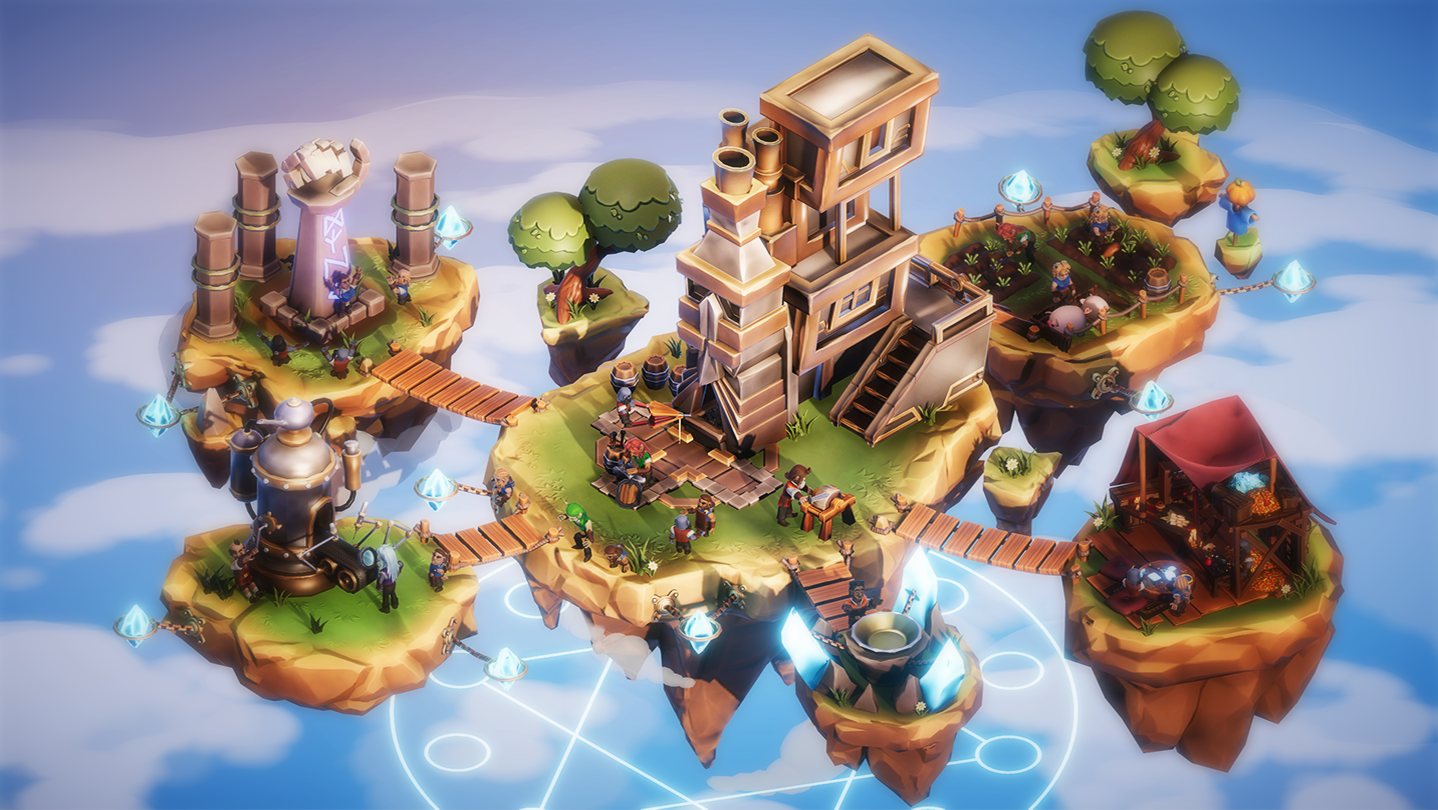
• Trade outposts: Strategic outposts provide early intel on faction movements and access to rare materials, rewarding map control and foresight.
• Favor economy: Favor Points unlock exclusive contracts, political perks, and forge bonuses that change how the late game plays out.
Replayability and long‑term appeal
Dynamic wars, shifting markets, and multiple weapon trees give the game a high ceiling. You can replay to pursue different reputations, become a peacemaker blacksmith, a neutral artisan, or a war profiteer, and optimization fans will enjoy squeezing more throughput from production lines and discovering new enchantment metas.
Practical tips
• Early research: Prioritize throughput upgrades and basic automation to avoid midgame bottlenecks.
• Market timing: Stockpile key reagents before predicted conflicts; sell into demand spikes rather than holding everything.
• Contract mix: Balance high‑pay risky contracts with steady, lower‑risk orders to stabilize income.
• Recipe management: Create a personal catalog of favored patterns and enchantment combos to speed repeat crafting.

Final Verdict
This is a richly imagined management sim that turns blacksmithing into a strategic art: the astral forge’s tactile micro‑crafting, deep enchantment synergies, and a reactive market/political layer combine into a satisfying, high‑ceiling experience. Players who love optimization, emergent narratives, and long‑term planning will find hours of rewarding systems to tinker with and meaningful choices that ripple across the realm.
That said, the game asks a lot of its player: the onboarding could be clearer, and a few UI and pacing refinements would make the early game less daunting. If you enjoy complex sims and don’t mind investing time to learn the mechanics, this is a must‑try; casual players should be prepared for a learning curve but will be rewarded by the depth and replayability once they settle in.
Watch and Wishlist
• Why wishlist: Get notified about new weapon patterns, balance patches, and expansions that add political depth or late‑game systems.
• Platforms to track: PC (Steam/Epic) first; watch for console ports if you prefer controller play.
• How to stay informed: Follow the developer on social media, join the game’s Discord for meta discussion and patch notes, and monitor the store page for updates.
• Price perspective: Consider waiting for a launch discount if you’re budget‑minded; the game’s depth rewards long playtime, so value scales with hours invested.
Key takeaways
• Deep crafting: Fine‑grained forging and enchantment systems make each weapon feel unique.
• Reactive world: Markets and wars respond to your output, creating meaningful strategic choices.
• High replay value: Multiple faction paths and weapon trees encourage repeat playthroughs.
• Needs polish: Better onboarding and UI clarity would broaden appeal.
• Best for: Players who love systems, optimization, and emergent political consequences.
Game Information:
Developer: Clever Trickster Studio, Clever Trickster Productions
Publisher: Clever Trickster Productions
Platforms: PC (reviewed)
Release Date: January 13, 2026
Reviewed by Alissa Worley
Score: 8.0 / 10 👍
⭐⭐⭐⭐⭐⭐⭐⭐☆☆
🎮 BioGamer Girl Review Verdict
Magic Forge Tycoon is a rich, strategic sim that rewards experimentation and long‑term planning. Its tactile forging mechanics and reactive economy create a compelling loop, and the political consequences of your contracts give the game narrative weight. With improved onboarding and UI polish, it could be a genre standout; as is, it’s a must‑try for sim fans and a rewarding long‑term project for players who enjoy mastering complex systems.
“8.0 / 10 - Every hammer strike echoes through the realm: forge with care, and history will remember your name.”
