Quantum Threshold VR: The Wheel Remembers - A weaponized chair, rogue AIs, and emergent, high‑moment gameplay. (Game Review)
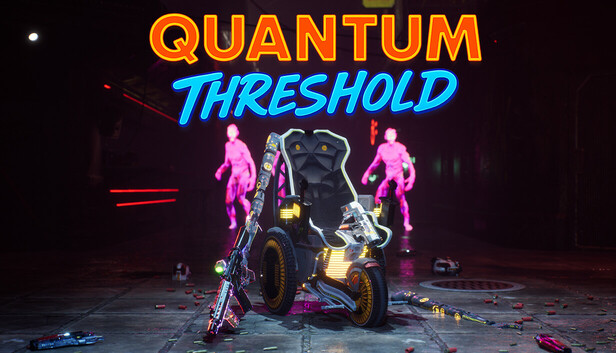
Quantum Threshold upends VR combat by seating you in a weaponized wheelchair and throwing you into a neon‑soaked, Techno Wraith‑infested dystopia. Engineered from the ground up for seated play, it’s a roguelike shooter that treats accessibility as a core design principle rather than an afterthought, every mechanic is tuned for the chair.
You drift through gunfire with momentum‑driven controls, lay down turrets mid‑roll, and chain hacks and grenades into frantic, tactile encounters; what might seem like a limitation becomes a fierce, kinetic identity. The result is a bold, visceral experience where build choices, upgrades, and on‑the‑fly improvisation turn each run into a high‑stakes statement of survival.
What it is
Quantum Threshold thrusts you into constantly reshaping arenas where every run is a frantic scramble for loot, upgrades, and the next shot at escape.
Between runs you return to a gritty hub‑world stronghold where earned salvage becomes permanent upgrades, letting you tailor loadouts and chair mods that compound over time.
The core loop; enter arena, fight, die, adapt, rewards emergent builds and risky decisions: gamble on a powerful but fragile weapon, or invest in defensive chair systems that change how you approach encounters.
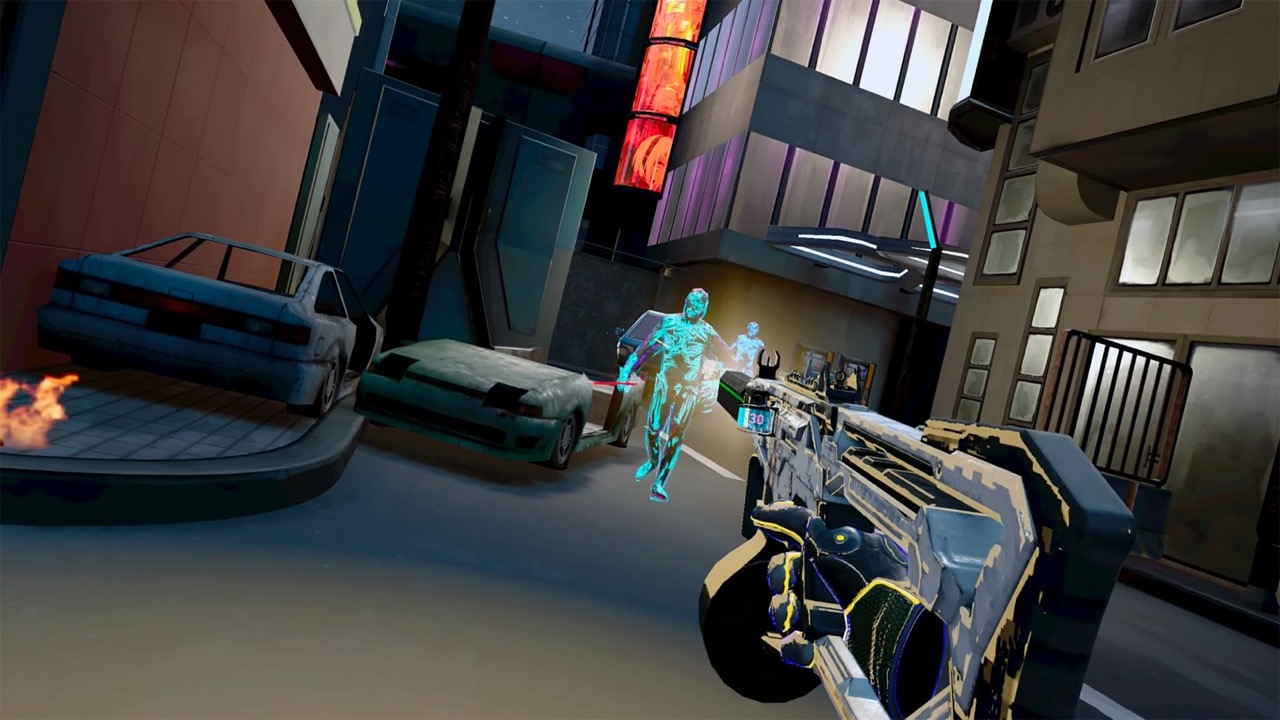
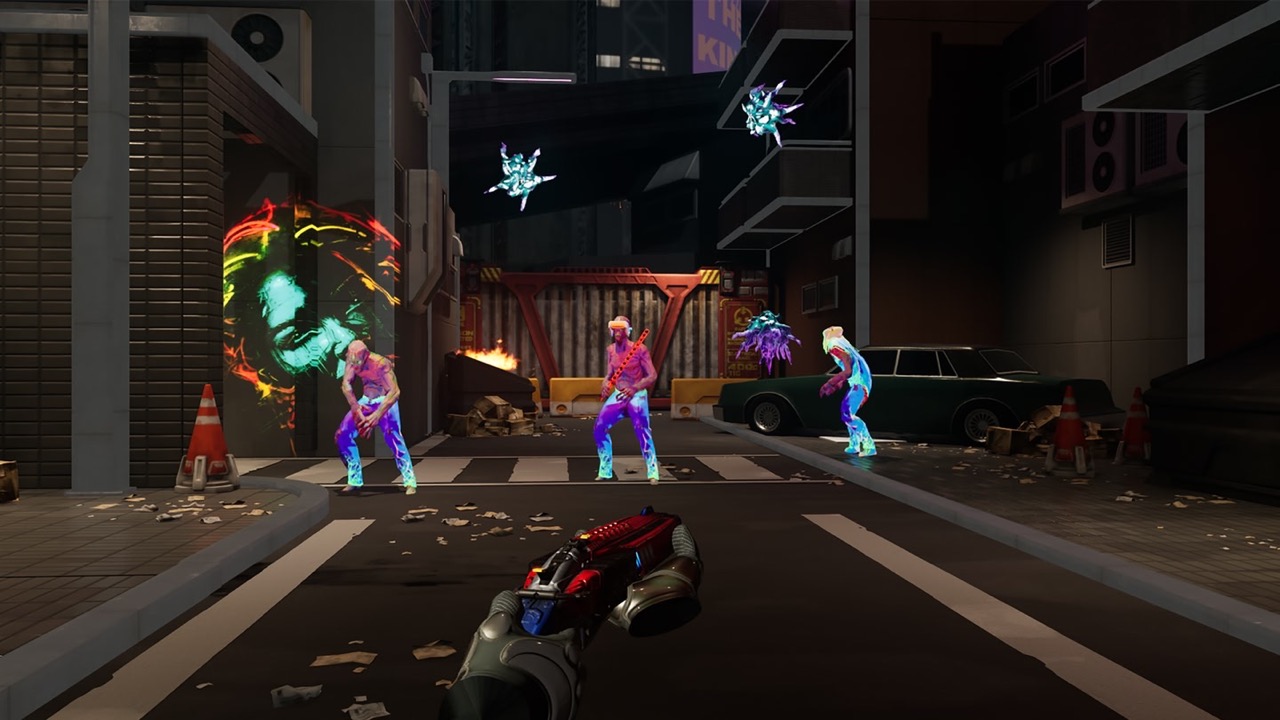
All of it unfolds against a neon‑soaked, rain‑slicked cityscape of broken towers and data‑strewn alleys, where hacking, grenades, and robotic appendages are the hard currency of survival and improvisation.
How it plays
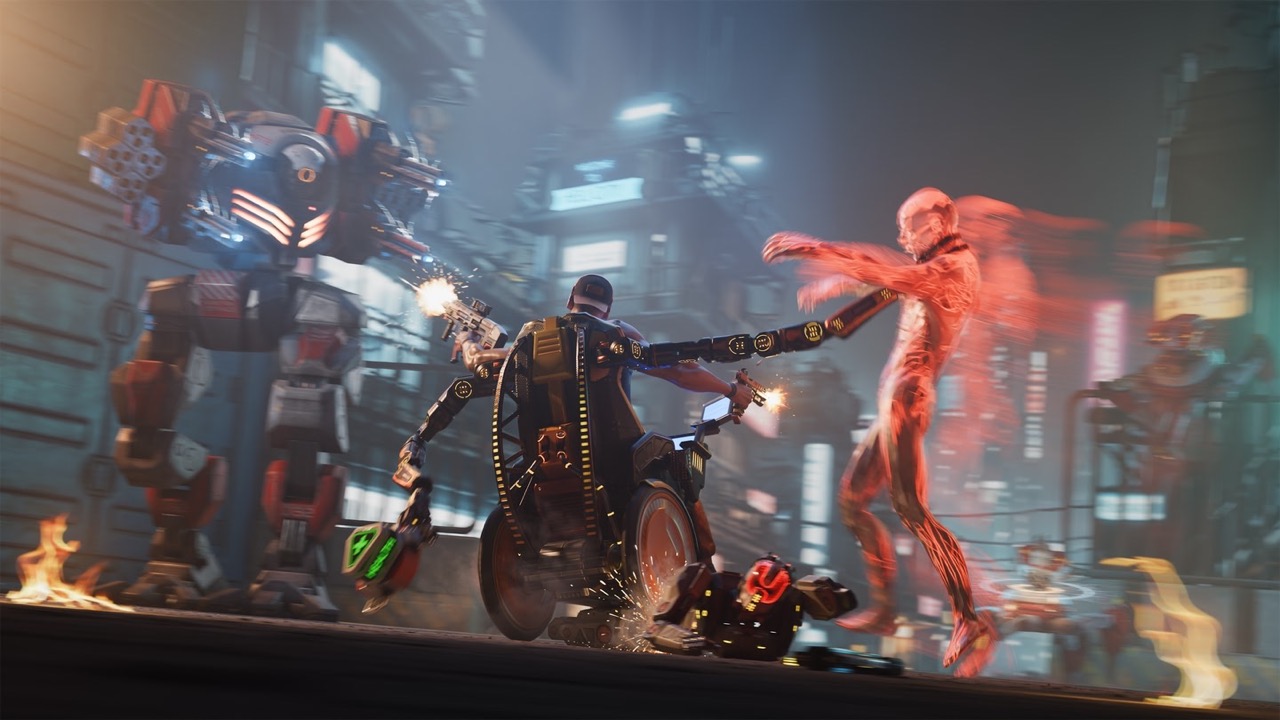
• Wheelchair combat: Movement centers on a weaponized wheelchair tuned for seated VR; momentum‑driven drifting, short boosts, and precise angling let you dodge incoming fire while lining up shots with standard VR aiming. The chair’s physics reward anticipatory movement and positioning, turning mobility into a tactical resource rather than a limitation.
• Tactical toolkit: Deployable turrets, AI‑corrupting hacks, grenades, and a modular robot arm create layered combat options; use turrets for area denial, hacks to turn enemies or disable systems, grenades for crowd control, and the arm for melee, grappling, or utility interactions. Synergies between tools let you craft distinct roles on the fly: support, burst DPS, or zone control.
• Roguelike progression: Procedurally varied runs feed salvage back to a hub‑world stronghold where permanent upgrades, chair mods, and unlockable abilities compound over time. Meaningful choices, spend now for short‑term power or save for long‑term systems, create tension and emergent builds that change how you approach each run.
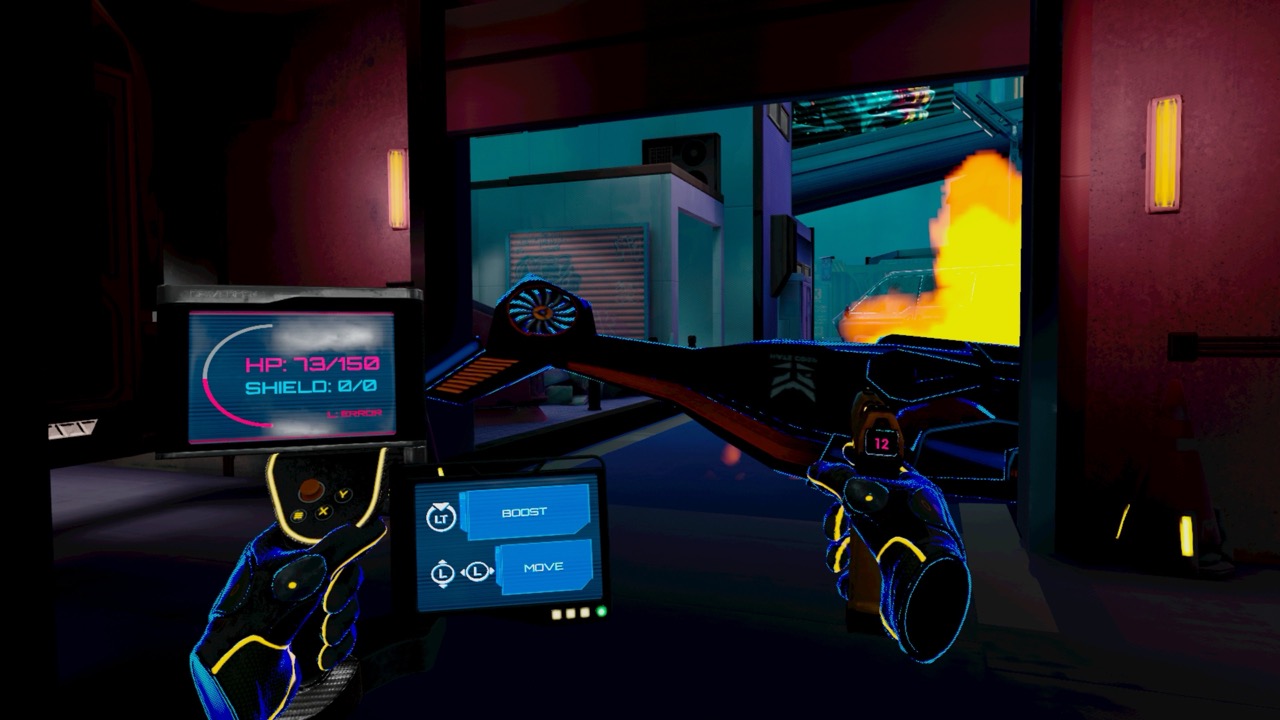
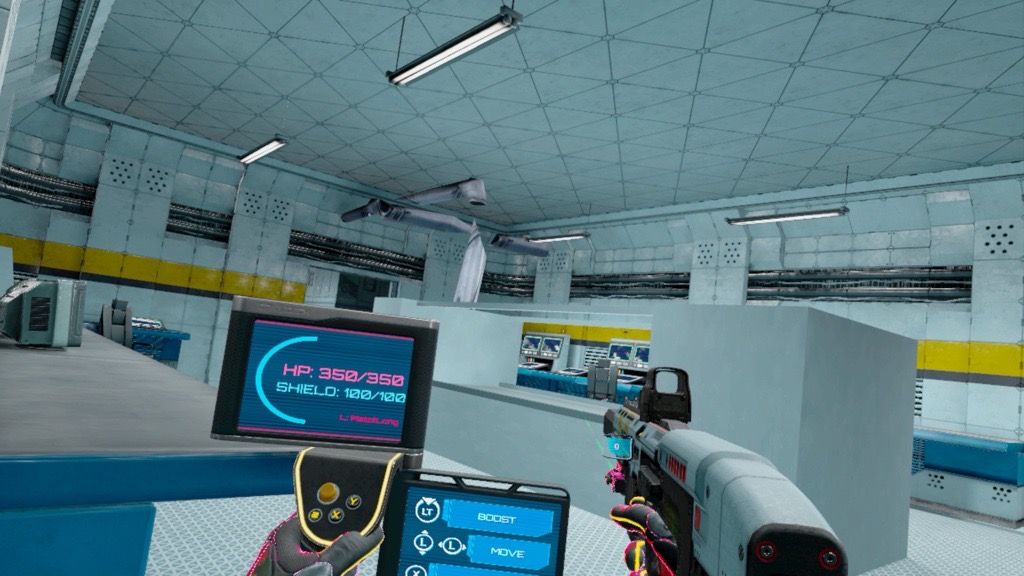
• Controls and comfort: The game includes toggle‑grip, comfort toggles, and other seated‑friendly options, but players report a learning curve and want clearer onboarding. Additional quality‑of‑life requests include single‑controller movement scaling, HUD orientation aids, chair‑visibility toggles, and a more explicit tutorial that explains movement thresholds, upgrade triggers, and key interactions.
Presentation and systems
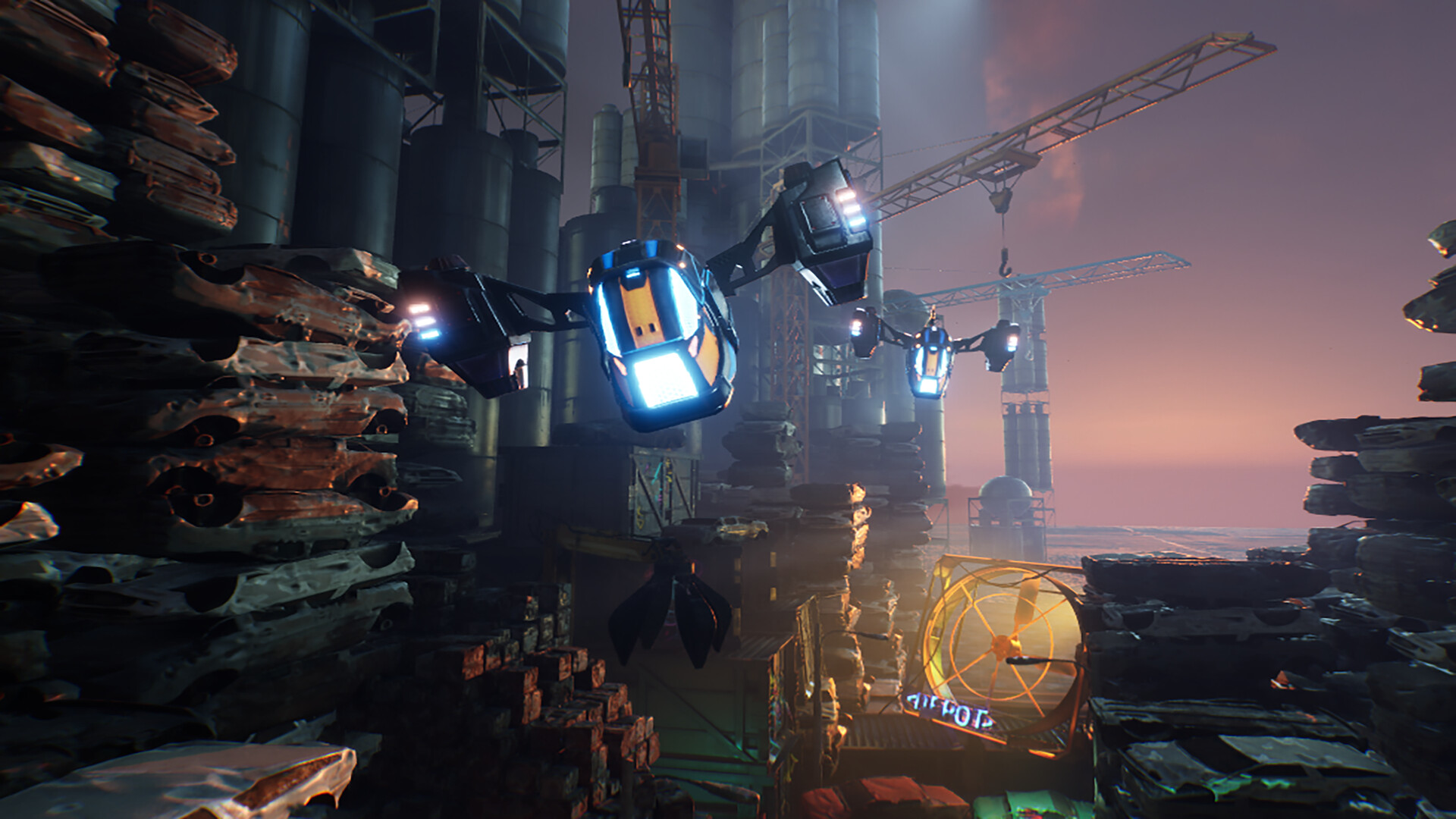
Visually, Quantum Threshold leans hard into cyberpunk grit; neon reflections, oil‑slick puddles, and hostile, angular architecture that frames combat like a series of claustrophobic set pieces; while disciplined lighting and particle work give each arena a lived‑in, dangerous texture.
Audio design is equally purposeful: sharp spatial cues, impactful weapon SFX, and an ever‑present assistant voice that paces encounters and heightens tension without becoming intrusive. The upgrade economy mixes free progression with reported paid options, which some players find useful and others want clarified; weapon and chair modularity, however, genuinely reward experimentation and creative synergies.
Small mechanical touches, like the flick‑to‑reload; add satisfying tactile feedback, though players frequently request a manual reload alternative and more customizable comfort and HUD options to better match individual playstyles and reduce motion discomfort.
Strengths
• Seated‑first design: A rare, thoughtfully executed title that treats seated play as the primary experience, not a fallback; every mechanic, UI choice, and encounter is tuned for comfort and intensity while seated.
• Distinct movement loop: Momentum‑driven wheelchair drifting, short boosts, and mid‑roll turret deployment create a tactile, physical combat rhythm that rewards positioning and timing rather than twitch aim alone.
• Meaningful build variety: Permanent hub upgrades and run‑time pickups combine to support diverse, emergent builds; tank‑style chairs, glass‑cannon loadouts, or utility‑focused setups, so choices feel consequential and replayable.
• Real accessibility potential: By centering the chair as the core interaction, the game opens roguelike action to players who can’t or prefer not to stand, demonstrating how accessibility‑first design can produce novel, competitive gameplay.
Weaknesses
• Polish and clarity: Several players report that onboarding and UI leave key systems opaque; tutorials skim important mechanics, upgrade unlock conditions aren’t clearly signposted, and feedback during runs can feel ambiguous. That uncertainty makes progression feel accidental rather than earned, which undercuts the satisfaction of building toward specific goals.
• Comfort and motion: Even as a seated‑first title, some players experience nausea or disorientation and ask for more granular comfort options. Requested additions include HUD orientation anchors, a toggle to hide or lock the virtual chair to match physical rotation, single‑controller movement scaling, and clearer visual indicators for facing and momentum to reduce sensory mismatch.
• Bugs and balance: Players have encountered a range of technical issues; enemies stuck in geometry, inconsistent assistant audio levels, and occasional progression bottlenecks where upgrade variety stalls or shop inventories feel repetitive. These edge cases don’t break the core loop for everyone, but they do interrupt flow and make some runs feel unfair or unfinished.
• Pacing and long‑term depth: The run loop is compelling early on, yet a portion of the community wants deeper late‑game systems: a visible skill tree, clearer upgrade paths, more meaningful chair and weapon branches, and additional endgame content to reward long‑term investment. Without those layers, the experience can feel brilliant but compact, leaving players hungry for more strategic progression.
Who should play
Quantum Threshold is for players who want a bold, experimental take on VR roguelikes, especially those who prefer or require seated play. If you enjoy fast, build‑driven runs, modular weapon systems, and the tactile novelty of wheelchair‑based movement, this game offers a distinct and memorable ride. Players who need extensive comfort options or who expect long, polished campaigns may find it rough around the edges.
Final Verdict
Quantum Threshold is an ambitious, occasionally raw, but unmistakably original entry in VR, a game that turns a wheelchair from accessibility feature into a bold design fulcrum.
Making the chair the centerpiece of combat isn’t a gimmick; it’s a gameplay innovation that reshapes movement, tactics, and identity: when the controls feel tight and upgrades synergize, runs become frantic, inventive, and genuinely thrilling.
The roguelike loop rewards experimentation and risk‑taking, and the seated‑first approach opens new tactical possibilities other VR shooters rarely explore.
Its promise is tempered by rough edges; murky onboarding, comfort options that need expansion, and clearer progression signals, but with focused polish on tutorials, motion comfort, and upgrade transparency, Quantum Threshold could stand as a powerful example of how accessibility‑led design can broaden and deepen action VR.
Watch and Wishlist
• Why wishlist: Be first to see balance patches, comfort updates, new chair mods, and additional content (skill trees, late‑game expansions) that address early‑access rough edges.
• Platforms to track: Meta Quest (Quest Store); PC VR (Steam - SteamVR); PlayStation VR2 if a console port is announced.
• How to stay informed: Wishlist on each storefront and enable notifications; follow the developer on Discord and X (Twitter); watch the Steam news feed and the studio’s official channels for patch notes and roadmap posts.
• Price perspective: $23.99. A mid‑tier indie price; reasonable for a unique, seated‑first roguelike; expect occasional sales and added value if post‑launch content arrives.
Key Takeaways
• Core concept: Quantum Threshold makes the wheelchair the central gameplay mechanic, turning seated play into a bold, tactical identity.
• Gameplay loop: Fast, roguelike runs emphasize risk‑reward decisions; loot, adapt, and return to the hub to convert salvage into permanent upgrades.
• Movement and combat: Momentum‑driven wheelchair drifting, boosts, and mid‑roll turret deployment create a physical, positioning‑first combat rhythm.
• Tactical depth: Modular tools; deployable turrets, AI hacks, grenades, and a robot arm; enable varied builds and on‑the‑fly synergies.
• Progression: Permanent hub upgrades and run‑time pickups combine to support meaningful, emergent builds, though unlock conditions can feel opaque.
• Accessibility impact: By designing for seated VR from the ground up, the game expands access and introduces novel mechanics other shooters rarely explore.
• Areas for improvement: Players report unclear tutorials, comfort and motion options that need expansion, and occasional bugs or progression stalls.
• Replay value: Strong for players who enjoy build experimentation and high‑risk runs; may feel compact without deeper late‑game systems.
• Value proposition: A distinctive, experimental VR roguelike; raw in places but full of potential, especially if developers refine onboarding, comfort, and progression clarity.
Game Information:
Developer: Vaki Ltd
Publisher: Vaki Games
Platforms: MetaQuest (reviewed)
Release Date: May 22, 2025
Score: 9.0 / 10
Quantum Threshold scores 9.0 out of 10: a daring, finely tuned experiment in seated VR that transforms accessibility into a core gameplay identity.
Its momentum‑driven wheelchair combat, modular build systems, and roguelike risk‑reward loop deliver consistently thrilling runs, and when upgrades click the game reaches moments of pure, kinetic joy.
Remaining rough edges; tutorial clarity, comfort options, and a few technical bugs, keep it from perfection, but they’re fixable and don’t obscure how original and compelling the core design is.
“9.0 / 10 - A gutsy, inventive roguelike that turns a wheelchair into a war machine; raw, thrilling, and full of potential.”