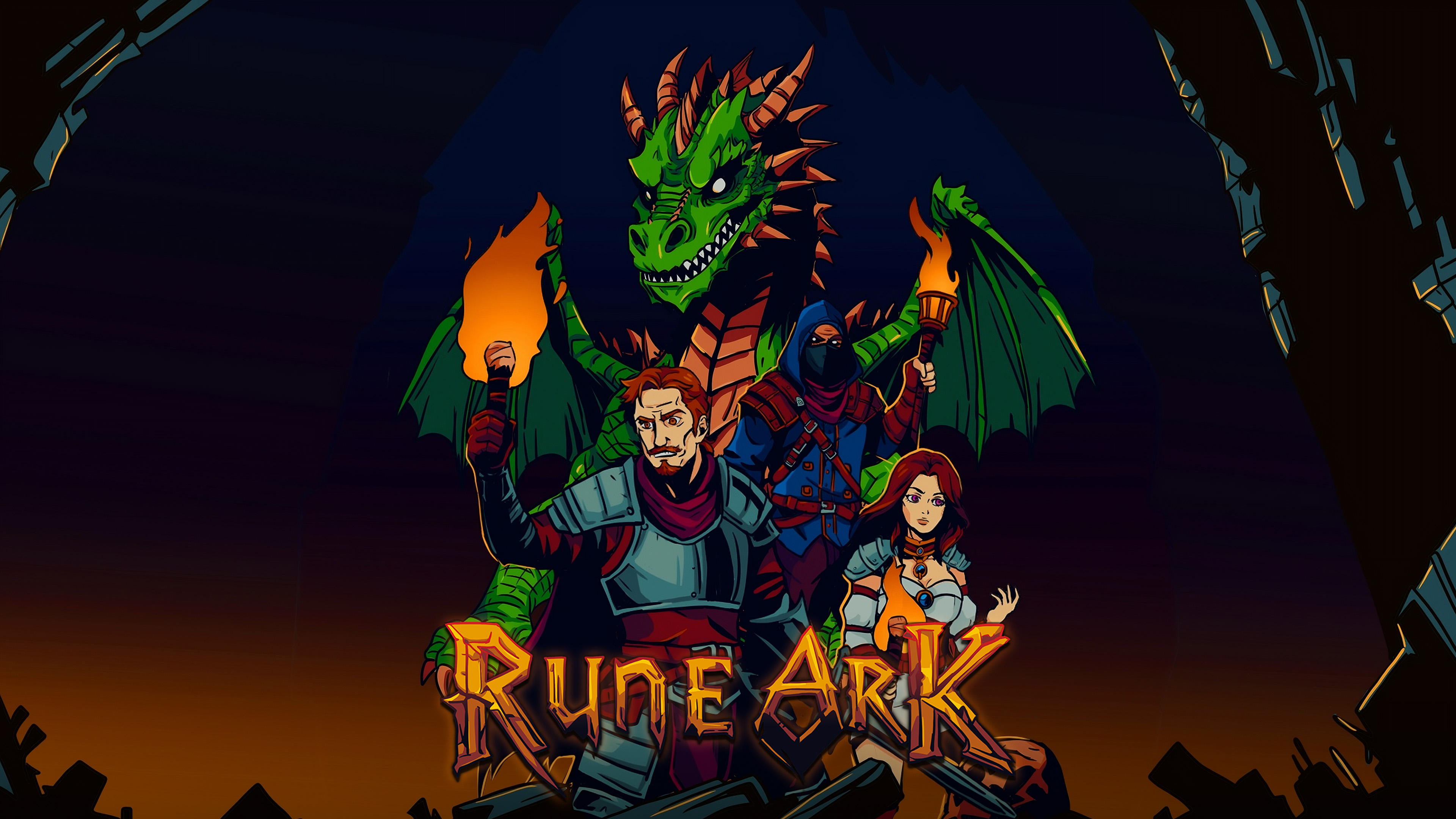
Rune Ark fuses match‑3 combat with roguelite dungeon crawling and a tightly focused, choice‑driven narrative. You step into the boots of a young squire who, after uncovering a long‑buried evil beneath the castle, must descend into shifting, dangerous depths where every room tests both your tactical thinking and your resolve.
Each battle plays like a compact puzzle‑drama: matching tiles becomes your sword, shield, and spellcasting system, and smart board play directly influences survival, resource management, and the options available in the story. Procedurally generated floors and branching events ensure runs never feel identical, while visual‑novel style encounters and consequential choices thread a clear narrative through the roguelite loop.
The game’s ambition is simple and effective, make every match matter. By tying mechanical decisions to narrative outcomes, Rune Ark turns routine tile clears into meaningful moments that shape your path, your alliances, and the kingdom’s fate.
Core mechanics: match‑3 as combat
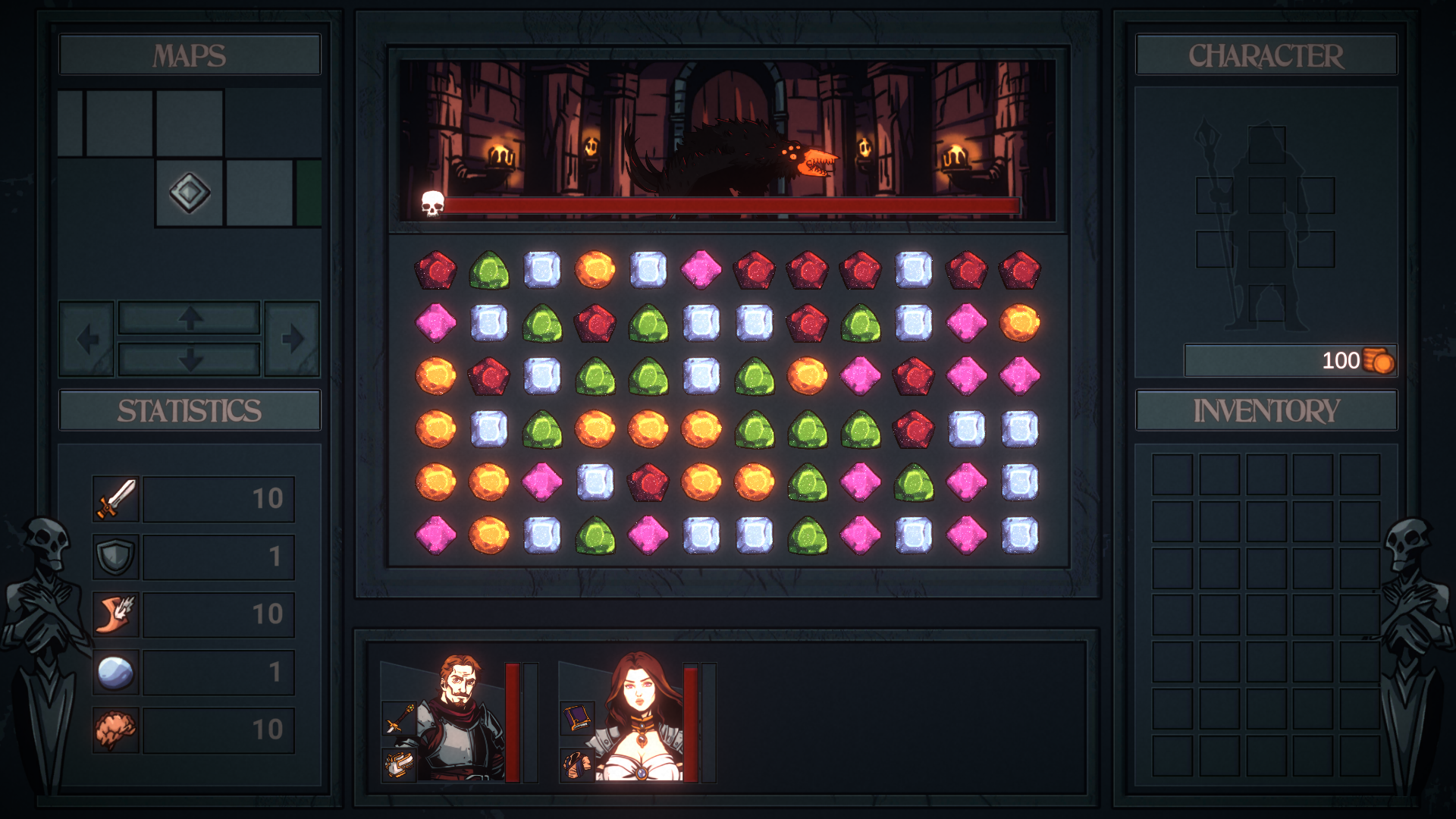
• Combat loop: Battles unfold on a dynamic, shifting tile board where every match converts into concrete battlefield effects; attacks, blocks, mana generation, and unique runic triggers. The system privileges planning and board control over reflexes, turning each encounter into a layered tactical puzzle where positioning, foresight, and timing determine whether you survive a room or get overwhelmed.
• Abilities and progression: Runic abilities, passive upgrades, and crafted gear sit on top of the core matching rules, enabling distinct build archetypes (burst damage, sustain/tank, control, or utility). Progression choices matter: invest in stronger single‑target runes for boss fights, or amplify area effects to clear crowded rooms. Resource decisions; when to spend mana, when to bank combos, and when to unleash Crystal Awakening, become meaningful strategic tradeoffs that shape each run.
• Synergy and depth: Enemy mechanics and board modifiers encourage emergent play: certain foes punish greedy matches, while others open windows for high‑value combos. Layered synergies between runes, crafted items, and temporary buffs reward experimentation and create satisfying “aha” moments when systems click together.
• Tension and pacing: The match‑3 framework creates a steady rhythm of decision‑making, calm planning punctuated by spikes of urgency when enemies close in or boss phases shift. This ebb and flow keeps encounters engaging and makes successful clears feel earned rather than incidental.
• Feedback and satisfaction: Clear visual and numerical feedback; point popups, combo meters, and distinct audio cues; turn abstract matches into immediate, gratifying outcomes. Watching a carefully built combo resolve into a devastating attack or a lifesaving shield is consistently rewarding and reinforces the game’s core loop.
Dungeon design and replayability
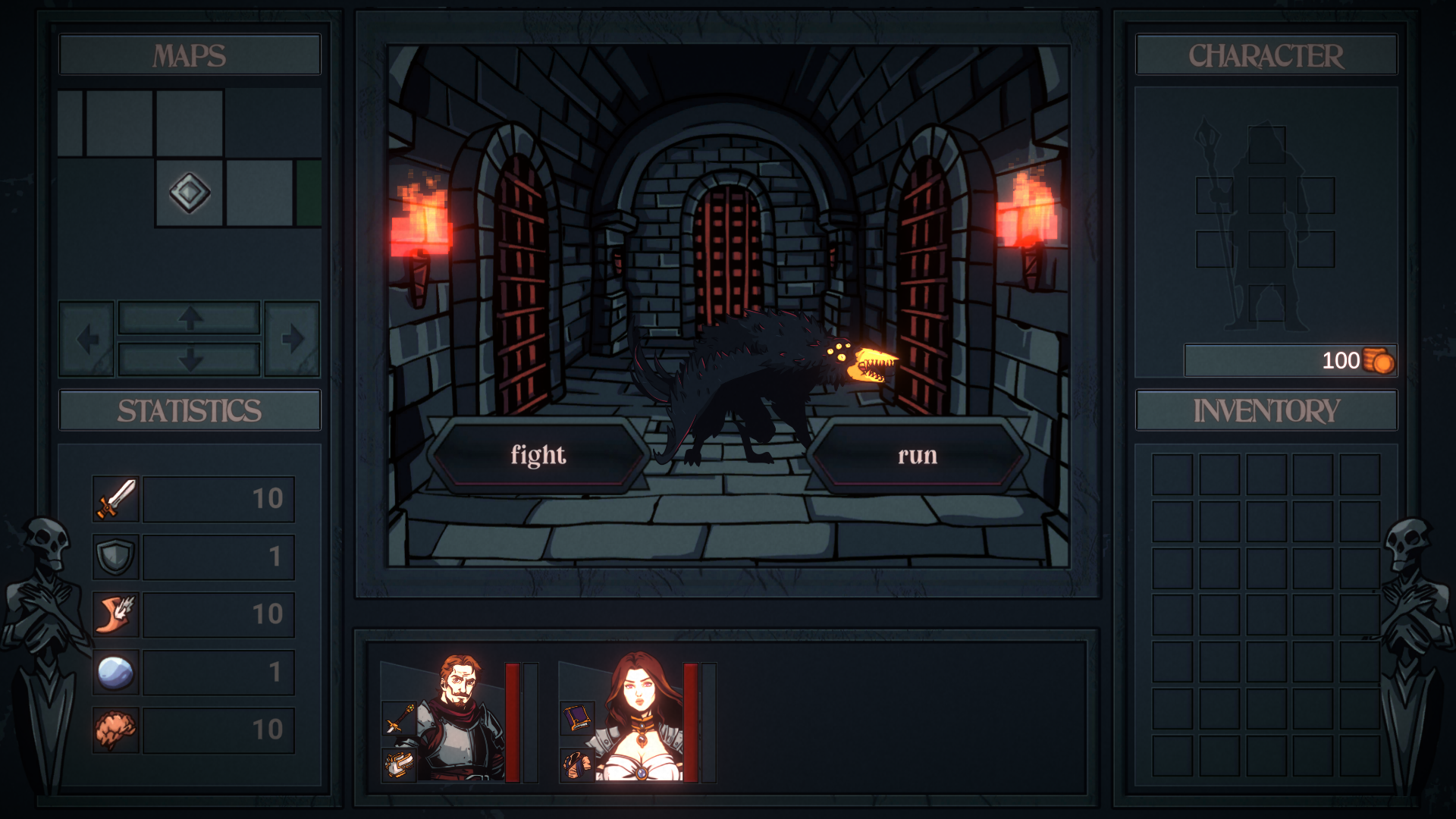
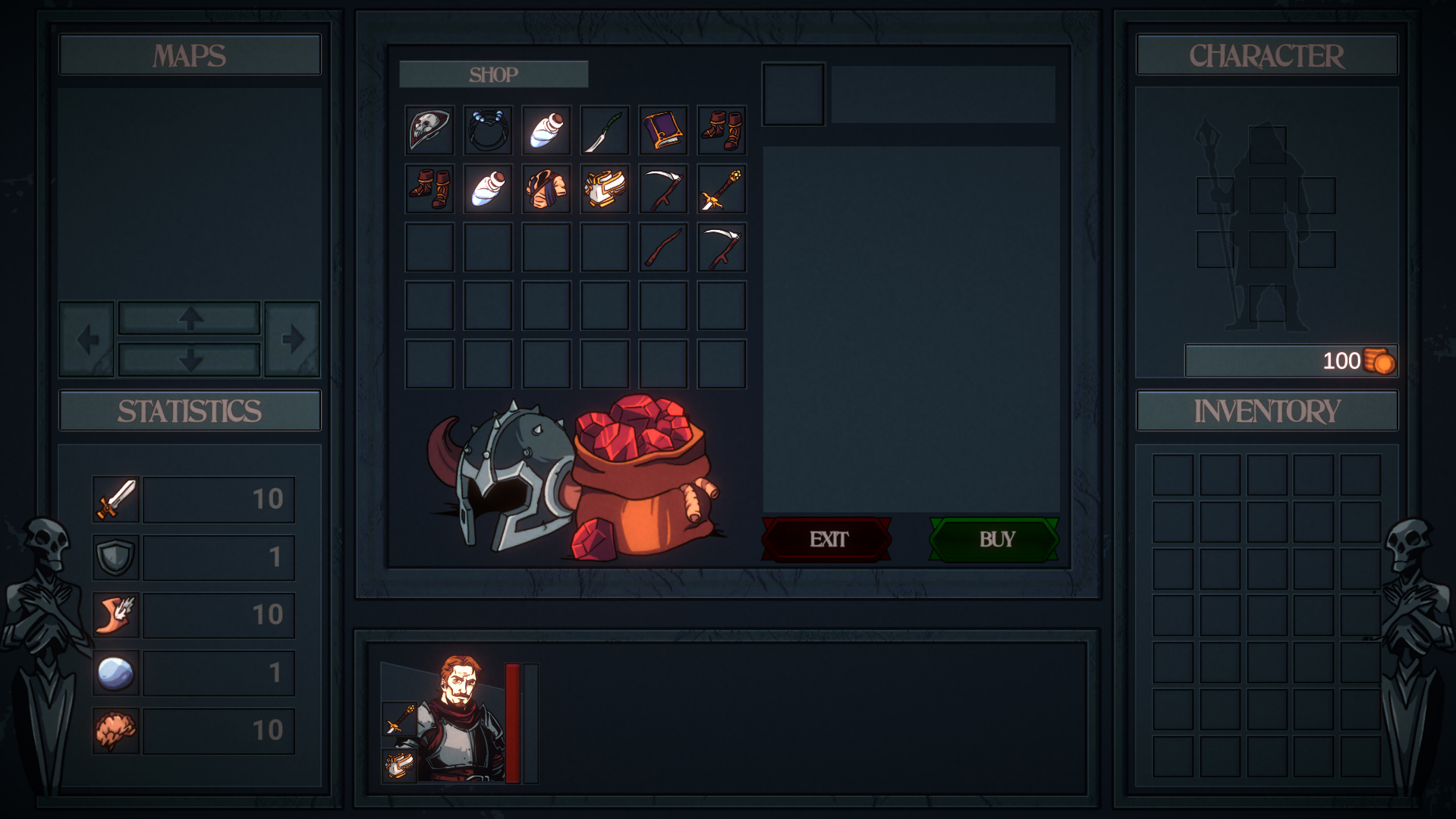
• Procedural dungeons: Floors are procedurally generated from a library of handcrafted rooms, events, and loot nodes, so each descent recombines familiar pieces into new tactical puzzles and narrative beats. Smart pacing and varied room types; combat gauntlets, environmental hazards, merchant nodes, and story events; reward route planning and risk‑reward decisions, encouraging players to experiment with different paths and builds.
• Choices matter: Branching corridors and event outcomes shape more than immediate rewards; they influence character relationships, unlockables, and story branches that lead to multiple endings. Persistent consequences; new allies, rivalries, or access to rare runes; give the roguelite loop a clear narrative spine and make player decisions feel meaningful across runs.
• Limitations and mitigation: The core match‑3 loop remains the primary mechanical anchor, so long sessions can feel repetitive when variety relies mostly on modifiers and enemy abilities. To combat fatigue, the game benefits from introducing late‑run mechanics, rotating modifiers, and event‑driven rule changes that temporarily alter board behavior or enemy interactions, small shifts that keep the core familiar while refreshing each run’s tactical demands.
Story and presentation
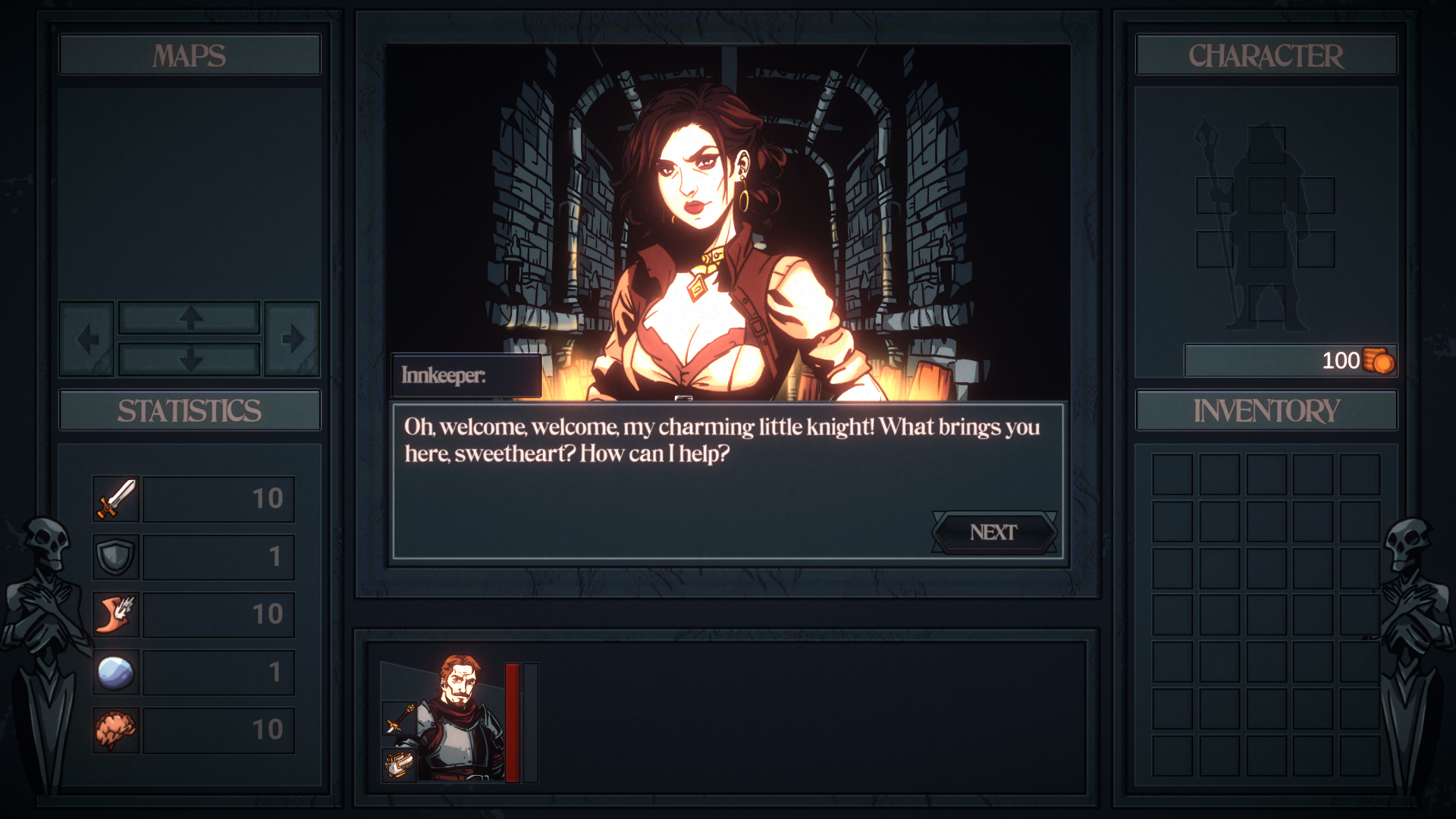
• Narrative delivery: Visual‑novel style dialogue and character interactions are woven between dungeon floors to deepen the squire’s arc and reveal the kingdom’s secrets.
The writing sustains a dark, focused tone that complements the gameplay, with short, punchy exchanges that land emotionally without derailing momentum.
To improve readability and player agency, most exposition should live in pre‑ or post‑dungeon briefings, with optional in‑game logs and a codex for later review so story beats never compete with active matches.
Small touches like branching dialogue responses that unlock unique runes or alter NPC behavior would make choices feel mechanically meaningful as well as narratively resonant.
• Art and sound: A moody dark‑fantasy aesthetic and an unobtrusive, atmospheric soundtrack establish a strong sense of place while keeping the match board highly readable and the UI uncluttered.
Visuals favor clear silhouettes, high contrast for interactive tiles, and restrained particle work so important information is never lost in spectacle.
The audio design supports gameplay with layered ambience, distinct musical motifs per region, and crisp sound cues for matches, combos, and runic activations that reinforce feedback and pacing.
Accessibility options for colorblind palettes, subtitle timing, and adjustable music versus SFX balance would broaden appeal without diluting the game’s immersive tone.
Technical issues and UX problems
• Combat interruptions: Attack animations sometimes block tile interaction, breaking flow and making precise matches harder during hectic moments.
• Softlock bug: A critical issue occurs with Crystal Awakening,triggering it during an animation can leave only one crystal on screen; if you lack mana to reactivate, the battle can softlock with no escape option, forcing a full restart.
• UI and quest gaps: Hover highlights and clickable cues occasionally do nothing; quest tracking and a readable journal are missing, which undermines follow‑up on objectives and narrative threads.
• Overall impact: These bugs and UX omissions are significant for a full release. They interrupt the otherwise engaging loop and reduce confidence that the game is ready in its current state.
Final Verdict
Rune Ark is an inventive, well‑paced hybrid that will click for players who enjoy methodical puzzle combat wrapped in a moody, narrative roguelite. Its match‑3 battles are consistently satisfying, each board feels like a compact tactical problem whose solutions feed directly into survival and story progression.
Procedurally generated floors, branching paths, and character choices give runs meaningful variety and replay value, while the game’s dark‑fantasy presentation ties mechanics and narrative together with confident tone.
That said, the experience is held back by a few critical issues. A softlock with Crystal Awakening, intermittent combat interruptions from animations, and missing UI features (notably quest tracking and a readable journal) break flow and undermine trust in a full release. These are not minor annoyances: they interfere with the core loop and make long sessions frustrating rather than rewarding.
Rune Ark shows real promise and delivers a compelling core loop for fans of puzzle‑forward RPGs, but it needs targeted fixes to reach its potential. Keep an eye on it, play or wishlist after the major technical patches land if you want a smoother, more reliable experience.
Watch and Wishlist
• Why wishlist: Match‑3 combat tied to a branching narrative means patches (bug fixes, balance, QoL) materially change play; wishlisting ensures you get demo drops, hotfixes, and sale alerts.
• Who should watch: Fans of tactical puzzle combat and roguelite runs; players who like dark‑fantasy stories with choice‑driven outcomes; streamers who want tense, replayable encounters and memorable moments.
• What to expect from updates: Critical bug fixes (Crystal Awakening softlock, combat input interruptions), balance passes, QoL additions (quest journal, objective tracking, dialogue timing), and occasional content drops or seasonal events.
• Best times to buy: After major patches or during sales when technical fixes and balance tuning land; buy early if you want to support the studio and play evolving builds.
• Platforms to track: PC (Steam demo and full release) first; watch for later console ports (PlayStation, Xbox, Switch) and platform announcements.
• How to stay informed: Wishlist on Steam, follow WelesGames and indie.io on social channels, join the game Discord, and watch devstreams and patch notes for stability and balance updates.
• Quick verdict for wishlisters: Wishlist Rune Ark to catch demos and post‑launch fixes; pick it up after the major technical patches if you want the smoothest, most polished narrative roguelite experience.
Key Takeaways
• What it is: Rune Ark is a dark‑fantasy roguelite that marries match‑3 combat with procedural dungeon crawling and choice‑driven narrative, casting you as a young squire who uncovers an ancient threat beneath the castle.
• Core loop: Combat is a tactical match‑3 system where matches become attacks, blocks, mana, and runic effects; success depends on board control, resource timing, and strategic use of abilities like Crystal Awakening.
• Replayability: Procedurally generated floors, branching paths, and event choices give runs variety and narrative weight, with persistent unlocks and relationship outcomes that reward repeated play.
• Strengths: Satisfying puzzle combat, clear visual feedback, a moody presentation, and a compact narrative that ties mechanical choices to story consequences.
• Technical and UX issues: Critical bugs (notably a Crystal Awakening softlock), attack animations that interrupt matching, and missing UI features (quest journal, reliable interactables) significantly harm the full‑release experience.
• Who should play: Fans of methodical puzzle combat and narrative roguelites; players who enjoy strategic, low‑twitch encounters and dark‑fantasy atmosphere.
• When to buy: Wishlist and wait for major stability and QoL patches; consider buying after the softlock and UI fixes land, or earlier if you want to support the developer and play evolving builds.
• How to follow: Wishlist on Steam, join the developer Discord, and watch patch notes and devstreams for fixes, balance passes, and content drops.
Game Information:
Developer: WelesGames
Publisher: indie.io
Platforms: PC (reviewed)
Release Date: November 18, 2025
Score: 7.0 / 10
An inventive, atmospheric match‑3 roguelite with satisfying tactical combat and meaningful narrative hooks, held back in this build by critical technical issues and some UX gaps.
“7.0 / 10 - An inventive, atmospheric match‑3 roguelite with satisfying tactical combat and strong ideas; fun and promising, but critical bugs and UX gaps keep it from greatness.”