Scrabdackle: The Scribbler’s Quest - Traditional animation, dense worldbuilding, and curiosity‑driven design. (Game Review)
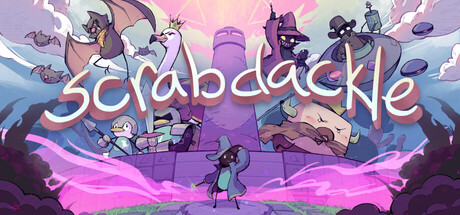
Scrabdackle is a lovingly hand‑drawn open‑world adventure crafted by a solo developer that marries Metroidvania exploration, Soulslike boss encounters, and Zelda‑style discovery into a sprawling, scribbly fantasy.
Act 1 stands as a substantial, self‑contained chapter, about 12–15 hours on a focused playthrough, while Acts 2 and 3 are planned as free episodic updates that will expand the map, systems, and story (the base price will rise as new acts launch, so early buyers get future acts included).
The game’s personality comes from its traditional animation, a dense layer of worldbuilding, and a design philosophy that rewards curiosity, experimentation, and off‑the‑beaten‑path play. Expect a large handcrafted world full of secrets, memorable boss set pieces, and a slow‑burn sense of discovery that unfolds as you learn new spells and revisit previously blocked paths.
Story
You inhabit the robes of Blue, a novice wizard literally hurled from the academy when its halls are breached and unceremoniously dumped into a world that contradicts every neat lesson in your textbooks. The story unfolds as a quiet, character‑driven coming‑of‑age: Blue must learn to survive in strange regions, face multi‑phase bosses that punish complacency, and slowly reconcile the academy’s tidy doctrines with the messy, morally ambiguous realities beyond its walls.
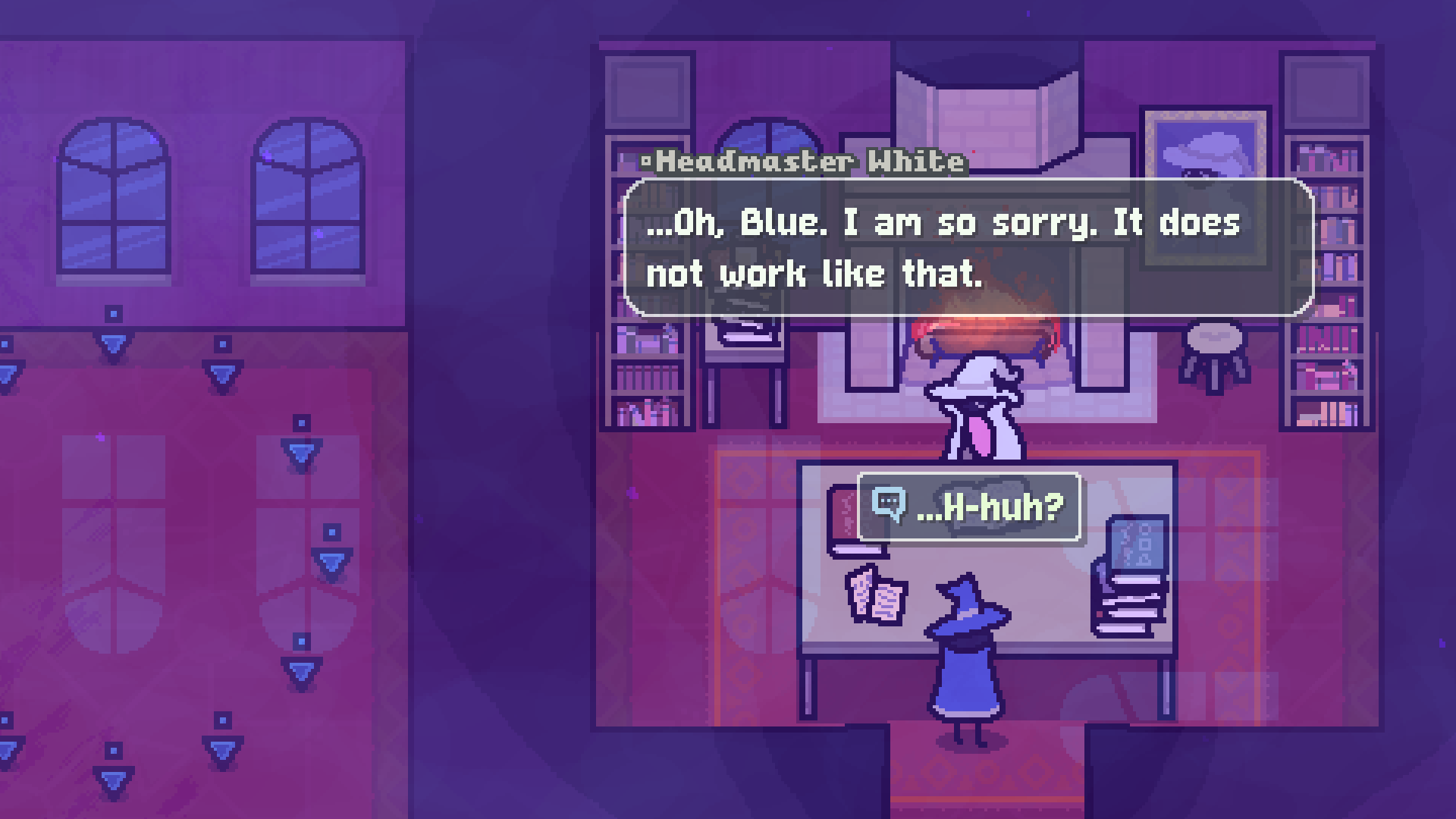
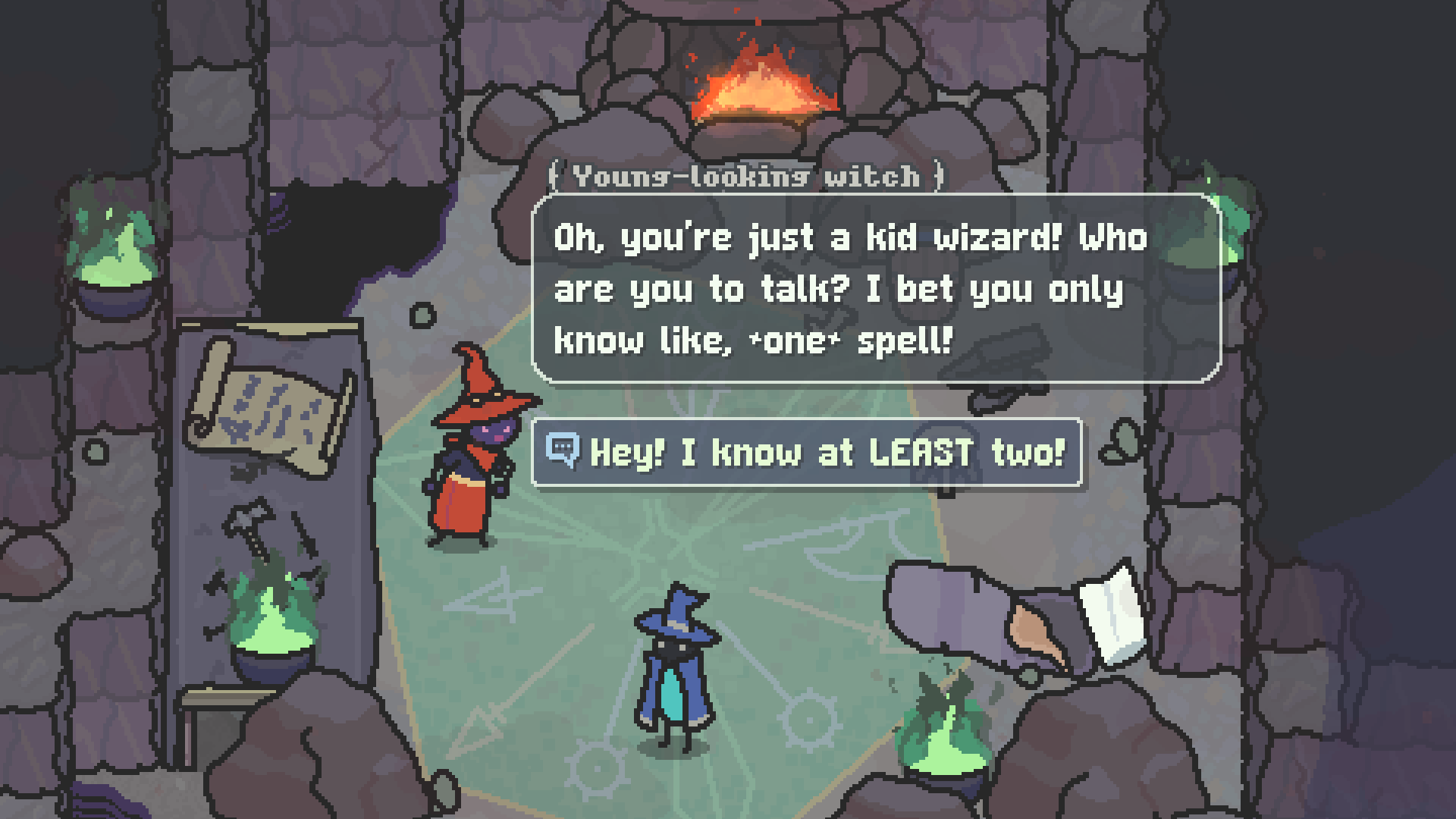
The game favors small, human moments as much as spectacle. NPCs feel lived‑in; each has a distinct voice, motivations, and optional story beats you can pursue or ignore, and conversations ripple through the world rather than telegraphing their outcomes. You can listen closely for lore, cut a chat short if you’re pressed for time, or follow a stray thread that leads to a hidden secret; those choices shape what you learn about Blue, the academy, and the people who populate Scrabdackle.
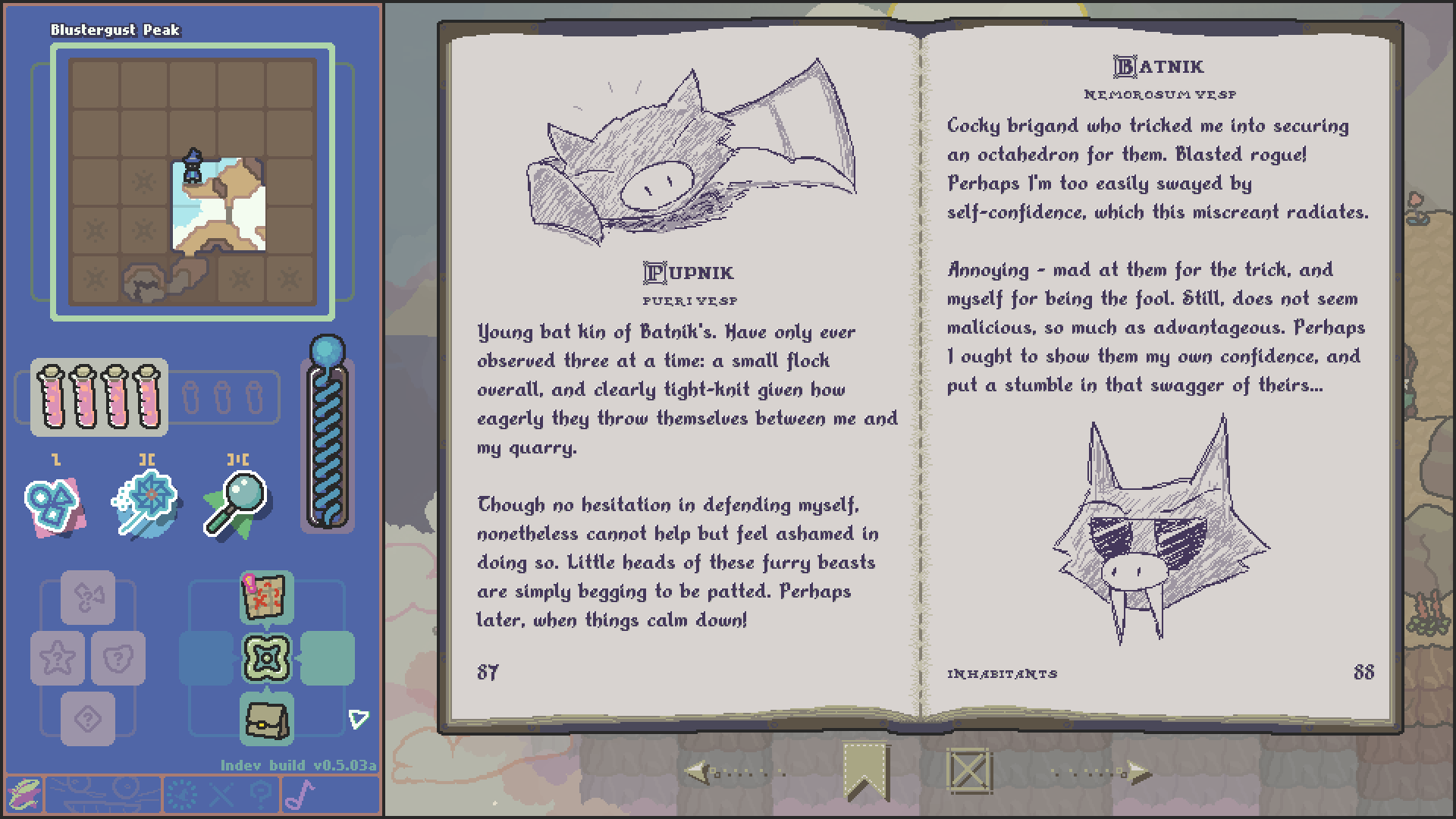
Narrative progression is earned through exploration and discovery rather than blunt exposition. Environmental details, notebook entries, and incidental encounters reward curiosity, and the game lets you piece together quieter truths at your own pace. The result is a story that feels personal: Blue’s growth is measured in small revelations, hard lessons learned in combat, and the slow accumulation of knowledge that turns a bewildered exile into a resourceful, wiser traveler.
Gameplay
• Exploration first: The world is intentionally non‑linear; most spells, bosses, and regions can be discovered in many orders. You’ll hit soft gates that require new spells to bypass, but the map encourages detours, backtracking, and serendipitous discoveries rather than forcing a single path.
• Spellcraft and progression: Act 1 introduces six spells that meaningfully alter traversal and combat, turning the map itself into a puzzle to be reinterpreted as you learn new abilities. Spells unlock routes, interactions, and emergent solutions, rewarding creative problem solving over rigid gating.
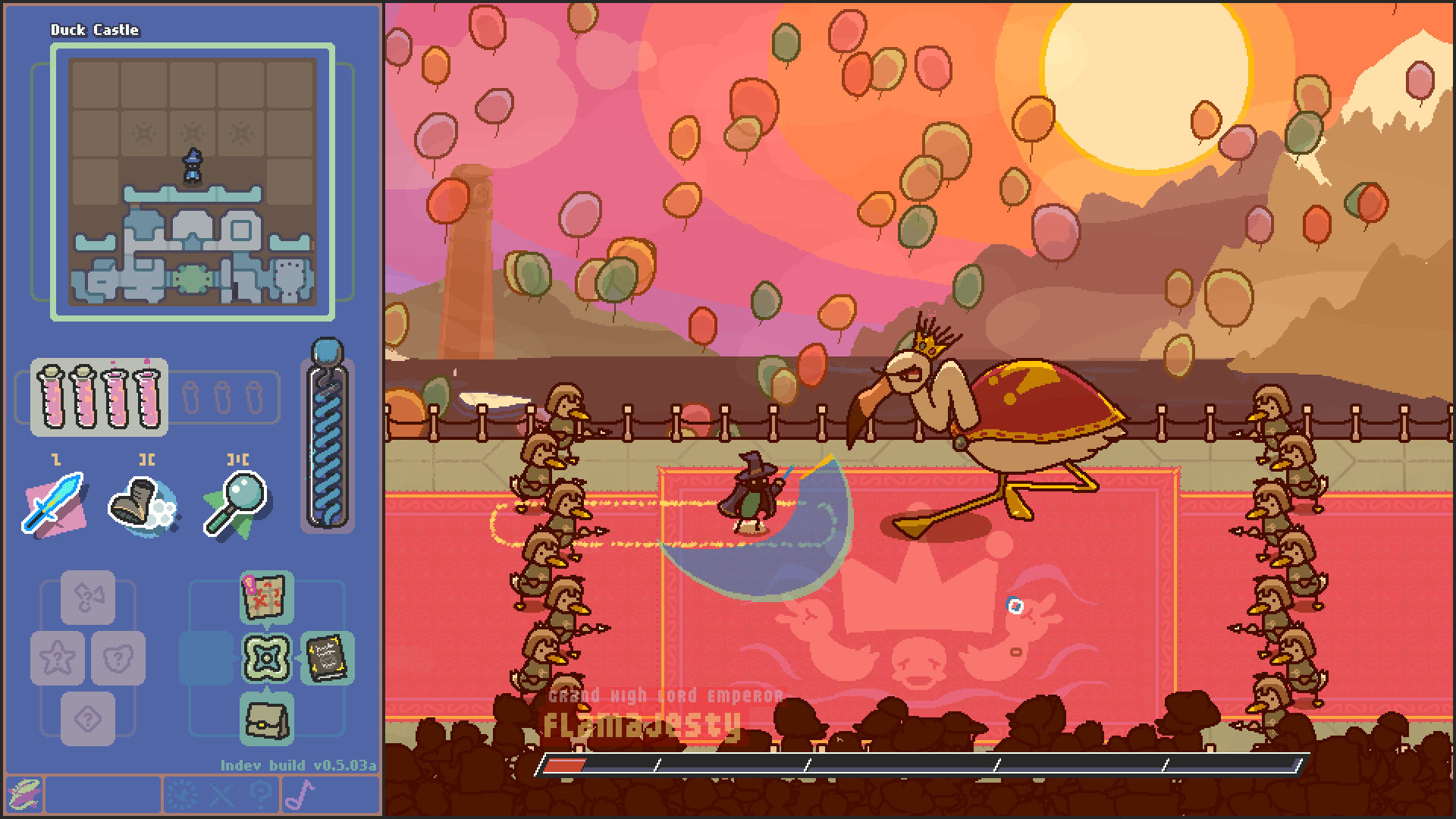
• Boss design: Nine bosses in Act 1 deliver multi‑phase, telegraphed encounters that feel fair but demanding. Each fight builds tension with musical cues and shifting rules, so repeated attempts teach patterns and reward mastery.
• Challenge options: Difficulty is flexible; tone it down to savor puzzles and exploration, or crank up challenge settings for tighter combat and higher stakes. The options let you tailor the experience to your preferred pace and risk tolerance.
• Collectibles and systems: Stickers, stars, and a detailed academy notebook (for scrying lore and entries) give completionists plenty to chase and worldbuilders lots to piece together. Collectibles aren’t just filler, they deepen the setting and unlock context that enriches later acts.
World and Progression
The map is a handcrafted, sprawling playground that balances wide, interconnected overworlds with tighter, puzzle‑forward dungeon sequences. Procedural systems take a back seat to carefully designed encounters, layered secrets, and environmental storytelling that rewards slow exploration and repeated visits. Act 1 already feels dense and deliberate, each region is packed with curiosities, optional challenges, and moments that invite you to stop and study the world.
• Regions: 10–11 handcrafted areas to explore, each with its own visual identity and traversal hooks.
• Collectibles: 60 stickers and stars scattered across the map for completionists and creative players.
• Lore: 122–130 notebook entries to discover and scry, deepening the world and character threads.
• Audio and text: ~90 minutes of original music and roughly 70,000–80,000 words of readable content that flesh out the setting.
• Design emphasis: Minimal procedural generation; focus is on handcrafted secrets, scripted encounters, and environmental clues that reward curiosity and backtracking.
Acts 2 and 3: Planned as free updates for early buyers and designed to match Act 1 in scope. The episodic rollout gives players time to digest each chapter, while the base price will increase as new acts launch, buying early secures future acts at no extra cost.
Pros
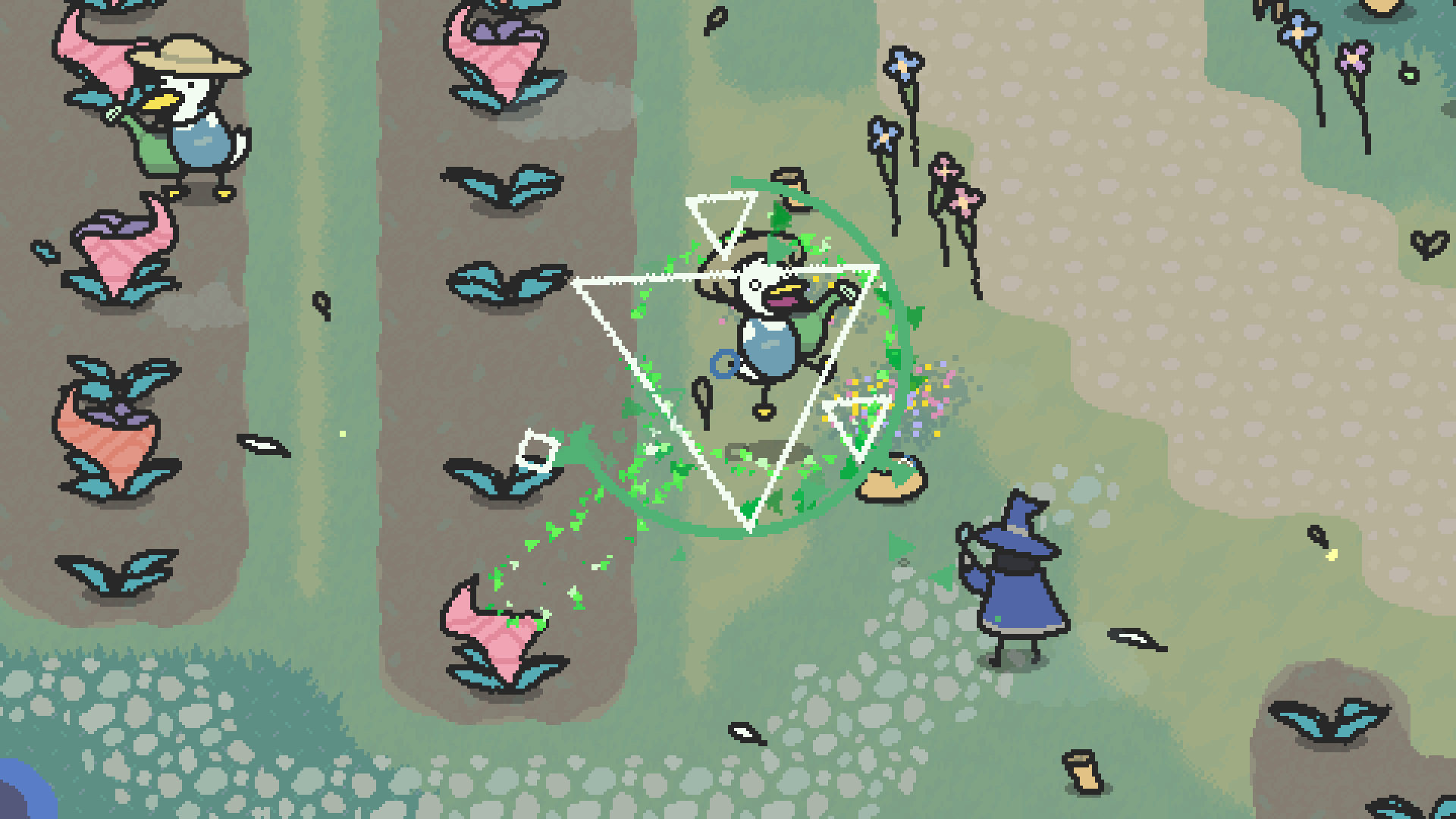
• Distinct hand‑drawn aesthetic: Traditional frame‑by‑frame animation gives every region and creature a tactile, expressive personality that makes exploration feel handcrafted rather than procedural.
• Compelling boss encounters: Multi‑phase fights are tightly telegraphed and scored, building to cinematic final phases that reward pattern recognition and adaptation.
• Open exploration: A non‑linear map encourages curiosity and multiple viable routes, soft gating with spells invites creative detours and satisfying backtracking.
• Rich audio design: A memorable soundtrack and dynamic combat cues elevate both quiet exploration and high‑tension boss moments, turning music into a gameplay partner.
• Meaningful collectibles: Notebook entries, stickers, and stars deepen lore and player expression, giving completionists tangible rewards that also enrich the world.
• Ambitious scope from a small team: Act 1 already feels expansive and polished in many areas, a notable achievement for a largely solo project that promises even more as future acts arrive.
Cons
• Occasional mechanical rough edges: Screen transitions can abruptly reset enemy progress when foes are knocked offscreen, and some dash interactions behave unintuitively or lack clear feedback. These issues interrupt combat flow and can turn tense encounters into frustrating moments rather than tests of skill.
• Navigation friction: The map’s generous scale and optionality are a strength, but they can overwhelm players who prefer clearer guidance. Without stronger signposting or optional waypoint tools, it’s easy to feel lost or unsure which detours are worth pursuing.
• Limited replay tools: After beating a boss, there’s no obvious, convenient way to rematch it for practice or fun. That makes revisiting favorite fights or testing new builds more cumbersome than it needs to be.
• Scope versus resources: The ambition of a largely solo project shows in places where polish, clarity, or UX consistency could be tighter. Small quality‑of‑life fixes and clearer tutorials would go a long way toward smoothing the rough edges without sacrificing the game’s handcrafted charm.
• Impact and fixability: Most issues are addressable through targeted patches; tweaked transition logic, clearer input feedback, optional navigation aids, and a boss rematch option would significantly improve the experience while preserving the game’s strengths.
Final Verdict
Scrabdackle is a singular indie triumph: a lovingly hand‑drawn adventure that fuses Metroidvania exploration, Soulslike bosscraft, and Zelda‑style discovery into a sprawling, scribbly fantasy that begs to be explored. Act 1 functions as a generous, self‑contained chapter; rich in music, lore, and standout encounters, while the promise of two free, equally sized acts makes the whole project feel like the opening season of something much larger.
The game’s handcrafted animation and layered systems create countless small delights, moments of quiet wonder in tucked‑away corners and pulse‑racing finales in multi‑phase boss fights, so even when a few mechanical rough edges show the limits of a largely solo effort, the emotional highs land hard. If you prize handcrafted worlds, inventive combat, and a design that rewards curiosity and experimentation, Scrabdackle is a delightful, occasionally messy misadventure well worth your time.
Watch and Wishlist
• Why wishlist: Get notified at launch, catch discounts, and be first to hear about Act 2/Act 3 releases, major patches, and new features.
• Platforms to track: PC (Steam/Epic) as the primary storefront; watch for Nintendo Switch, PlayStation, and Xbox ports as the developer expands availability.
• How to stay informed: Wishlist the game on store pages, follow the developer and publisher on social channels (X/Twitter), join the official Discord, and monitor Steam/Epic news and patch notes.
• Price perspective: $14.99 for Act 1; buying early includes Acts 2 and 3 as free updates, while the base price will rise as new acts launch.
Key Takeaways
• Premise: Hand‑drawn open‑world adventure where novice wizard Blue is flung from the academy and must navigate a strange, scribbly world.
• Gameplay blend: Mixes Metroidvania exploration, Soulslike multi‑phase bosses, and Zelda‑style discovery into a non‑linear sandbox.
• Exploration first: Most spells, bosses, and regions can be tackled in many orders; soft gating encourages detours and creative backtracking.
• Spell and progression: Act 1 introduces six spells that reshape traversal and combat, unlocking new routes and interactions.
• Bosscraft: Nine demanding, well‑scored boss encounters deliver cinematic, adrenaline‑charged finales.
• World scope: Act 1 is a substantial standalone chapter (~12–15 hours focused), with Acts 2 and 3 planned as free episodic updates.
• Handcrafted charm: Traditional frame‑by‑frame animation, rich environmental storytelling, and a standout soundtrack give the world personality.
• Collectibles and lore: Notebook entries, stickers, and stars reward curiosity and deepen the setting for completionists.
• Rough edges: Occasional mechanical quirks, navigation friction, and limited replay tools reflect the ambition of a largely solo project.
• Value proposition: Act 1 priced at $14.99; buying early includes future acts as free updates while the base price will rise as new acts launch.
Game Information:
Developer: jakefriend
Publisher: Fellow Traveller, jakefriend
Platforms: PC (reviewed)
Release Date: December 2, 2025
Score: 9.5 / 10
Scrabdackle is a near‑masterpiece of handcrafted indie design: gorgeous frame‑by‑frame animation, memorable multi‑phase bosses, and a soundtrack that elevates every encounter. Act 1 delivers a generous, curiosity‑driven world with satisfying spellcraft and discovery; remaining mechanical niggles and navigation friction are minor blemishes on an otherwise exceptional solo effort.
“9.5 / 10 - A lovingly scribbled adventure that hits like a warm, thrilling punch: beautiful, bold, and brimming with surprises.”