Turnbound: Haunted Inventory Arena - A tense, clever demo of asynchronous autobattles and inventory strategy. (Demo Preview)

Turnbound thrusts you into a cursed board game where your inventory is both weapon and strategy, every tile you place can mean survival or doom.
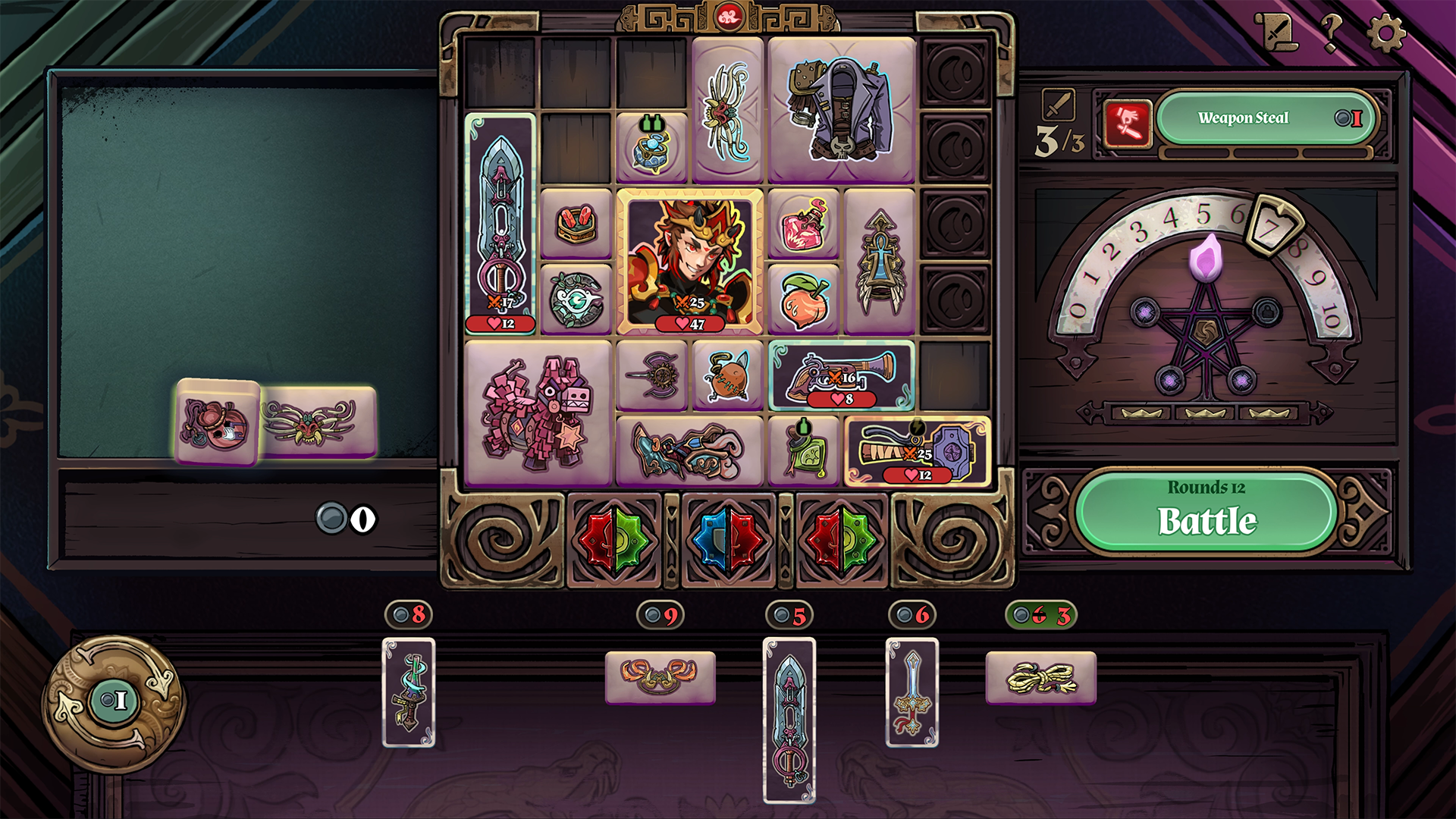
The demo distills that premise into a tight, competitive inventory battler: draft tiles, arrange them like inventory‑Tetris, and watch your layout auto‑resolve against the ghosted builds of other players.
What feels simple at first quickly reveals deep cause‑and‑effect synergies, tense resource decisions, and satisfying emergent combos; clever, tense, and far more strategic than a demo has any right to be.
What the demo gets right
• Core hook: Every tile placement carries weight; cause‑and‑effect loops trigger satisfying chain reactions that reward spatial foresight, planned merges, and multi‑turn setups rather than single‑move power plays.
• Asynchronous PvP: Opponents leave behind persistent ghost builds you can challenge anytime; matches resolve quickly and unpredictably, turning each run into a fresh puzzle of counterplay and adaptation.
• Playback tools: Replays are more than a novelty; they’re a practical tuning tool that highlights exact interactions, timing mistakes, and missed synergies so you can iterate smarter between drafts.
• Hero variety: Each Hero brings unique items, trinkets, and ability synergies inspired by their lore, encouraging distinct archetypes and forcing you to rethink placement and resource priorities with every new champion.

New demo features worth noting
• Customization unlocks: Demo players can earn cosmetic boards, frames, and tile backs; small, meaningful rewards that personalize your profile and make each run feel like progress toward a unique identity.
• Ammo for ranged tiles: Ranged attack tiles now consume ammo, introducing a tactical resource layer that curbs spammy long‑range strategies and forces you to balance positioning, conservation, and support items.
• Cause & Effect VFX: New visual indicators trace which tiles influence others, turning opaque interactions into readable flows so you can spot combo chains and counterplay at a glance.
• Echo Recovery and XP tweaks: Adjusted recovery pacing and clearer XP/level‑up displays smooth progression, reduce abrupt power spikes, and make it easier to time upgrades and plan mid‑run pivots.

How it plays in practice
Draft rounds force meaningful tradeoffs: do you snap up a high‑power tile now or invest in upgrades that enable future merges and stronger synergies?
Placement is a spatial puzzle; adjacency, merge timing, and directional effects all change outcomes, so where you put a tile can be as important as which tile you pick.
Battles resolve briskly, and the demo’s best reward is iterative learning: losses teach clearer lessons than single victories, exposing weak linkages and counter patterns you can fix next draft.
The build favors short, repeatable sessions that encourage experimentation, risk‑taking, and steady refinement of your strategic toolbox.
Strengths
• Inventive hybrid design: Merges inventory‑Tetris with autobattler mechanics so placement decisions become strategic actions, not just bookkeeping; merges, adjacency, and directional effects create layered cause‑and‑effect gameplay.
• High skill ceiling: Rewards spatial reasoning, long‑term planning, and creative synergies; mastery comes from anticipating multi‑turn chains and engineering resilient, adaptable builds.
• Actionable feedback loop: Replays plus the Cause & Effect VFX turn opaque interactions into clear lessons, letting you diagnose failures, refine combos, and iterate faster between drafts.

Friction
• Balance roughness: Early builds still show clear power disparities; a handful of tiles dominate many drafts, which can make strategic variety feel shallow until balance passes arrive. This exaggerates the luck factor in drafts and reduces the payoff for creative, niche synergies.
• Matchmaking and pool variety: Because the demo relies on an active player pool, you can run into the same ghost builds repeatedly, which flattens the meta and makes counterplay feel rote. A larger, more diverse player base or rotating curated pools would keep encounters fresher.
• UI density and onboarding: The grid, directional effects, and layered tile interactions create a steep initial learning curve, new players can be overwhelmed by information and miss key interactions. A guided tutorial, clearer tooltips, and progressive reveal of mechanics would help newcomers grasp placement priorities faster.
Strategy tips from the demo
• Prioritize merge enablers: Favor tiles that set up merges or trigger multiple linked effects over single‑target damage; merged items often unlock exponential value and create durable combos that outlast one‑shot power spikes.
• Treat ammo as a resource to plan around: Ranged tiles now consume ammo, so balance firepower with supply; slot recovery tiles, ammo‑granting trinkets, or short‑cooldown supports to sustain ranged pressure without wasting grid space.
• Learn from replays, then counter: Use playback to spot which enemy tiles and placements repeatedly punish your layouts; identify the common counters and adjust your spatial priorities or include specific disruptors to blunt those threats.
• Build to the Hero, not the other way around: Let each Hero’s signature items and abilities define your archetype, optimize placement and merges to amplify their strengths instead of forcing generic builds that dilute their unique synergies.
Technical and polish notes
The demo runs smoothly on most systems I tested, and the new VFX and UI tweaks make interactions clearer. Expect balance patches and additional QoL updates as the developer iterates; the team is actively adding customization and addressing clarity issues based on player feedback.
Who will enjoy the demo
• Fans of inventory Tetris, autobattlers, and light competitive design.
• Players who like iterative, puzzle‑like progression and learning from replays.
• Streamers and creators who enjoy short, repeatable runs with visible decision points.
Players seeking deep, synchronous PvP or a fully balanced competitive ladder should temper expectations until the full release.

Final Verdict
The Turnbound demo is a compelling, addictive prototype that crystallizes the promise of strategic inventory combat: every placement matters, combos feel earned, and the game consistently rewards spatial foresight and creative problem‑solving.
It already nails the core loop; draft, arrange, and watch your design resolve against ghosted opponents; while offering useful tools (replays, clearer VFX) that make iteration satisfying rather than punishing.
With tighter balance, a wider tile pool, and continued polish to onboarding and variety, the full release could easily become a standout in the autobattler/inventory‑management space; as it stands, the demo is well worth a spin for anyone who enjoys spatial strategy, emergent synergies, and short, repeatable runs.
Watch and Wishlist
• Why wishlist: Demo updates, balance patches, and QoL improvements materially change Turnbound’s competitive feel; balance passes, expanded tile pools, and matchmaking tweaks will reshape meta and replayability; wishlisting ensures you get notified about demos, hotfixes, and sales.
• Platforms to track: PC (Steam) demo, full release, and Steam Deck support; watch for announcements about console ports (PlayStation, Xbox, Nintendo Switch) and any platform‑specific launch windows.
• How to stay informed: Wishlist on Steam, follow developer 1TK on social channels, join the official Discord for patch notes and community pools, and tune into devstreams and release notes to time your purchase or demo play.
Key Takeaways
• Core concept: Turnbound is an inventory‑driven autobattler where grid placement and tile interactions are the primary strategic layer; draft, arrange, and watch your design auto‑resolve against ghosted opponents.
• Meaningful placement: Every tile matters; adjacency, merges, directional effects, and multi‑turn cause‑and‑effect loops reward spatial foresight and long‑term planning.
• Asynchronous PvP loop: Opponents leave persistent ghost builds you can challenge anytime, keeping matches fast and allowing iterative improvement without needing synchronous play.
• Useful tooling: Replays and the new Cause & Effect VFX make interactions readable and actionable, turning failures into clear lessons for the next draft.
• New mechanics that matter: Ammo for ranged tiles adds resource planning to placement decisions, and demo customization unlocks give small, motivating progression goals.
• Strengths: Inventive hybrid of inventory Tetris and autobattler design, high skill ceiling for combo planners, and a tight feedback loop that rewards experimentation.
• Current frictions: Balance needs work (some tiles dominate), demo pools can feel repetitive without a larger player base, and the UI/onboarding can overwhelm newcomers.
• Practical tips: Prioritize merge enablers and multi‑effect tiles, plan ammo usage for ranged pieces, learn from replays, and build around each Hero’s signature strengths.
• Who should try it: Players who enjoy spatial puzzles, emergent synergies, and short, repeatable competitive runs; those seeking polished, synchronous ladder play should wait for further updates.
• Why wishlist: Balance passes, expanded tile pools, and matchmaking improvements will materially change the meta; wishlisting ensures you catch demos, patches, and sales.
Game Information:
Developer & Publisher: 1TK
Platforms: PC (reviewed)
Release Date: Coming Soon
Score: 7.5 / 10
A smart, addictive prototype that delivers a fresh twist on autobattlers through inventory‑first design. The demo already offers compelling strategic depth and a satisfying feedback loop, but balance roughness and onboarding friction keep it from being a higher score right now.
“7.5 / 10 - A clever, addictive prototype that rewards spatial strategy and iteration, but balance gaps and onboarding friction hold it back from greatness.”