Under Par Golf Architect: Design breathtaking courses with powerful terraforming tools, test every hole, and run a resort that draws VIPs and tournaments. (Demo Impressions)

Under Par Golf Architect casts you as both visionary designer and pragmatic manager, marrying a deep sandbox editor with approachable business strategy. At its core is a powerful terraforming toolkit that lets you sculpt terrain, carve waterways, and tune green speeds so every hole plays like a deliberate piece of architecture. A simple point‑and‑click testing system closes the feedback loop: design, test, tweak, so you can iterate quickly and judge a hole’s par without getting bogged down in simulation.
Off the course, you’ll staff and upgrade a resort, court VIP members, and stage tournaments that turn beautiful layouts into profitable attractions. With promised cross‑platform support and an upcoming sharing feature to export creations beyond your screen, the game is shaping up as a thoughtful, community‑minded hybrid of creative builder and light tycoon play.
What the game is
• Core idea: Design, sculpt, and operate world‑class golf courses across diverse biomes, turning raw terrain into signature holes that challenge players and dazzle VIPs.
• Primary loop: Terraform landscapes, place strategic hazards and amenities, test and iterate holes, then manage staff, facilities, and finances to raise your club’s prestige and profitability.
• Play options: Either play your creations directly with accessible point‑and‑click controls or run simulated rounds from the tee to quickly evaluate balance, par, and pacing.
• Tone: A creative, relaxed sandbox focused on architectural expression with light tycoon mechanics, less arcade golf, more deliberate course design and strategic club management.
Design and tools
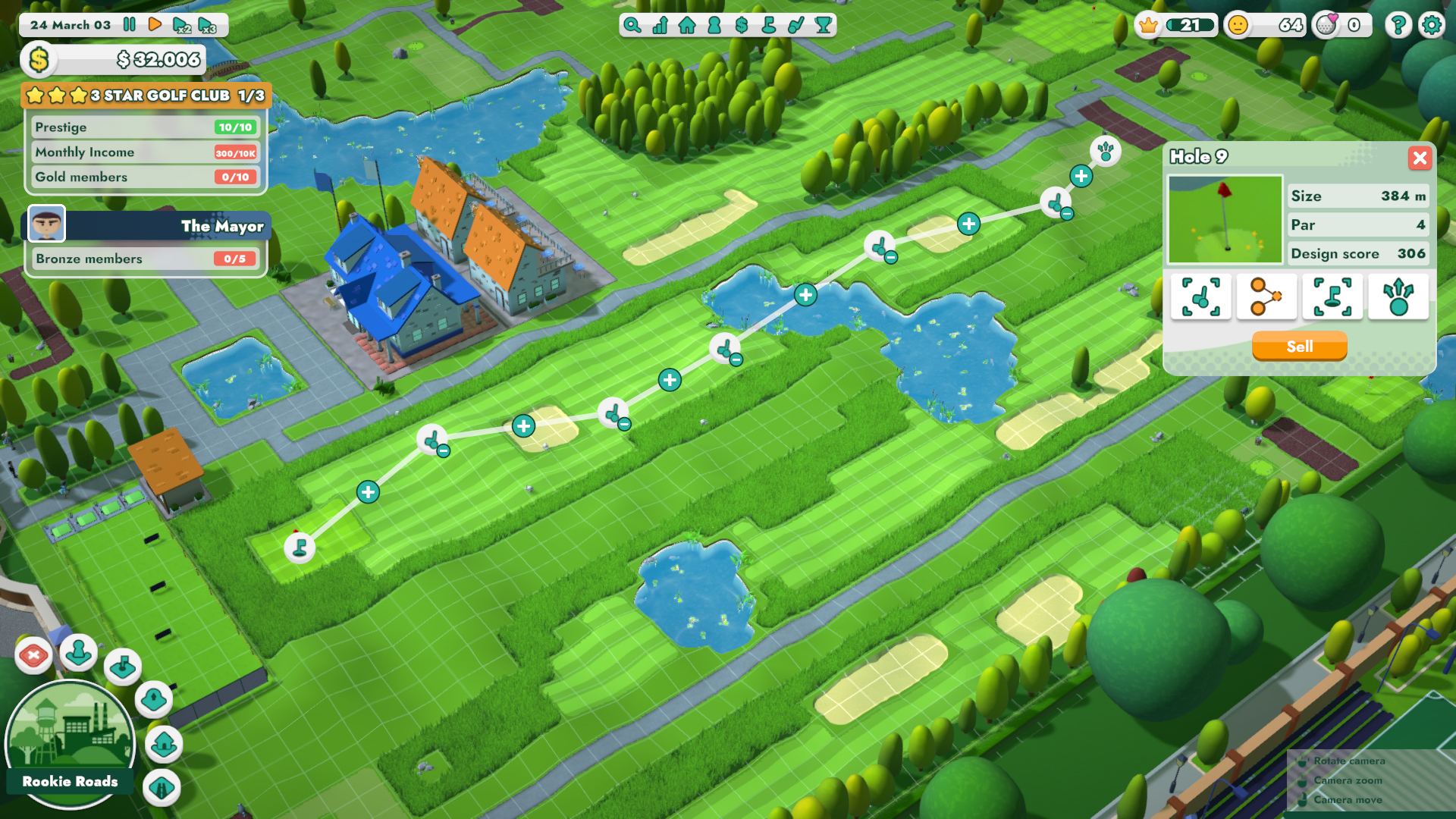
The game’s standout feature is a powerful terrain and course editor that treats course design like architecture. You can raise and lower land with precision, carve rivers and lakes that alter shot strategy, and sculpt greens to fine‑tune roll, break, and difficulty. Landscaping tools sit alongside decorative and functional assets: trees, bunkers, rock outcrops, water hazards, bridges, and clubhouse buildings, so every course becomes both a visual statement and a carefully balanced gameplay challenge.
• Simple controls: The point‑and‑click testing system keeps iteration fast and approachable; design a hole, test a shot, then tweak contours or hazards without steep mechanical overhead.
• Deep customization: Biomes span urban rooftops to remote wilderness, letting you craft atmospheres from stately, tree‑lined classics to bold, resort‑style spectacles; environmental choices affect sightlines, wind behavior, and strategic play.
• Design tools that matter: Slope brushes, contour snapping, hydrology controls, and green‑speed tuning give you granular control over how a hole plays, not just how it looks.
• Community potential: The upcoming sharing feature promises to move creations beyond your screen; publishable courses, community galleries, or exportable files will boost replayability and spark collaborative design.
Together, these systems make the editor more than a toy: it’s a designer’s toolkit that rewards experimentation and thoughtful iteration.
Management and progression
Beyond design, Under Par Golf Architect asks you to run a living, revenue‑driven club where every decision shapes member satisfaction and long‑term prestige.
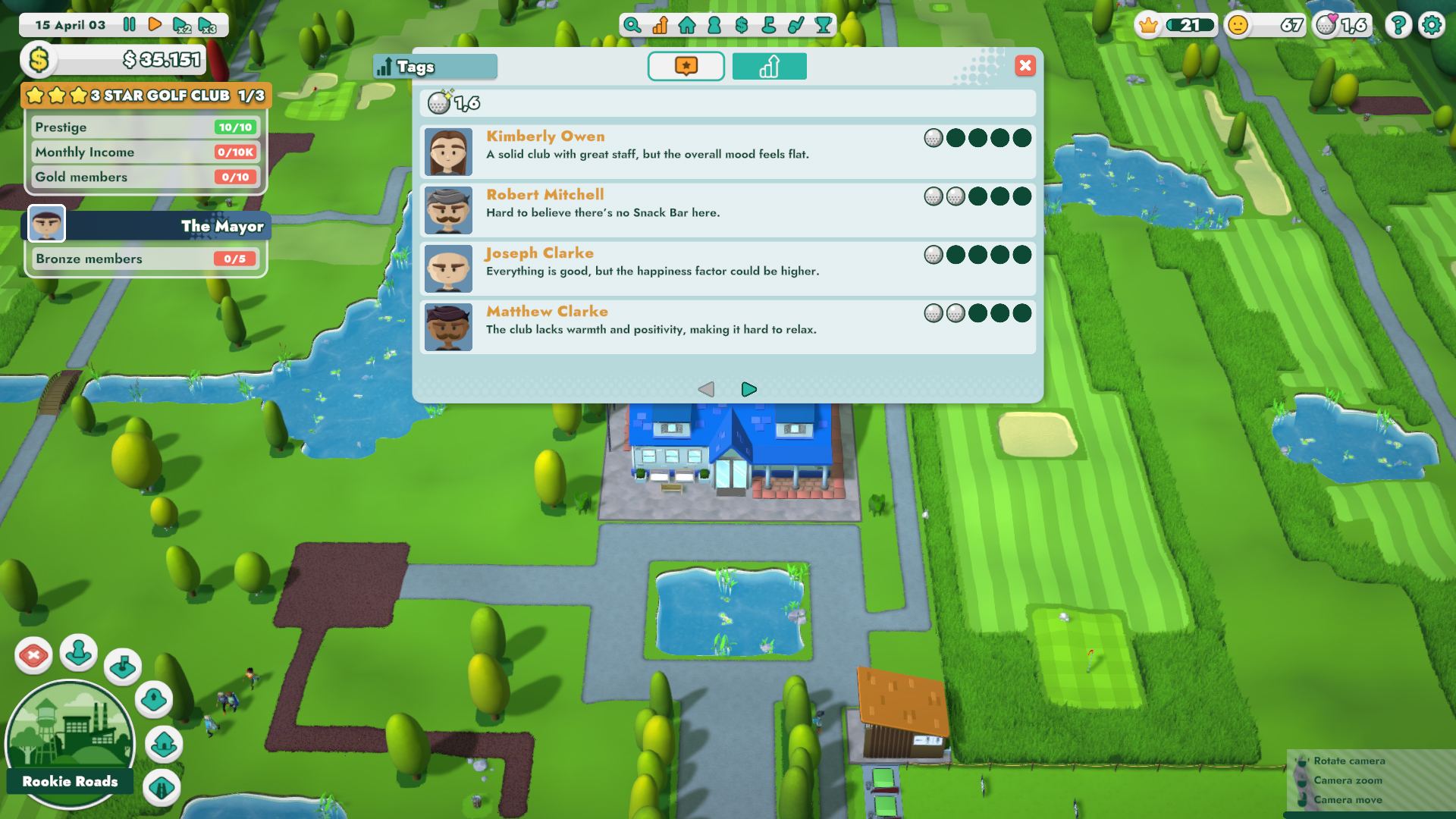
• Facilities and services: Build and upgrade bars, pools, restaurants, pro shops, and training centers to boost member happiness and attract VIPs; facility placement and aesthetics also influence course appeal and event suitability.
• Staffing and culture: Recruit and train staff with distinct personalities and skill sets, groundskeepers, pros, hospitality managers, then assign roles to optimize service quality; staff morale and fit affect turnover, service speed, and guest reviews.
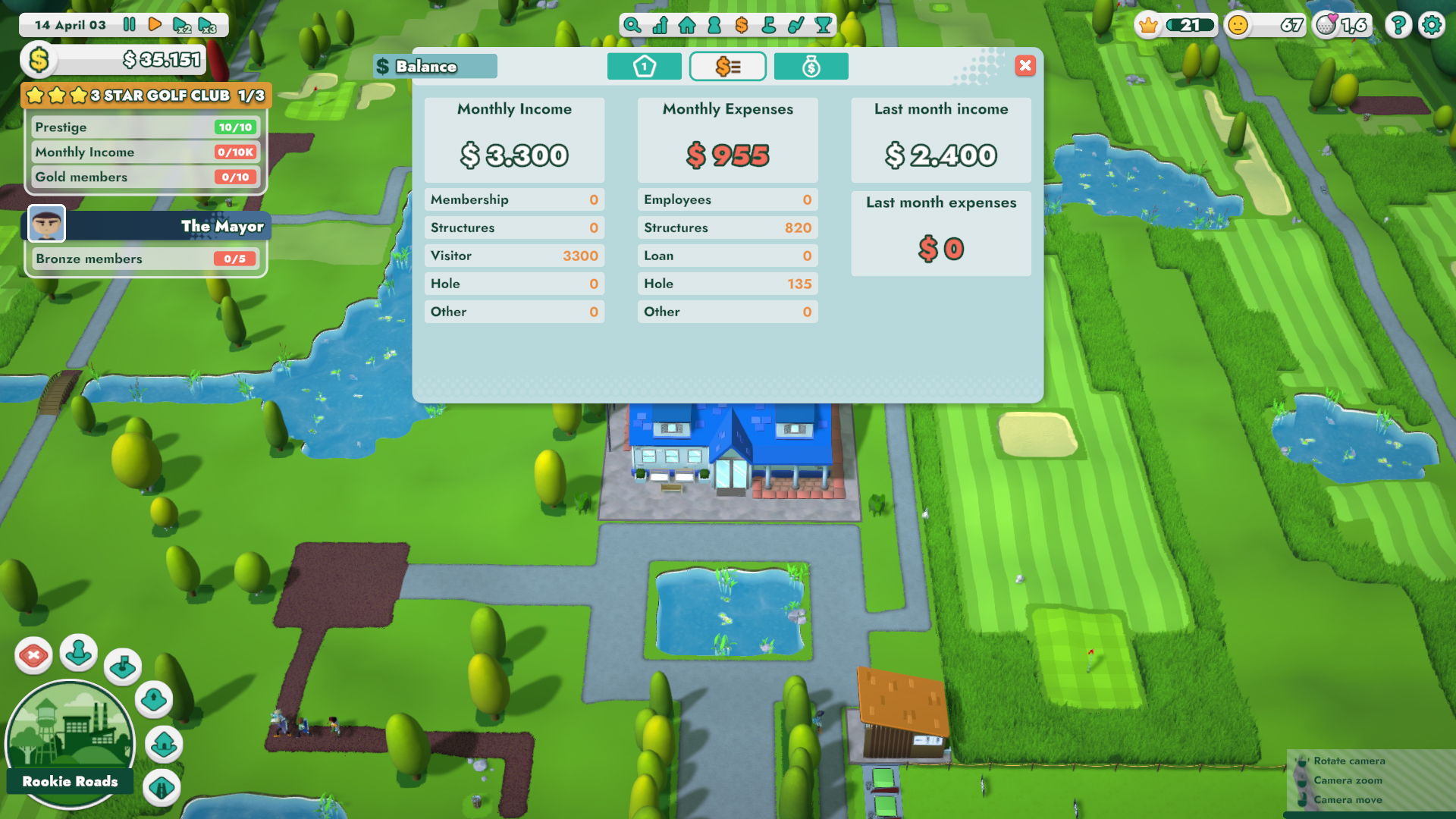
• Economy and pricing: Set membership tiers, tournament entry fees, and upgrade priorities while managing maintenance costs and capital investments; smart pricing and timed promotions turn beautiful layouts into steady income.
• Events and tournaments: Host charity opens, VIP weekends, and competitive tournaments to raise prestige, unlock sponsorships, and test your course under pressure; event outcomes feed back into reputation and revenue.
• Analytics and iteration: Use in‑game stats; round completion rates, hole‑by‑hole scoring, member feedback, and financial dashboards, to identify weak holes, tweak difficulty, and plan targeted expansions or marketing pushes.
This blend of creative freedom and managerial responsibility gives the game real depth: a visually stunning course only reaches its potential when paired with smart operations, happy members, and headline events.
Gameplay feel
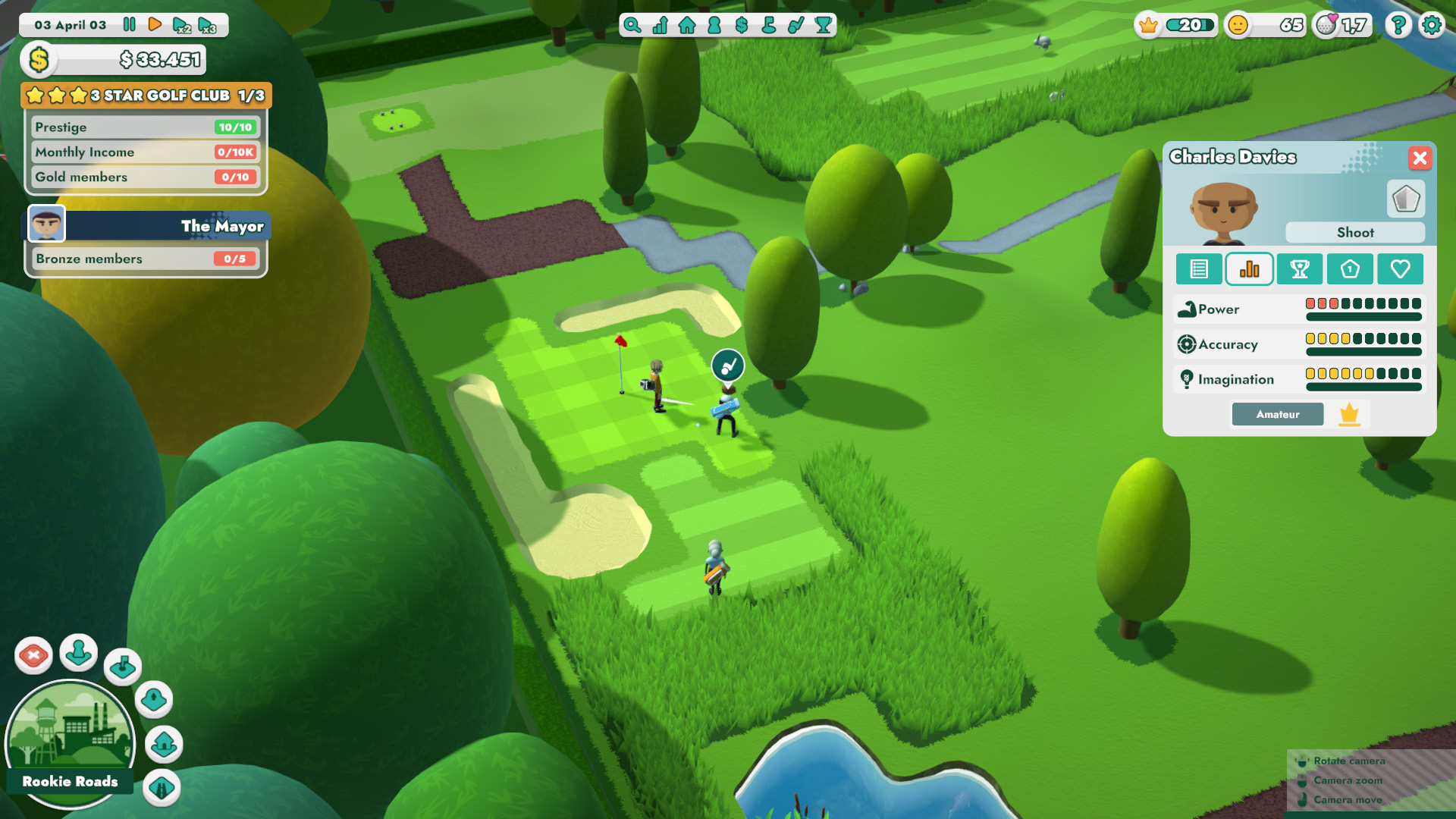
Playing a round or running a simulation is genuinely satisfying because the editor’s feedback loop: design, test, tweak, is immediate and intuitive. The point‑and‑click testing system keeps playtests accessible for newcomers, while the simulation mode provides fast, data‑driven results for designers who want to iterate without playing every shot.
Visual cues, ball‑roll telemetry, and hole‑by‑hole stats make it easy to see how tiny adjustments: slope tweaks, bunker repositioning, or green‑speed changes, shift strategy and scoring. That responsiveness rewards experimentation: a single contour change can turn a forgiving par into a memorable risk‑reward challenge, and the game encourages repeated refinement until a hole feels both beautiful and balanced.
Presentation and polish
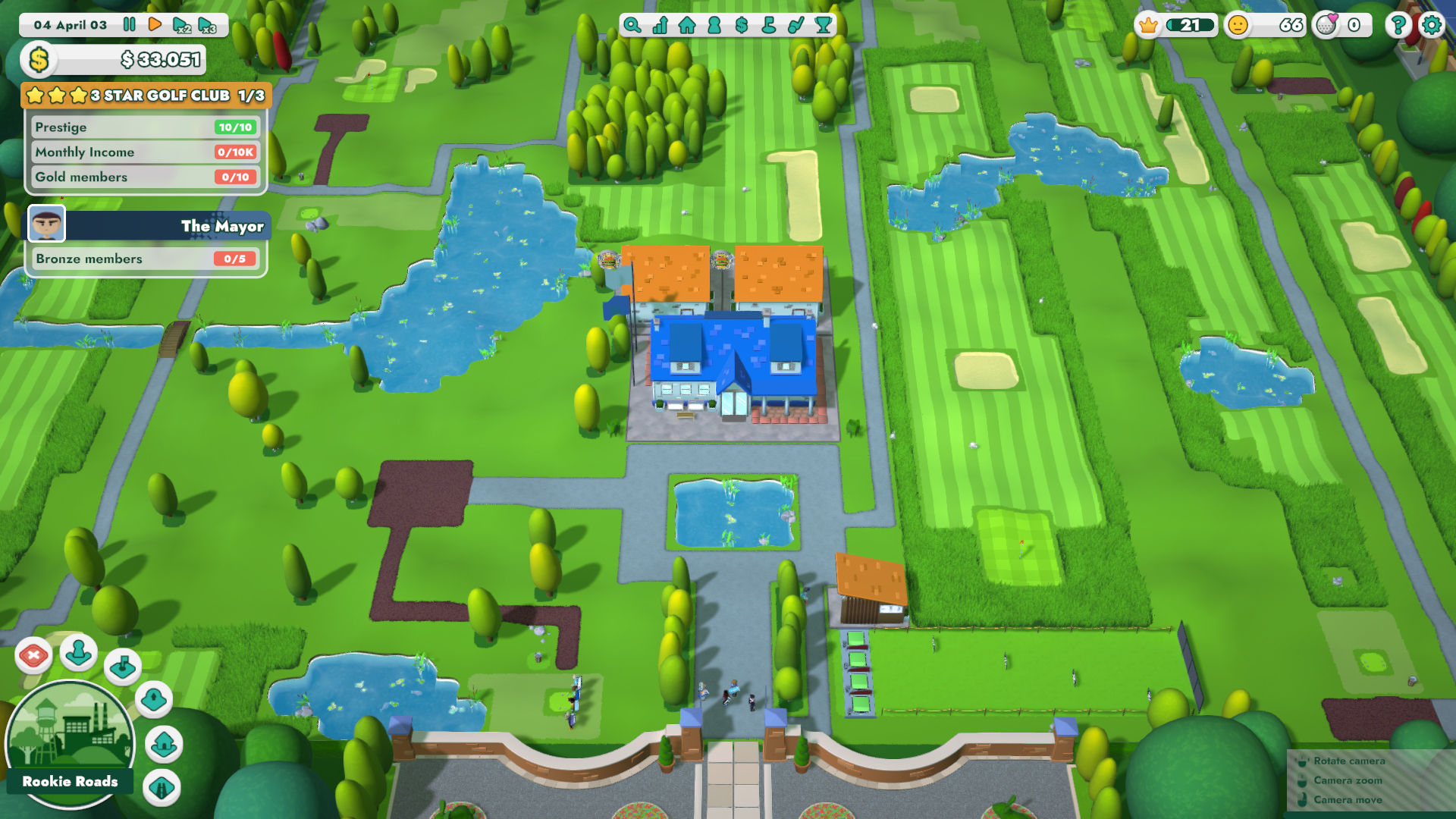
Visually, the game favors clean, polished course presentation that puts your landscaping choices front and center: well‑lit fairways, crisp foliage, and thoughtfully composed vistas make each hole read at a glance.
The UI and controls lean toward approachability, with streamlined tools and clear feedback, though the team’s update notes show ongoing work to tighten accessibility options and achieve consistent platform parity.
The studio’s steady communication: regular demo updates, active community engagement, and explicit plans for cross‑platform support, signals that visual fidelity and UX polish are priorities and should continue to improve as the release approaches.
Community and roadmap
The developer is actively listening to demo feedback and prioritizing community requests, treating player input as a core part of the roadmap rather than an afterthought.
The teased sharing feature is the standout promise, once implemented it should let creators publish courses to a central gallery, export designs for cross‑platform play, and fuel curated showcases and community challenges that dramatically extend replay value.
Ongoing public testing and transparent patch notes show the team is iterating based on real user data, and their push to wishlist, review, and join Discord signals a launch strategy built around collaboration: early adopters who engage now will shape balance, features, and the creative ecosystem that follows.
Strengths
• Powerful terraforming and course‑building tools: Precision brushes, contour controls, hydrology options, and green‑speed tuning let you sculpt terrain and hazards with designer‑level control.
• Accessible testing mechanics: Fast point‑and‑click playtesting plus a simulation mode provide immediate, data‑driven feedback so you can iterate without slogging through full rounds.
• Meaningful management layer: Facilities, staffing, events, and pricing create long‑term goals and progression, your design choices feed directly into reputation, revenue, and club growth.
• Community and sharing focus: Active developer engagement and an upcoming publish/share feature promise a thriving creator ecosystem, curated showcases, and extended replayability.
Weaknesses
• Work in progress: Platform parity and overall polish are still being refined; expect UI tweaks, performance optimizations, and control adjustments as the team moves toward final release.
• Feature timeline: Ambitious systems, especially the sharing tools and full cross‑platform parity, are planned but may arrive post‑launch or in staged updates, not necessarily at day one.
• Pacing and focus: The game prioritizes design and management over arcade action; players seeking fast‑paced, swing‑by‑swing thrills may find the tempo deliberate and the reward loop more cerebral than reflexive.
• Scope tradeoffs: Because the team is balancing deep editor tools with management systems, some secondary systems (tutorials, accessibility options, or advanced AI behavior) might be lighter at launch and expanded later.
Who should play
• Creative builders who enjoy sandbox tools and visual design.
• Tycoon fans who like light management and optimization.
• Casual players who want to test holes without committing to full rounds.
• Community creators who plan to share and iterate on designs once the sharing feature launches.
Final Verdict
Under Par Golf Architect is coalescing into a satisfying hybrid of creative sandbox and light tycoon play. The editor is the star: terraformed landscapes, nuanced green tuning, and hazard placement deliver a designer’s toolkit that feels both deep and rewarding. The management layer gives those creations real stakes, turning aesthetic choices into reputation, revenue, and event opportunities.
Equally important is the studio’s iterative approach: demo‑driven updates and a teased sharing system point toward a future where player creations become the game’s lifeblood. If you love shaping spaces and watching systems respond, this is a project to follow closely, and to wishlist, through its final development push.
Watch and Wishlist
• Why wishlist: Get notified at launch and for demos; support the studio’s community‑driven roadmap and be first to try the sharing tools.
• Platforms to track: PC (Steam; Epic likely), consoles (PlayStation, Xbox, Nintendo Switch), and potential mobile ports, official confirmations pending.
• How to stay informed: Wishlist the store page, join the developer’s Discord, and follow Broken Arms Games and Gambit Digital on social channels for patch notes and feature reveals.
• Price perspective: To be announced; expect indie pricing with likely launch discounts and seasonal sales.
Key Takeaways
• Designer + Manager hybrid: Combines a deep, intuitive terraforming editor with light tycoon mechanics, build stunning holes and run a profitable club.
• Editor is the star: Precision contouring, hydrology, and green‑speed tuning let you shape both aesthetics and playability.
• Fast iteration loop: Point‑and‑click testing plus simulation mode provide immediate, data‑driven feedback for rapid refinement.
• Meaningful progression: Facilities, staffing, events, and pricing turn creative designs into reputation and revenue goals.
• Community‑first roadmap: Developers are actively iterating on demo feedback and preparing a sharing/publishing feature to boost creator activity.
• Cross‑platform ambitions: Broader platform support is planned, though full parity and some ambitious features may roll out over time.
• Who it’s for: Ideal for creative builders, light management fans, and community creators; less suited to players seeking fast‑paced arcade golf.
• Worth watching: Promising concept with strong tools and community potential, wishlist and follow updates to catch demos, sharing features, and launch details.
Game Information:
Developer: Broken Arms Games
Publisher: Broken Arms Games, Gambit Digital
Platforms: PC (reviewed)
Release Date: 2026
Score: 7.0 / 10
Under Par Golf Architect earns a 7.0 for delivering a compelling creative core and meaningful management systems. The terrain editor is deep and satisfying, playtesting and simulation tools speed iteration, and the club‑management layer gives designs long‑term purpose.
Areas holding it back are polish and platform parity, ambitious sharing and cross‑platform features are promising but not yet fully realized, and the deliberate pacing may not suit players seeking arcade‑style golf. Overall, it’s a strong, evolving indie with high creative upside.
“7.0 / 10 - A designer’s sandbox with real managerial teeth: beautiful to build, rewarding to run.”