Akatori: Chapter One - Wield a monk’s bo staff, bond with a red bird, and explore a warping island where every choice carries consequence. (Demo Impressions)

Akatori: Chapter One drops you into a compact, confident slice of a larger metroidvania, putting you in the sandals of Mako, a young monk whose versatile bo staff and curious red bird companion turn every encounter into a test of skill and improvisation.
The demo smartly foregrounds movement as gameplay: staff throws, grappling hooks, and precise glides across air currents make traversal feel like a practiced dance rather than a series of jumps.
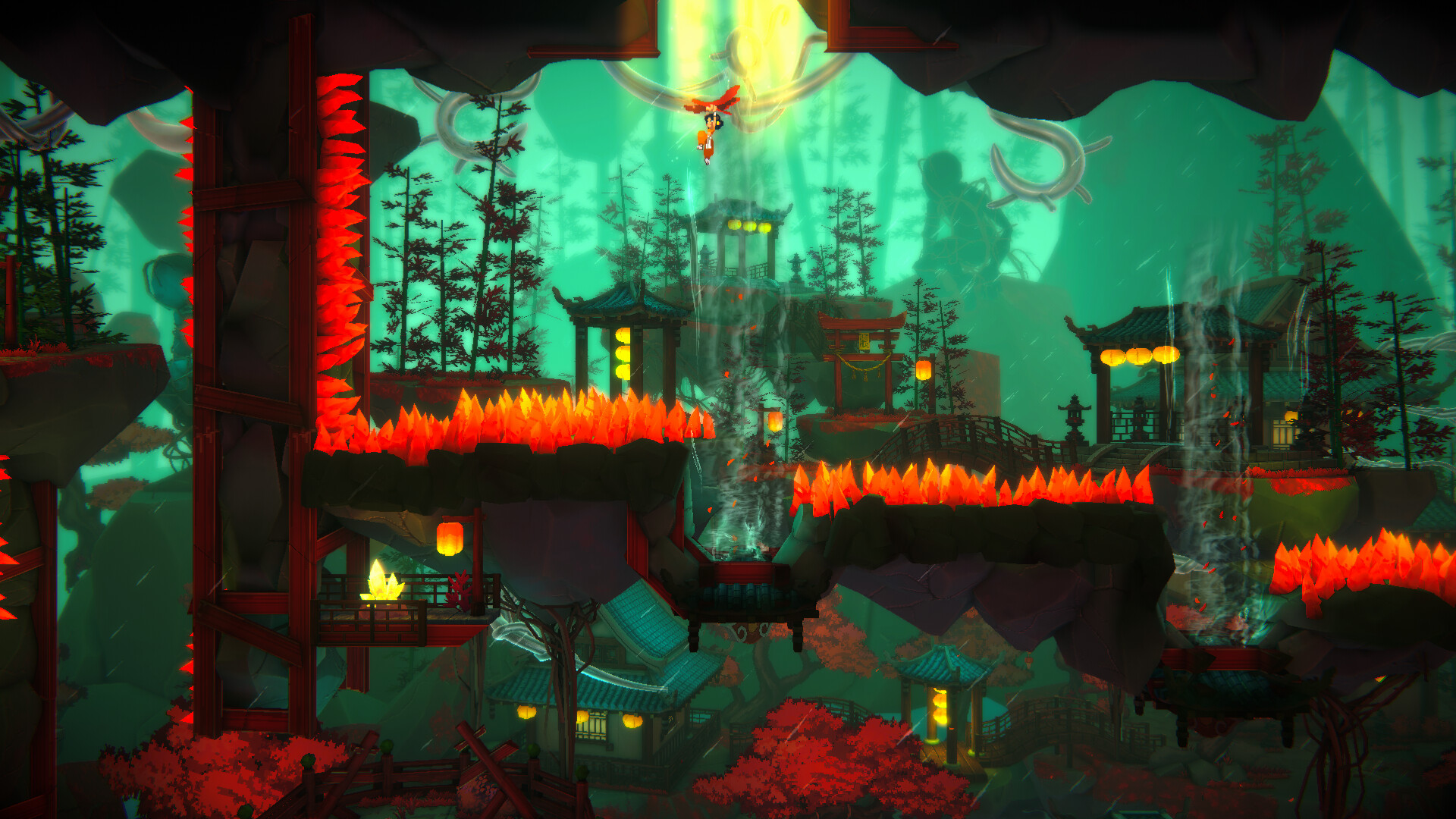
Visually and thematically the world blends East‑Asian industrial‑era motifs with a creeping ecological menace: the Amber, which warps wildlife and people alike, so even routine skirmishes carry weight and consequence. It’s a promising taste of a game that wants to marry tight action platforming with atmospheric worldbuilding.
What the Demo Lets You Do
• Core loop: Fight, jump, explore; the demo delivers a tight, focused sample of combat and traversal that hints at broader systems to come; encounters emphasize rhythm and movement, and exploration teases layered level design and shortcuts.
• Staff mechanics: The bo staff is a multi‑tool; melee weapon, throwable grappling hook, and platforming aid; demo encounters stress precision timing for hooks, throws, and air‑current glides that turn traversal into a skillful, expressive dance.
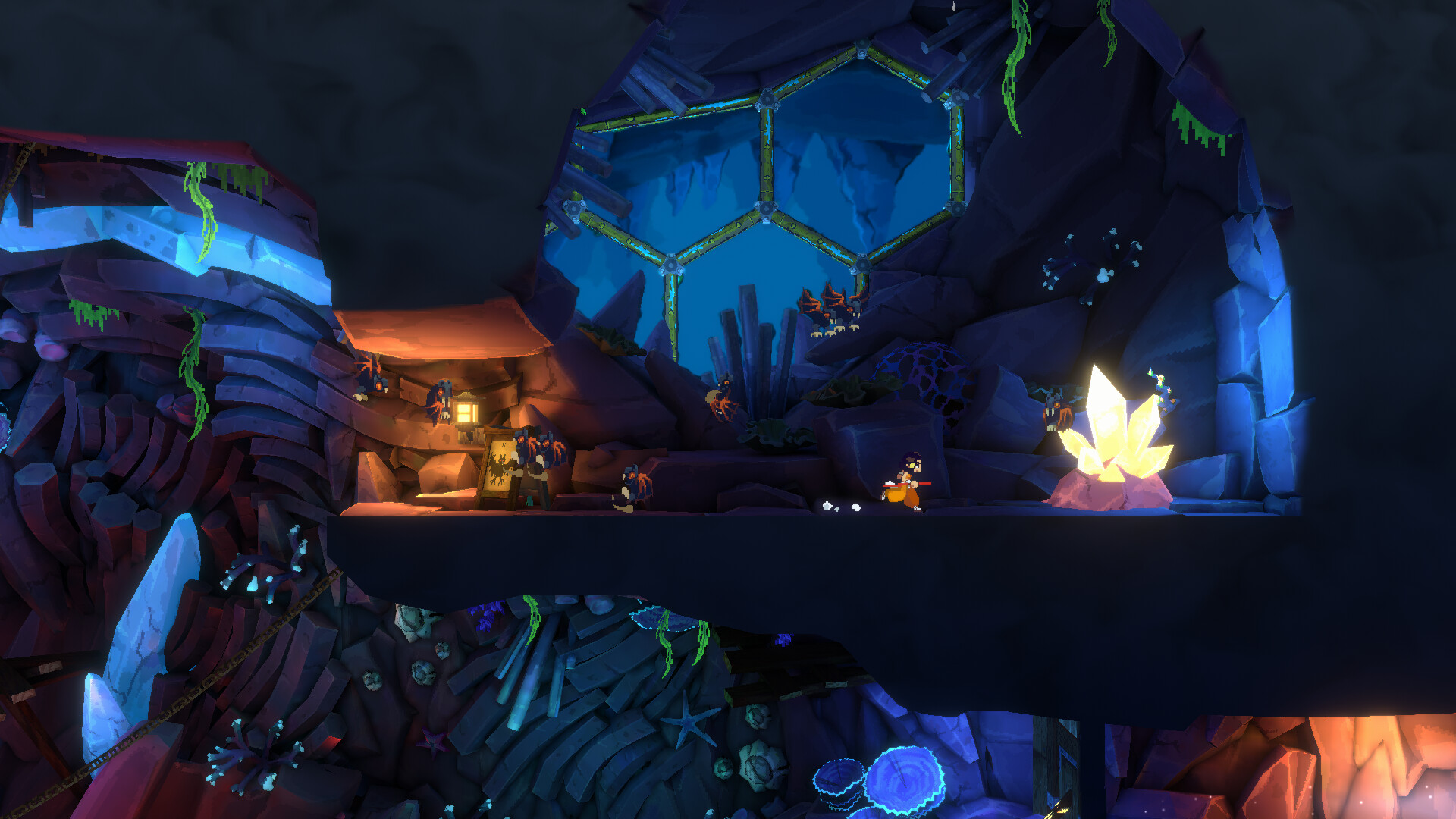
• Biomes and enemies: Two distinct biomes showcase contrasting visual themes and hazards; enemy variety ranges from amber‑corrupted goats and ambush predators to airborne threats, capped by a samurai‑style boss that demands timing, positioning, and resource management.
• Progression hints: Collectible ability items and upgrade nodes appear in miniature form, suggesting future movement options, combat combos, and exploration shortcuts that reward backtracking and careful observation.

Combat and Movement
The demo’s combat rewards rhythm and adaptability: melee strikes, thrown‑staff attacks, and quick dodges form a satisfying triad where timing matters more than button‑mashing. Enemies telegraph moves clearly, so parries and counters feel earned and kinetic rather than random.
Movement is the true highlight:gliding, wind currents, and staff‑assisted hooks demand deliberate inputs and split‑second decisions, turning traversal into an expressive, skillful dance.
The staff’s multiuse design ties combat and platforming together, so every fight can become a traversal puzzle and every jump an opportunity to attack, evade, or reorient midair.
Presentation and Worldbuilding
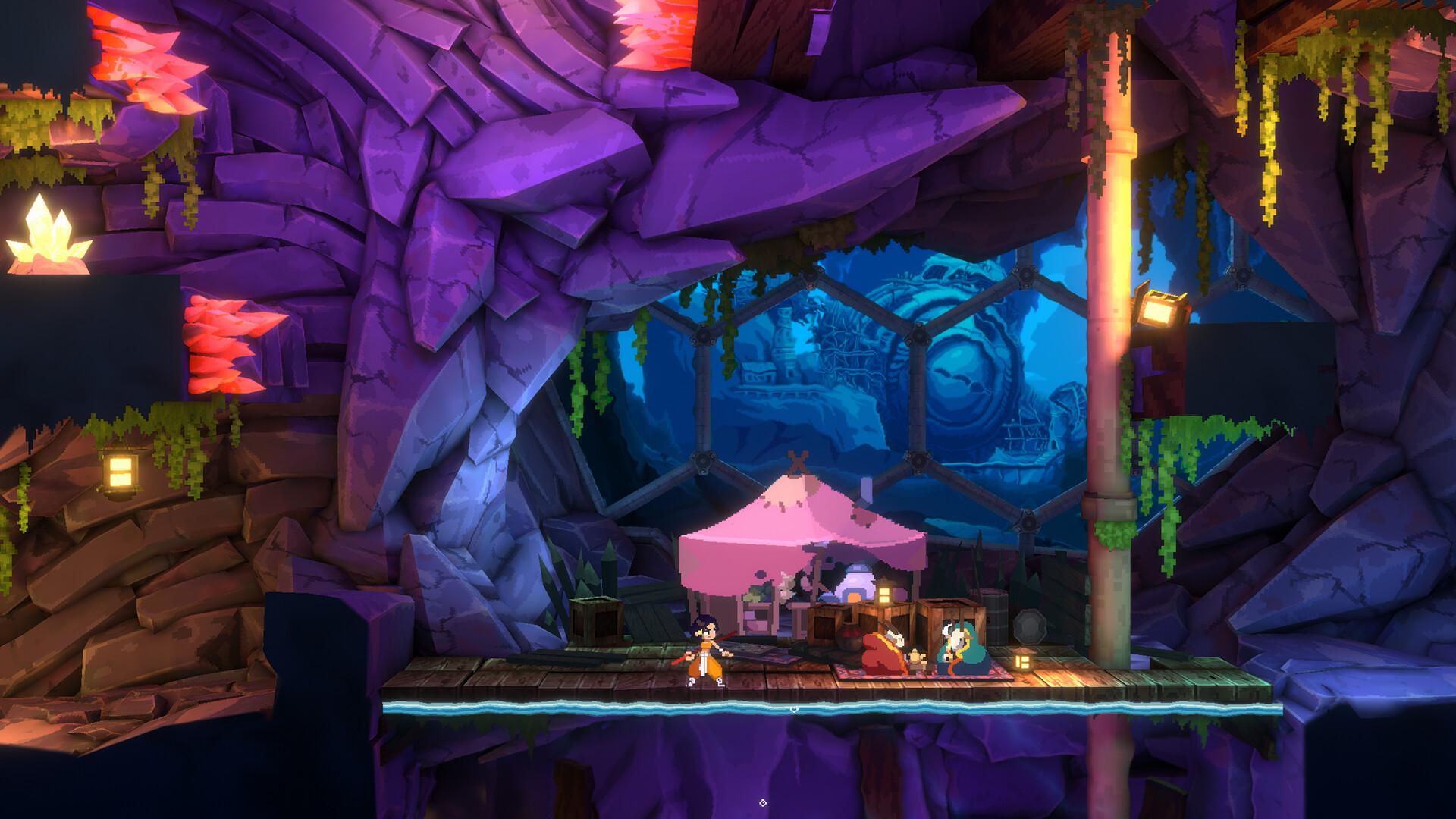
Akatori’s presentation is quietly ambitious: it fuses hand‑crafted 2D pixel characters with volumetric 3D backdrops to create diorama‑style scenes that feel far larger than the demo’s runtime suggests.
Small, tactile details: ambient mechanical hums, the snap of bamboo, and crunchy impact sounds; give weight to every action, while environmental hazards like exploding fruit and amber‑corrupted flora turn the scenery into an active threat.
Merchant stalls, scattered vignettes, and the “Akatori Tales” interludes layer personality and cultural texture onto the world, so exploration never feels empty; even brief encounters and background props carry narrative purpose and invite closer inspection.
Demo Strengths and Rough Edges
• Strengths: Tight, expressive movement; inventive staff mechanics; strong visual identity; and a clear sense of larger scope. The demo sells the promise of a layered metroidvania built around traversal and tool‑based combat.
• Rough edges: As a slice of a bigger game, the demo is necessarily short; some encounters feel like introductions rather than fully realized systems, and a few platforming hazards demand pixel‑perfect timing that may frustrate players who prefer looser traversal. The narrative hints are intriguing but leave several threads unresolved, intentionally, to be sure, but worth noting for players who want a fuller story in a demo.
Who Should Try the Demo
• Recommended for: Players who enjoy precision platforming, weapon‑based traversal (think staff or hook mechanics), and atmospheric metroidvanias with a strong sense of place.
• Less ideal for: Those seeking long demos, immediate narrative closure, or purely combat‑focused action without a heavy emphasis on movement.

Final Verdict
The Akatori: Chapter One demo is an effective proof of concept: it showcases a distinctive movement toolkit, a striking diorama‑style visual approach, and a world that clearly promises depth beyond its short runtime.
The demo is purposeful rather than padded, enough to demonstrate how staff‑based traversal, wind‑borne gliding, and precise combat will interlock across larger levels, while leaving you hungry for more biomes, expanded enemy encounters, and tighter pacing in later sequences.
If you favor metroidvanias that make traversal the core loop and reward experimentation, this demo is a compelling taste of what the full game could become.
Game Information:
Developer & Publisher: Contrast Games
Platforms: PC (reviewed)
Release Date: 2026