
Coffee Talk Tokyo relocates the series’ intimate, late‑night storytelling to a wood‑panelled café tucked beneath Tokyo’s neon skyline. The space channels jazz kissa sensibilities: dim lighting, towering racks of vinyl, and a Master who treats records like scripture, so music and atmosphere become as much a character as the patrons who drift in. From the hush of residential streets to the electric bustle of after‑hours avenues, the setting frames conversations between humans and yōkai with a textured, cinematic backdrop.
This move to Tokyo opens new narrative doors: local folklore and urban rhythms inform fresh character arcs, while the café’s warm, music‑forward interior preserves the franchise’s conversation‑first heart. Expect stories that feel both culturally specific and universally human: quiet confidences, small kindnesses, and the kind of late‑night moments that linger long after the cup is empty.
Why Tokyo matters for the series
Tokyo at night is a study in striking contrasts: quiet residential lanes and bicycle‑lit commutes sit cheek‑by‑jowl with neon thoroughfares, 24/7 shops, and after‑hours crowds. That layered urban rhythm inspired the team to plant the café amid the city’s nocturnal pulse, where ordinary routines brush up against the uncanny and everyday encounters can carry mythic weight.
Drawing on Japan’s rich folklore: kitsune, kappa, and other spirits, the game reinterprets these figures through Coffee Talk’s empathetic, conversation‑first lens, using them to illuminate contemporary social issues without losing sight of shared human truths. The developers frame the move to Tokyo as both a return to the series’ roots and a chance to tell new, culturally specific stories that still resonate universally.

What’s in the demo and how to try it
A new demo for Coffee Talk Tokyo is available as part of Steam Next Fest, offering the complete Day 1 and an early look at Day 2, plus expanded Tomodachill features, clickable hashtags, cold drink options, and refined dialogue and presentation. If you want to sample the game’s tone and mechanics before launch, the Steam Next Fest demo is the most polished build released so far.

Meet Vin: The café’s constant presence
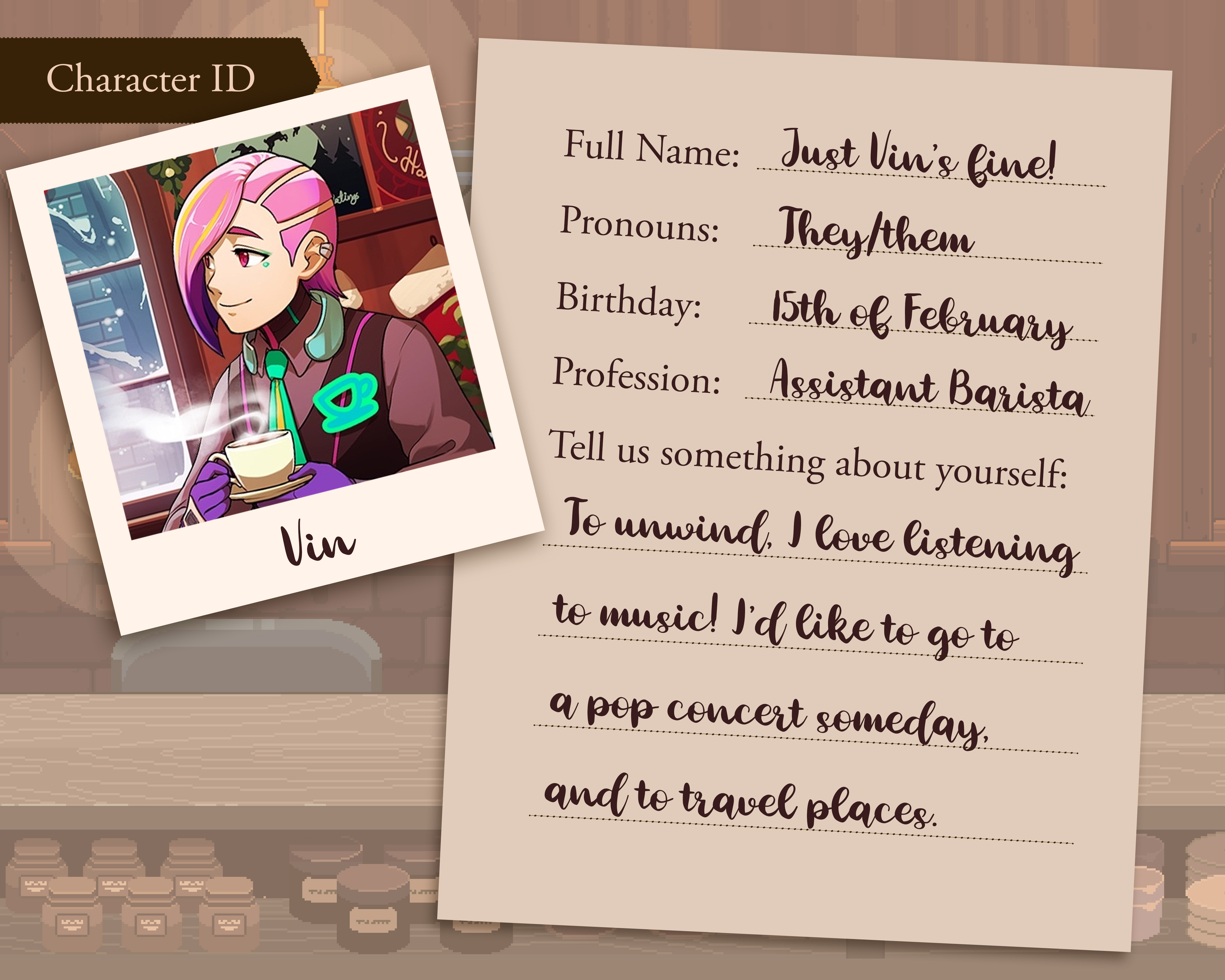
Vin arrives as more than an assistant: they’re the café’s steady throughline, the familiar presence who threads the night’s conversations together. Crafted to feel distinct from earlier series characters, Vin blends classic barista charm with a subtle cyberpunk edge: a creative, non‑binary personality who lives above the café, loves music, and cares for both dogs and cats. Their role is deliberately multifaceted; part confidant, part scene‑setter, part emotional ballast, so players always have a recognizable anchor as new patrons drift in and out.
Visually and emotionally, Vin was designed to convey warmth and resilience: concept art and character expressions emphasize an easy enthusiasm tempered by fatigue, small gestures that reveal a generous, hard‑working soul. Those nuanced animations and portrait states make Vin feel lived‑in and real, helping the player form a steady relationship that deepens the game’s episodic encounters.
Gameplay and features to expect
• New cast and stories: A fresh roster of patrons and short, character‑driven vignettes set against Tokyo’s nocturnal streets, each scene revealing personal dilemmas and quiet revelations.
• Expanded drinkcraft: Brew both hot and cold beverages with new recipes, sprinkle‑stencil latte art, and more meaningful drink choices that shape patrons’ reactions.
• Tomodachill social feed: Clickable hashtags unlock alternate dialogue branches and hidden narrative threads, letting player interactions ripple through the café’s social tapestry.
• Lo‑fi soundtrack: A mood‑setting score by Andrew “AJ” Jeremy that blends mellow beats and vinyl warmth to anchor late‑night conversations.
• Full localization: Complete localization in nine languages ensures the game’s subtle dialogue and cultural nuance reach a global audience.

Editions, extras, and release timing
The team confirmed a global launch date of May 21, 2026, and announced a Collector’s Edition that bundles a 10‑track City Pop album, the Seattle Prologue chapter, and a digital artbook, thoughtful extras aimed at longtime fans and collectors.
The Steam Next Fest demo functions as a polished preview ahead of launch, so wishlist Coffee Talk Tokyo on Steam to get notified and try the demo during the festival.
Final Takeaway
Coffee Talk Tokyo preserves the series’ core appeal: intimate, choice‑driven conversations and a cozy, late‑night atmosphere, while widening its palette with Tokyo‑specific culture, folklore, and a distinctly music‑forward setting.
The demo offers a substantive preview of tightened mechanics and richer narrative threads, and Vin’s steady presence promises an emotional throughline that anchors the café’s episodic encounters. For fans of slow, character‑first storytelling, this feels like a careful, thoughtful evolution that deepens the franchise without losing its heart.