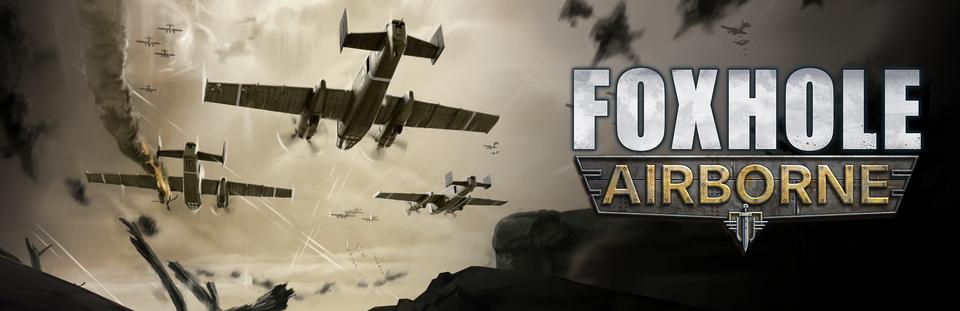
Foxhole Airborne propels the persistent war into a new dimension, weaving air, land, and sea into a single, seamless battlefield. Live now, the update introduces player‑crewed aircraft, paratrooper insertions, carrier‑launched strikes, and a refreshed naval roster, backed by a nearly 25% larger map and a full graphical overhaul that sharpens sightlines and tactical clarity.
Logistics and frontline play are fundamentally reshaped: airfields, ground crews, and radar networks become strategic hubs, while subsystem damage and crewed roles reward coordinated teams. This is more than new toys: Airborne expands the scale, depth, and strategic possibilities of Foxhole’s persistent war.
Aerial combat and operations
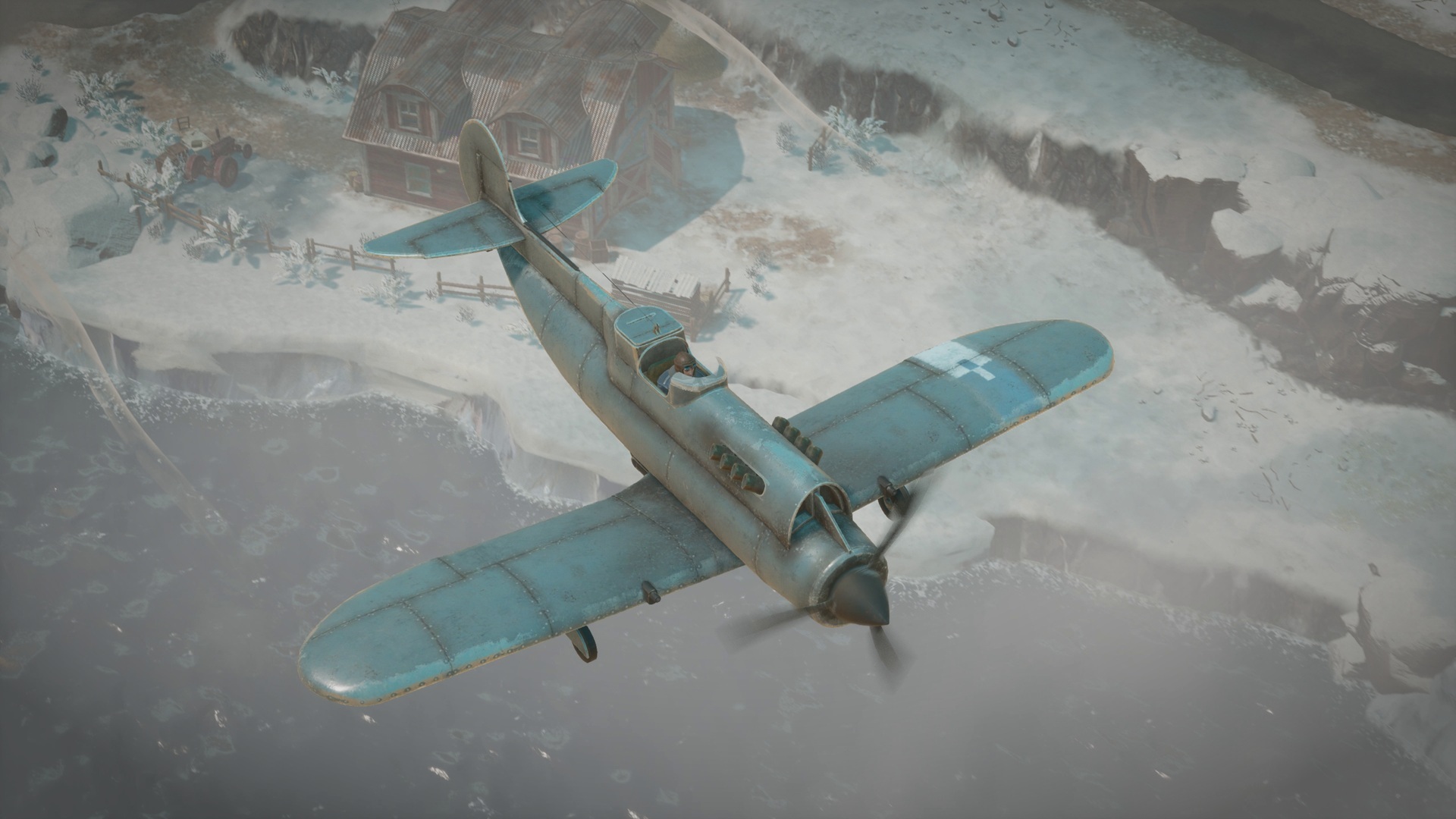
• Aircraft types and roles: Players can design, build, and crew Recon planes, Fighters, Bombers, and specialized airframes for distinct missions: scouting and spotting, dogfights, precision strikes, and supply‑line interdiction. Squadrons matter now, coordinated crews and role specialization multiply effectiveness across every mission type.
• Player‑crewed systems: Every cockpit, gun station, and crew position is filled by a real player, creating emergent teamwork where voice comms, role discipline, and in‑mission coordination determine whether a sortie succeeds or fails.
• Subsystem damage model: Planes are made of discrete subsystems (engines, control surfaces, weapons, fuel lines) that can be individually damaged. Targeted hits degrade handling, speed, or offensive capability and force damaged aircraft to limp back to an airfield for repairs instead of exploding on contact, rewarding tactical targeting and skilled airmanship.
• Paratrooper operations: Paratroopers let squads insert behind enemy lines to sabotage infrastructure, seize objectives, and sever logistics. These insertions create high‑value, high‑risk opportunities that blur the line between air and ground strategy and demand tight coordination with ground forces.
• Anti‑air defenses and counterplay: Ground forces must deploy and coordinate AA emplacements, radar, and early‑warning networks to protect supply routes and bases from bombing runs and recon sweeps. Successful air campaigns hinge on logistics, suppression of enemy AA, and integrated air‑ground planning.
Logistics and airfield operations
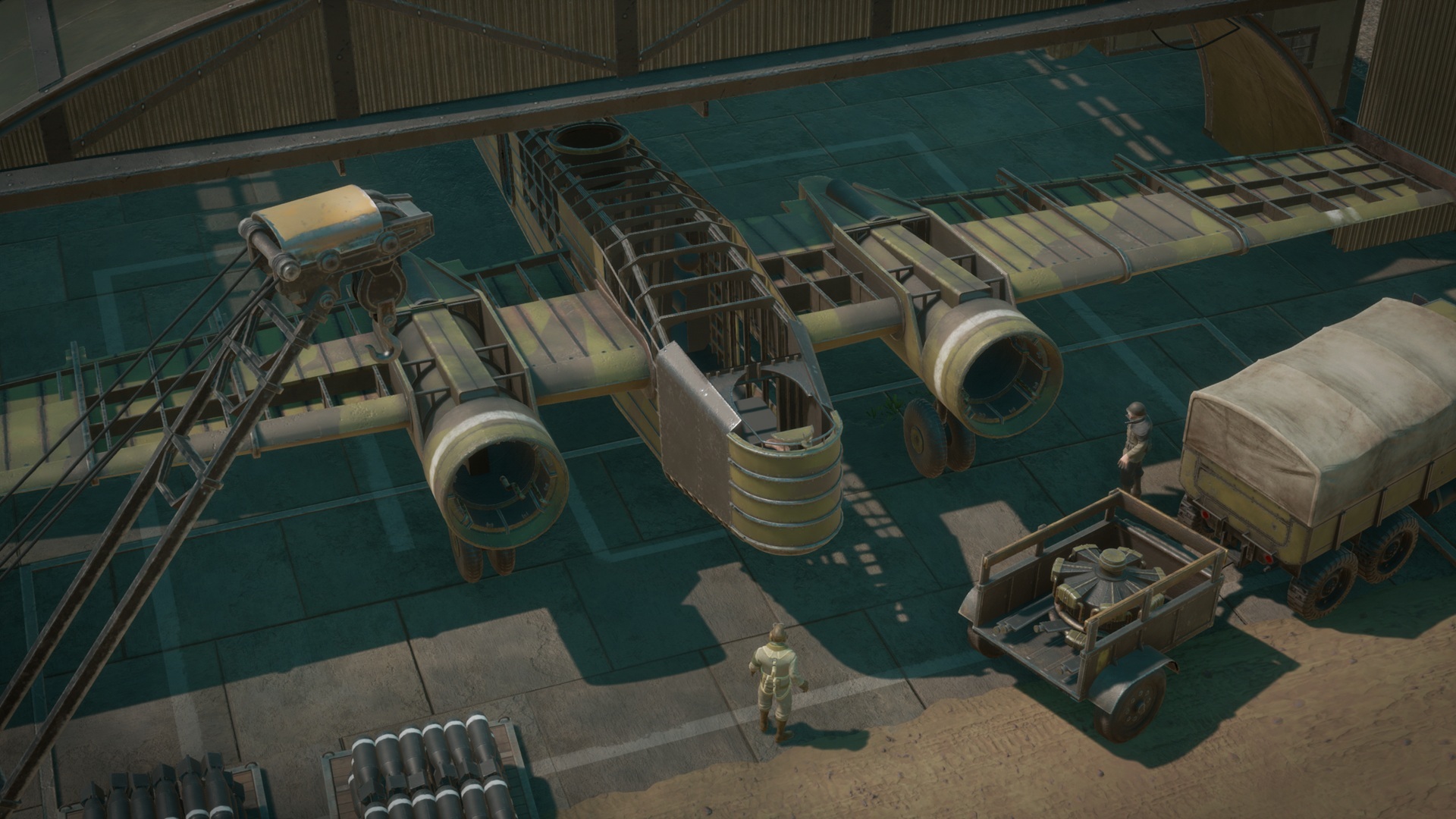
• Airfields and hangars: Controlling airfields, hangars, and production facilities is now central to sustaining aerial power. Bases act as strategic hubs that require defensive planning, resource investment, and forward positioning; losing an airfield can strand squadrons and choke a front’s sortie rate.
• Ground crew mechanics: Ground crews handle rearming, refueling, and subsystem repairs between sorties, turning efficient turnarounds into a force multiplier. Well‑organized logistics chains and dedicated crew roles shorten downtime, while chaotic or under‑supplied bases see aircraft grounded and missions fail before they launch.
• Aircraft logistics and supply: Ammunition, fuel, spare parts, and specialized munitions must be produced, transported, and staged, often under fire, to keep air operations sustainable. Protecting convoys and maintaining secure supply nodes becomes as important as winning dogfights.
• Air intelligence and early warning: Recon planes and radar installations feed a layered intelligence picture that makes detection, interception, and counter‑air planning possible. Timely intel lets commanders vector fighters, preempt bombing runs, and set ambushes; without it, air campaigns become blind and costly.
• Integrated planning: Successful air campaigns hinge on tight coordination between pilots, ground crews, logistics officers, and AA teams. When those systems mesh; airfields defended, supplies flowing, crews ready, and radar online, airpower becomes a decisive, sustainable tool rather than a short‑lived spectacle.

World expansion and naval overhaul
• Graphical overhaul: The world receives upgraded foliage, higher‑fidelity landscapes, and refreshed visuals across every biome, improving immersion and tactical readability.
• Map expansion: The playable map grows by nearly 25%, adding multiregion islands and expanded maritime areas that deepen naval and aerial theaters.
• New ship classes: Logistics and combat at sea gain new tools such as a mine‑laying boat, a light freighter for waterborne supply, and seven new combat boats spanning light, medium, and siege roles.
• Carriers: The introduction of carriers is a game changer, as these large ships let aircraft launch from offshore positions, projecting air power across maritime and coastal fronts and creating new targets for both navies and air defenses.
Supporters Edition and launch
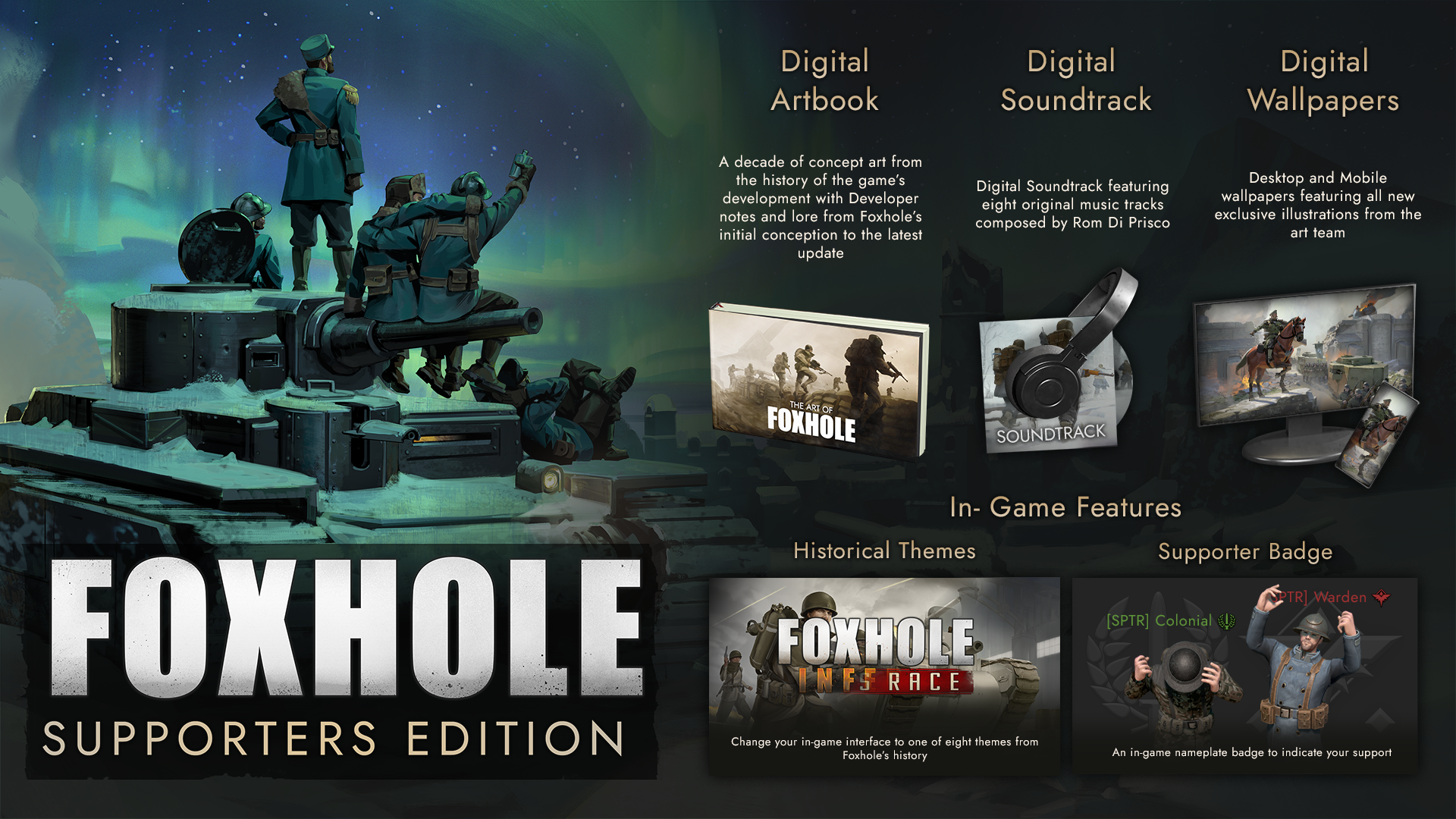
• Supporters Edition: Celebrating 10 years of development, the Foxhole Supporters Edition bundles an in‑game supporters badge, historical themes, a digital artbook with developer notes and lore, the original soundtrack, and exclusive wallpaper art.
• Release timeline: Foxhole Airborne went live on February 9, following the official trailer reveal in mid‑January. Players can jump in now to experience the new systems and seasonal content.
Final Takeaway
Foxhole Airborne fundamentally expands Foxhole’s strategic canvas, folding aviation, paratroopers, carriers, and a larger, more detailed world into a single, multi‑domain war. The update doesn’t just add new vehicles and toys, it rewrites how fronts are fought: airfields become supply hubs, carriers project power across oceans, and paratrooper insertions create sudden, high‑value opportunities behind enemy lines.
The patch rewards coordination and logistics as much as individual skill. When pilots, gunners, ground crews, convoy escorts, and AA teams synchronize, airpower becomes a sustained, decisive tool rather than a fleeting spectacle. Conversely, gaps in supply chains or poorly defended airbases can quickly neutralize an entire theater of operations.
For commanders and frontline players alike, Foxhole Airborne opens fresh strategic choices: prioritize radar and early warning, invest in protected airfields, or build fast, mobile strike groups that exploit new sightlines and sea lanes. Whether you lead logistics convoys, captain a carrier, or jump with a squad of paratroopers, this update hands you more levers to shape the persistent war; and more reasons to plan, communicate, and fight as a unified force.