Hobble‑Wobble - Up to eight players share a single, wobbly hero: coordinate every step, clutch every recovery, and turn chaos into triumph. (Demo Impressions)
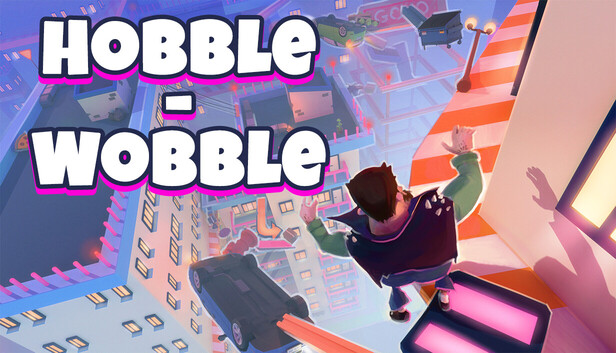
Hobble‑Wobble’s demo turns the simple objective, get home, into a gleefully chaotic exercise in shared responsibility. Up to eight players wrestle control of a single, perpetually off‑balance protagonist, and the result is equal parts maddening and hilarious: every step, jump, and stumble becomes a negotiated decision.
The physics are merciless but fair: panic mashing multiplies calamity, while calm, coordinated inputs let a team coax progress out of wobble and slip, so small successes feel hard‑won and genuinely legendary. The demo nails its core conceit: it punishes solo heroics and rewards social rhythm, turning every fall into a story and every clutch recovery into a moment you’ll want to replay.
How it plays
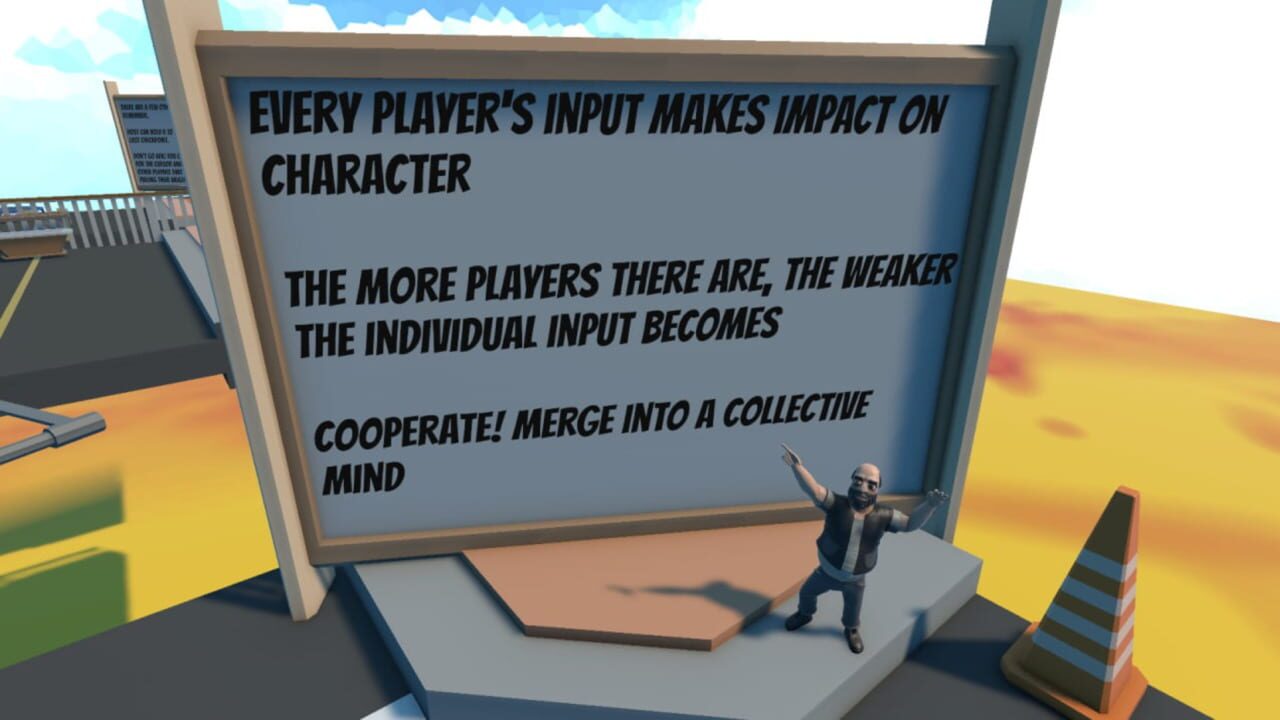
The control scheme is brilliantly simple and brutally clever: everyone uses WASD + Space, but each keypress only supplies a fraction of the total input, so movement is inherently collective. One player pressing W barely nudges the hero; a handful of coordinated presses produce meaningful motion; all eight players together approach a near‑normal gait. That fractional input design creates a new social rhythm where the group’s timing, patience, and communication become the real skill.
• Consensus over reflexes: Progress depends on coordinated intent rather than individual twitch reactions.
• Panic backfires: Frantic mashing amplifies wobble and usually turns a near‑win into a spectacular tumble.
• Deliberate choreography: Calling steps, holding jumps, and pacing bursts converts impossible sections into slow, steady advances.
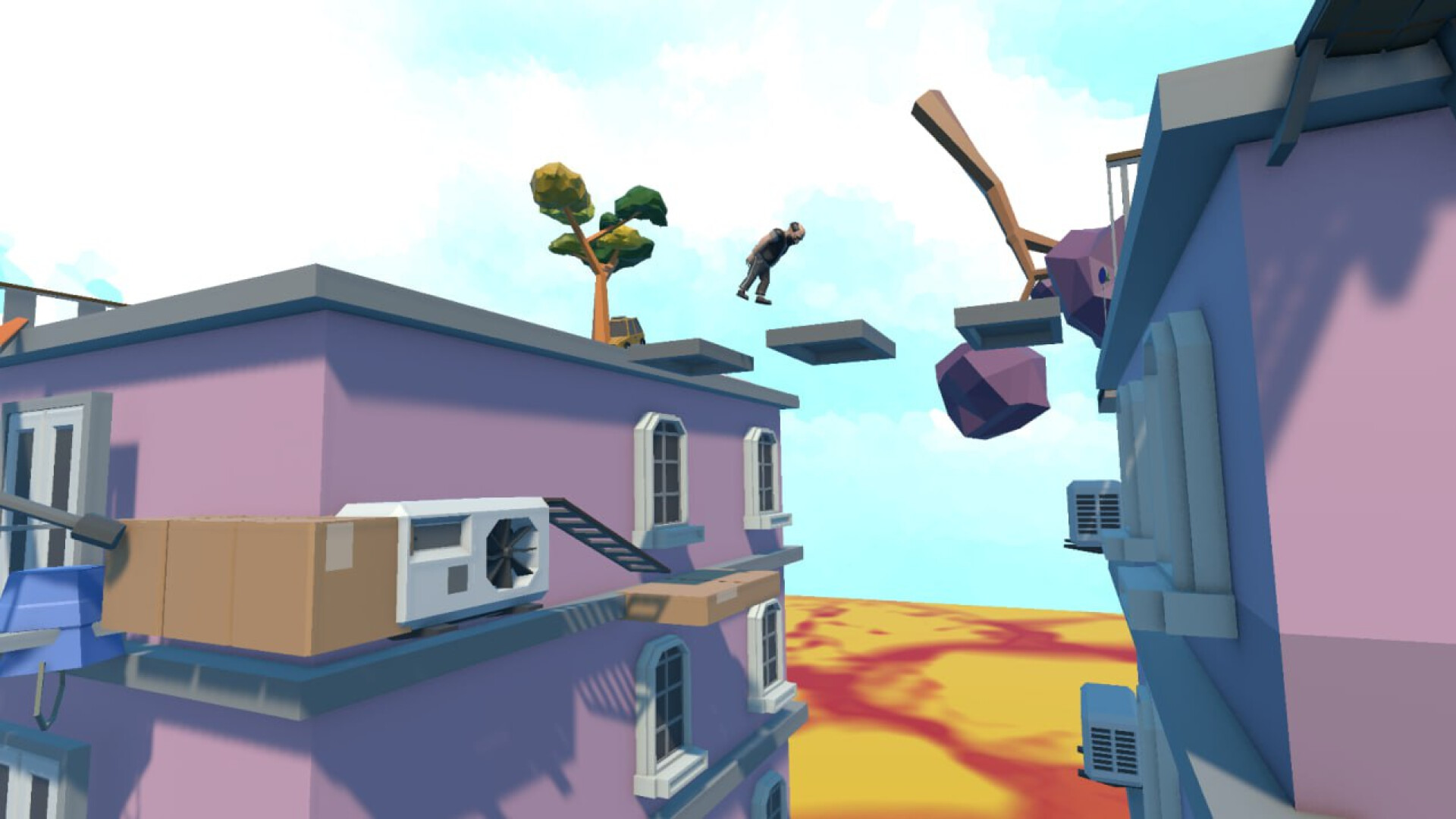
• Level design enforces negotiation: Narrow ledges, awkward jumps, and precarious platforms force the team to plan each move together.
• Social skill emerges: Success is rarely about one player’s prowess and always about how well the group invents roles, signals, and timing conventions.
Physics and feel
The demo’s physics are the showpiece: a perfectly tuned blend of believable momentum and comedic instability that makes every stumble feel meaningful. Your protagonist is perpetually off‑balance: leaning, slipping, and fighting gravity in ways that read clearly and react consistently, so teams can learn to anticipate cascades and build countermeasures instead of just raging at randomness.
• Predictable chaos: Falls are frequent but governed by consistent rules, letting groups learn patterns and turn failure into practice.
• Tactile failure: Each tumble is satisfyingly animated and physically expressive, turning losses into memorable, laugh‑out‑loud moments.
• Social skill emerges: Teams invent roles and conventions (who holds jump, who steadies, who times the push) that become the real meta.
• Readable feedback: Visual and motion cues telegraph momentum shifts and likely stumbles, so recovery feels possible rather than arbitrary.
• Minor rough edges: Occasional input lag or ambiguous collisions appear in the demo, but they’re small blemishes next to the joy of coordinated movement.
Overall, the physics turn chaos into a learnable language: once a group understands the wobble, every recovery becomes a shared triumph.
Co‑op dynamics and social design
Hobble‑Wobble is as much a social experiment as it is a platformer. The demo makes it clear that group size and temperament fundamentally reshape the experience, turning mechanical challenge into a cooperative performance piece. Small teams feel like careful negotiation; mid‑sized groups discover a satisfying rhythm; full rosters deliver chaotic, laugh‑out‑loud mayhem. The game rewards patience, communication, and a willingness to embrace glorious failure: perfect for friends, streamers, and party nights where the spectacle of a shared wipe is as valuable as the win.
• Small groups (2–4): Deliberate and methodical; progress is slow but controlled, with each input carrying obvious weight.
• Mid groups (5–6): The sweet spot for teamwork; movement becomes reliable and emergent roles form naturally.
• Full groups (7–8): Hilariously chaotic; movement approaches normalcy but spectacular collapses are frequent and memorable.
• Communication matters: Simple conventions; who holds jump, who times pushes, who steadies, turn into the real meta and dramatically improve outcomes.
• Perfect for social play: The demo shines with friends or an audience; every save, fall, and clutch recovery becomes a shared anecdote that fuels replays.
• Design that tells stories: Checkpoints and dramatic fails create bite‑sized narratives, so even short sessions produce moments you’ll want to clip and retell.
Modes, pacing, and replay value
The demo centers on short, punishing climbs and compact platforming gauntlets that reward iterative learning and teamwork. Checkpoints are frequent and restarts are snappy, so frustration rarely lingers and momentum stays high, each attempt feels like useful practice rather than punishment. Though brief, the demo demonstrates a loop that’s built for repeat play: learn a pattern, refine your timing as a group, and celebrate the tiny victories that only coordinated teams can pull off.
• Social variability: Different group sizes and personalities produce wildly different runs, so no two sessions feel the same.
• Emergent strategies: Teams invent roles, rhythms, and signals that meaningfully improve performance over time.
• High‑risk payoff: Tight jumps, narrow ledges, and clutch recoveries deliver satisfying, cinematic moments when the group gets it right.
• Friendly pacing: Generous checkpoints and quick restarts keep the learning curve approachable and the mood light.
• Long‑term promise: The demo makes a strong case that the full game could sustain community challenges, shared‑control speedruns, and social content creation; perfect fodder for streams, clips, and party nights.
In short, the demo is a compact, repeatable thrill: short sessions that invite immediate replays and long‑term experimentation with group tactics.
Final Verdict
The demo of Hobble‑Wobble is a brilliant proof of concept: a brutally hard platformer that turns punishment into cooperative comedy. Its fractional‑input system and delightfully vicious wobble physics create a multiplayer dynamic that feels fresh and social: teamwork is the real skill, not twitch reflexes.
Played with friends, the experience swings between tense, surgical coordination and gloriously chaotic collapse; solo attempts only underline how much of the fun comes from shared failure and recovery.
The demo leaves you hungry for more levels, varied scenarios, and new ways to spectacularly implode together. If you crave punishing climbs, social mayhem, and the rare thrill of a tiny, hard‑won victory, this demo is essential.
Game Information:
Developer & Publisher: wayanjo
Platforms: PC (reviewed)
Release Date: To be announced