Roll Or Die - Minimalist physics score attack: the floor collapses, momentum rules, and every restart is another shot at the leaderboard. (Early Access Preview)

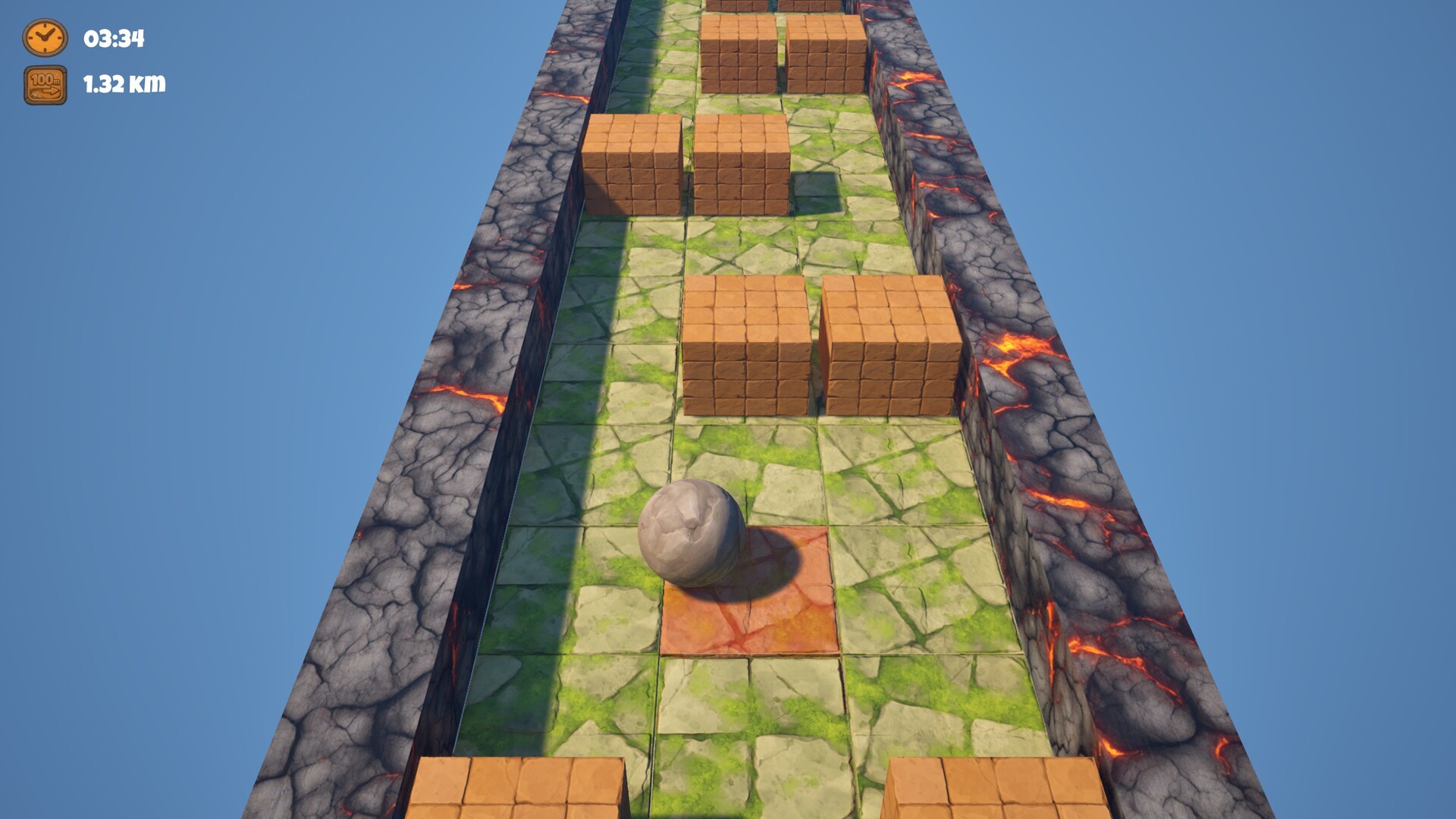
Roll Or Die pares arcade action down to a single, merciless rule: the floor gives way beneath you. Crimson Cloud Games’ Early Access build sharpens that premise into a taut, physics‑first score attack: three focused modes (Time Attack, Endless Runner, Obstacle Course) that demand razor‑sharp momentum control, split‑second decisions, and flawless timing.
Clean visuals and an instant‑restart loop make runs addictive and approachable, while the collapsing arenas and tight ball physics keep every five‑minute session tense, rewarding, and relentlessly replayable.
Core loop and gameplay
The gameplay is elegantly unforgiving. You pilot a single rolling ball where momentum, angle, and split‑second timing decide whether you cling to the last tiles or plummet into nothingness. Every run is a study in micro‑inputs and consequence, small corrections become the difference between a highlight reel save and an instant restart.
Key elements:
• One‑mistake tension: tiles vanish beneath you; recovery windows are tiny and mistakes are brutally final.
• Momentum mastery: tight, predictable physics let you chain clutch saves, carry speed through gaps, and use momentum to clear risky sections.
• Mode variety: Time Attack punishes hesitation as the arena collapses; Endless Runner tests sustained control and endurance; Obstacle Course demands pixel‑perfect precision across checkpoints.
• Instant restart loop: death is immediate, respawn is instant, and the “one more run” cadence keeps you grinding for incremental improvements.
The payoff is pure: a distilled arcade experience where learning the physics and refining tiny inputs yields outsized score gains, satisfying clutch moments, and a high skill ceiling that rewards practice and precision.

Social play and replayability
Roll Or Die feels built for competition and quick‑fire social sessions despite its minimalist design. Steam leaderboards give score chasers a clear target, while short, intense runs make it perfect for hotseat showdowns or trading attempts with friends between other games. Replayability is driven by:
• Procedural pacing in Endless Runner and varied obstacle layouts that keep each run feeling fresh.
• High skill ceilings where tiny improvements in timing, lane swaps, or momentum control translate into big score jumps.
• Emergent moments: clutch saves, long streaks, and near‑misses; that create highlight‑worthy runs you’ll want to repeat and share.
There’s no co‑op, but the game’s social life thrives in local rivalries, leaderboard climbing, and the personal compulsion to shave milliseconds off your best run.

Rough edges and launch notes
Early Access status shows in a few friction points that matter for a twitch‑heavy game:
• Physics tuning: some players report punishing wall collisions and inconsistent bounce behavior that can interrupt momentum unfairly.
• Control ergonomics: small QoL fixes (restart with spacebar, customizable keys, smoother lane‑swap input) would reduce needless mouse grabs and improve flow.
• Onboarding: the game assumes familiarity with momentum play; clearer tutorials or visual cues would help newcomers bridge the learning curve.
• Matchmaking and community features: leaderboards are present, but social features beyond rankings are limited; community tools or ghost runs could deepen engagement.
Performance and stability are solid in current builds, but the game’s long‑term appeal depends on iterative physics polish and a few accessibility and UX improvements.
Length value and accessibility
Roll Or Die’s value proposition is simple and sharp: short, intense runs that reward practice and precision rather than time investment.
As an Early Access title its scope is intentionally narrow, three tightly focused modes that prioritize depth over breadth, making it ideal for players who want a compact, repeatable challenge instead of a sprawling campaign.
The core loop is addictive: quick deaths, instant restarts, and a high skill ceiling mean small improvements in timing or momentum feel meaningful.
With a few accessibility additions: difficulty presets, input remapping, full controller parity, and optional assists; the game could comfortably bridge the gap between hardcore score chasers and casual players looking for a satisfying five‑minute break.

Final Verdict
Roll Or Die delivers a pure arcade hit: razor‑sharp physics, instant restarts, and a merciless “one mistake and it’s over” tension that makes every run pulse with adrenaline. Short sessions are addictive, clutch saves feel spectacular, and the game rewards players who obsess over momentum and tiny input improvements.
The Early Access build already shows a confident core, but a few targeted fixes: tighter bounce and wall physics, a couple of QoL control tweaks, and clearer onboarding; would dramatically widen its appeal.
For fans of score attacks and precision‑based challenges, this is a compact gem to play now; for everyone else, it’s a promising title to watch as it sharpens into a polished arcade staple.